


























Views
Downloads

Life Cycle of a Bean Worksheet | Grade 3 Essential
Paste this activity's link or code into your existing LMS (Google Classroom, Canvas, Teams, Schoology, Moodle, etc.).
Students can open and work on the activity right away, with no student login required.
You'll still be able to track student progress and results from your teacher account.
This Grade 3 science worksheet provides a structured framework for students to model the life cycle of a bean plant. By sequencing the four primary stages of growth, learners develop a foundational understanding of plant biology and chronological development. This activity transforms abstract biological concepts into a concrete, visual representation that students can manipulate and master.
At a Glance
- Grade: 3 · Subject: Science
- Standard:
3-LS1-1— Develop models to describe that organisms have unique and diverse life cycles- Skill Focus: Plant life cycle sequencing
- Format: 3 pages · 4 problems · Cut-and-paste activity · PDF
- Best For: Science centers and introductory biology lessons
- Time: 15–25 minutes
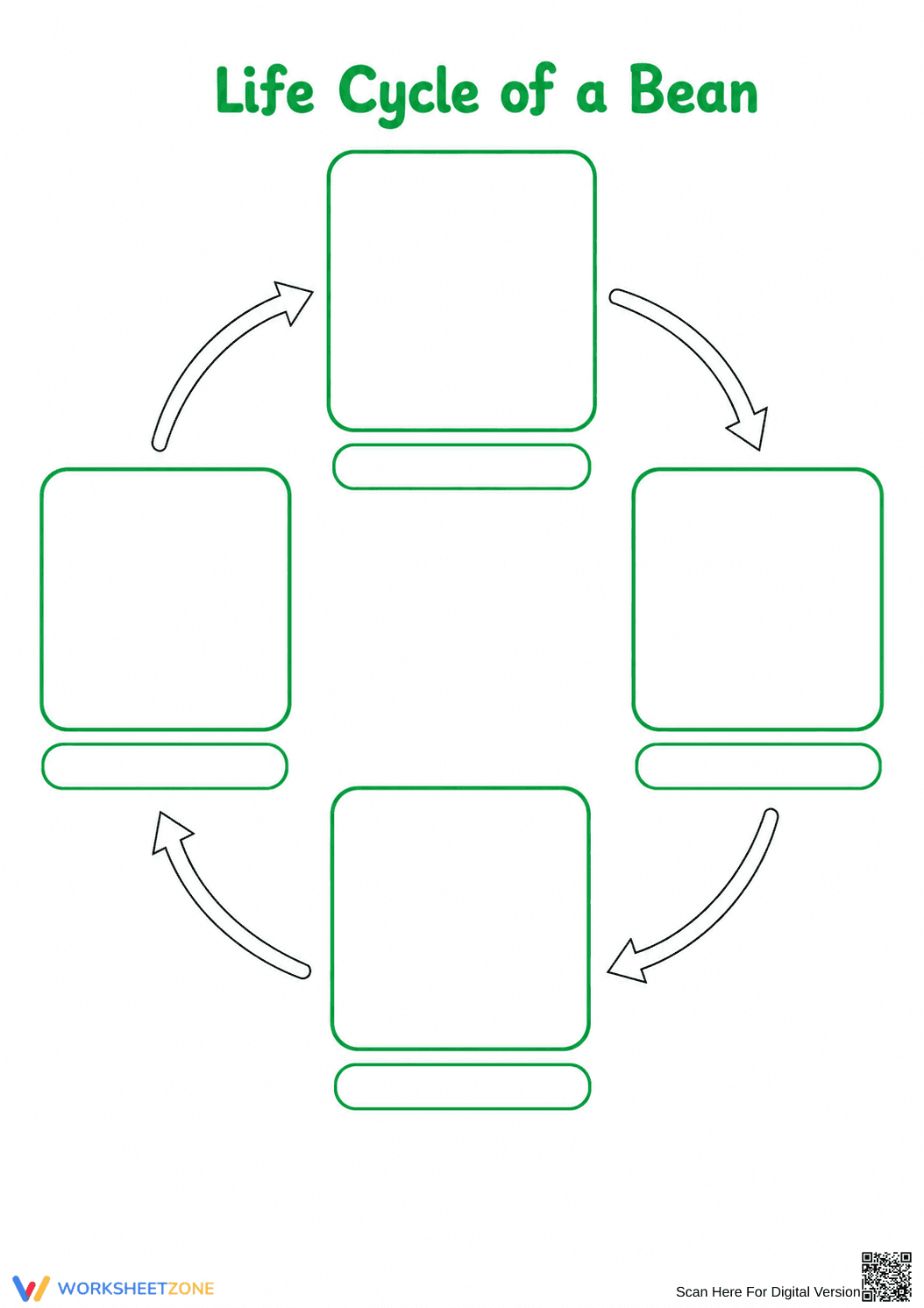
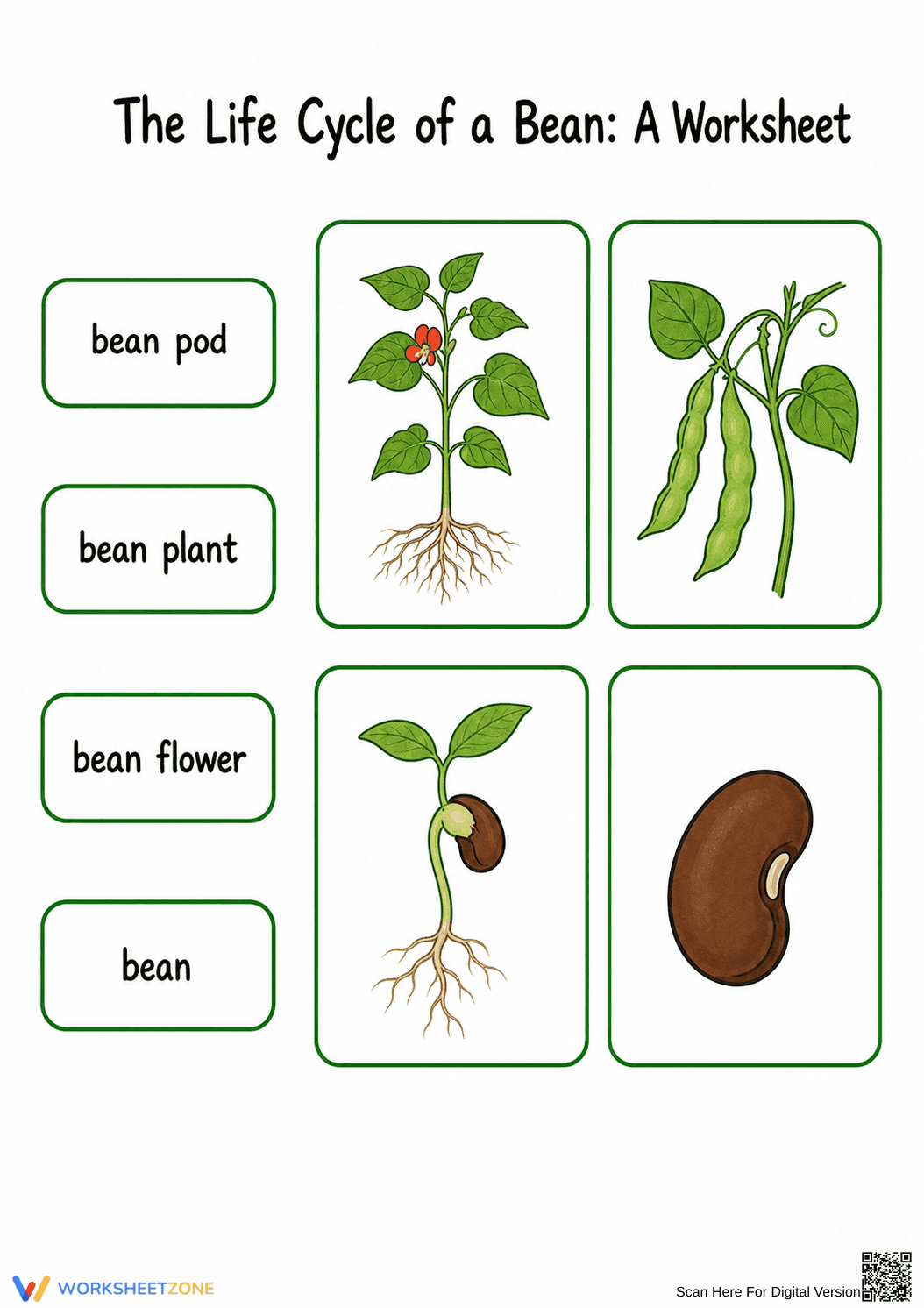
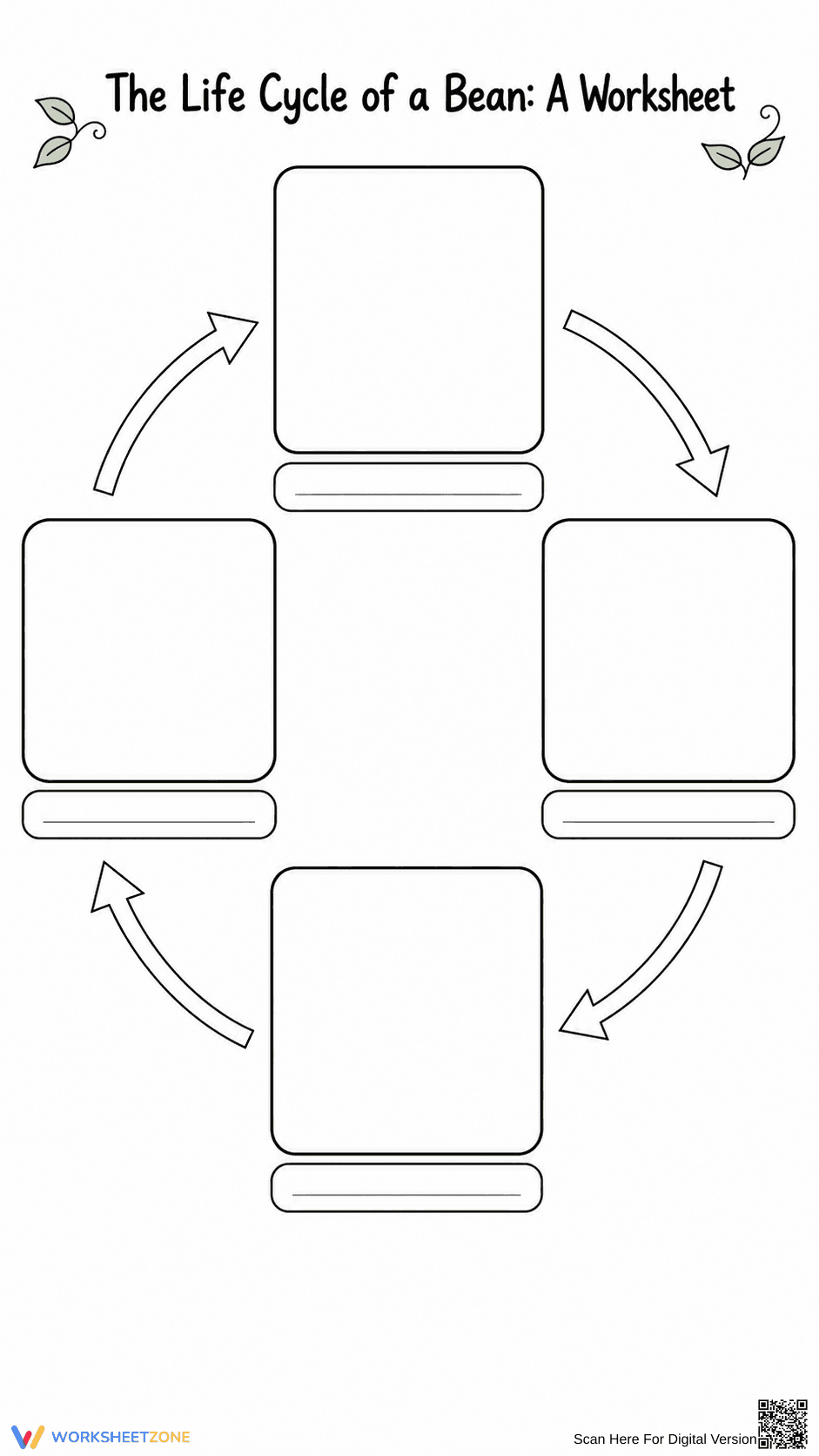
The resource contains 3 distinct pages designed for maximum classroom flexibility. It includes a primary life cycle diagram with four circular flow boxes, a dedicated page of high-quality cut-out images and vocabulary labels (bean, bean plant, bean flower, bean pod), and an alternative diagram layout. This multi-page format allows teachers to choose between a drawing-based activity or a tactile cut-and-paste exercise.
The zero-prep workflow is designed for immediate classroom implementation. First, print the required number of diagram and cut-out sheets (1 minute). Second, distribute materials to students along with scissors and glue (1 minute). Third, review the completed cycles as a whole-class check for understanding (5 minutes). This streamlined process makes the worksheet an ideal candidate for emergency sub plans or transition periods.
This worksheet is specifically aligned with 3-LS1-1, which requires students to develop models to describe that organisms have unique and diverse life cycles but all have in common birth, growth, reproduction, and death. It also supports CCSS.ELA-LITERACY.RI.3.3 by asking students to describe the relationship between a series of scientific ideas or steps in technical procedures. Both standard codes can be copied directly into lesson plans, IEP goals, or district curriculum mapping tools.
Use this worksheet during the "Explore" phase of a 5E lesson model to allow students to hypothesize the order of plant growth before direct instruction. Alternatively, assign it as a formative assessment after a bean-planting experiment to verify that students can connect their real-world observations to a scientific model. Completion typically takes 20 minutes, providing a clear window for teacher observation of fine motor and sequencing skills.
This resource is tailored for elementary students in grades 2 through 5, particularly those who benefit from visual and kinesthetic learning modalities. It serves as an excellent companion to a classroom garden project or a reading passage about botany. The inclusion of labels makes it highly effective for English Language Learners (ELLs) who are building scientific vocabulary.
According to the RAND AIRS 2024 report on elementary science instruction, the use of visual modeling tools significantly improves long-term retention of biological sequences in early learners. This worksheet addresses the 3-LS1-1 standard by requiring students to synthesize the chronological stages of a bean plant—from seed to mature pod—into a coherent circular model. By engaging in the tactile process of labeling and arranging these stages, students move beyond rote memorization toward a conceptual understanding of life science. Research from Fisher & Frey (2014) suggests that such graphic organizers provide the necessary scaffolding for students to internalize complex systems. This resource provides a high-utility, evidence-based approach to teaching plant biology, ensuring that students can accurately describe the commonalities of growth and reproduction across different species within the plant kingdom.


