


























Views
Downloads

Grade 1 Letter R Tracing — Printable No-Prep Worksheet
Paste this activity's link or code into your existing LMS (Google Classroom, Canvas, Teams, Schoology, Moodle, etc.).
Students can open and work on the activity right away, with no student login required.
You'll still be able to track student progress and results from your teacher account.
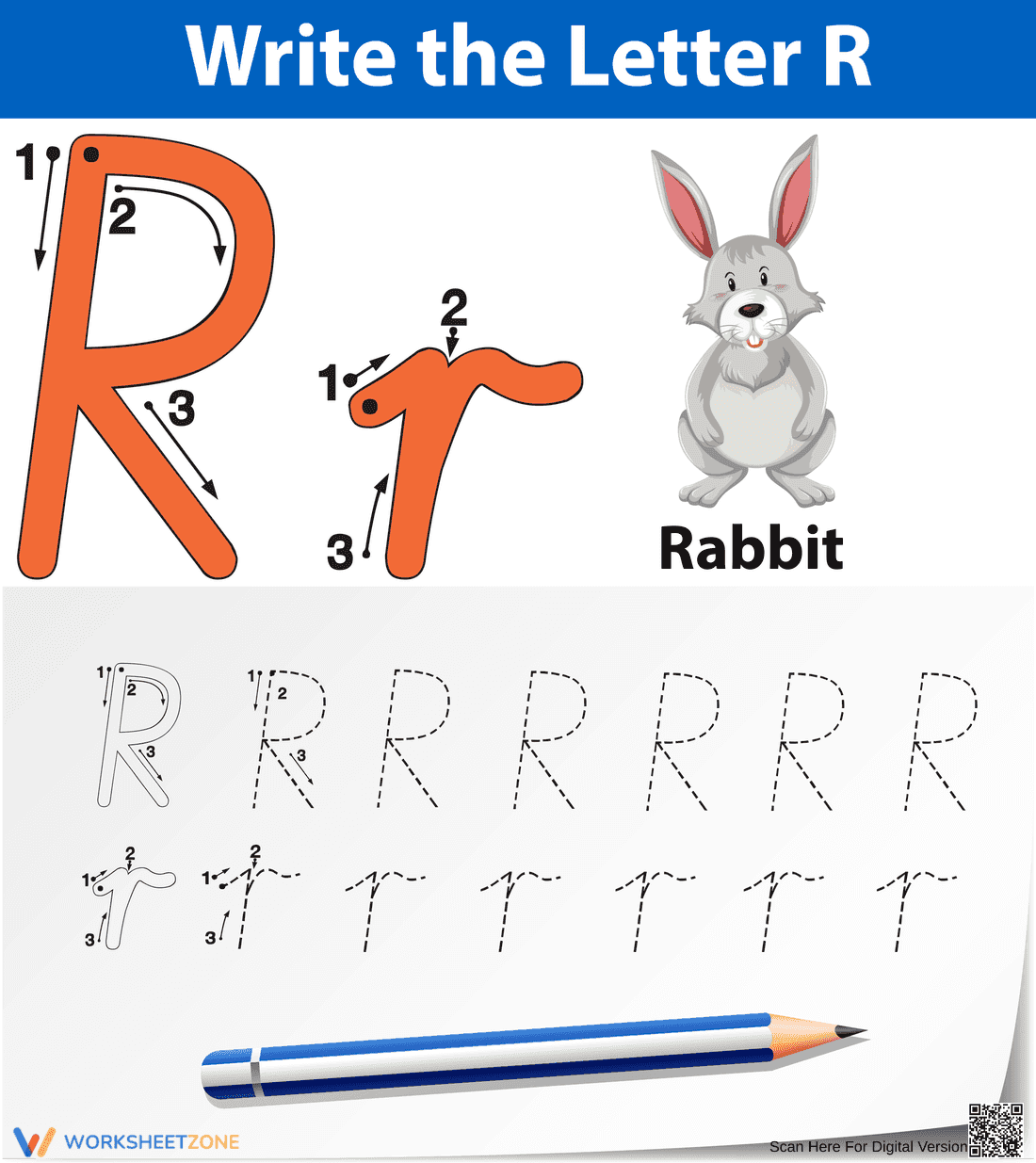
This Grade 1 letter R tracing worksheet provides students with 14 structured opportunities to master uppercase and lowercase letter formation. By following numbered stroke guides, learners develop the muscle memory required for legible handwriting. This resource ensures students can confidently produce the letter R while associating the character with the rabbit phonics cue.
At a Glance
- Grade: 1 · Subject: English
- Standard:
CCSS.ELA-LITERACY.L.1.1.A— Print all upper- and lowercase letters accurately and legibly- Skill Focus: Letter R formation
- Format: 1 page · 14 problems · Answer key N/A · PDF
- Best For: Independent handwriting practice and morning work
- Time: 5–10 minutes
The worksheet features a clear, rabbit-themed header that serves as a visual mnemonic for the letter R. It includes large-scale models of both uppercase 'R' and lowercase 'r' with numbered arrows indicating proper stroke direction. Below the models, two rows of dashed-line letters provide 7 uppercase and 7 lowercase tracing tasks. The clean layout minimizes visual distractions, making it ideal for young learners.
This resource is designed for a zero-prep workflow. 1. Print: Select the single-page PDF and print enough copies for your cohort (30 seconds). 2. Distribute: Hand out the sheets during morning arrival or literacy rotations (1 minute). 3. Review: Walk the room to check for proper pencil grip and stroke order as students complete the 14 tasks (5 minutes). It is an ideal emergency sub plan component.
This activity is specifically aligned to CCSS.ELA-LITERACY.L.1.1.A, which requires students to print all upper- and lowercase letters. By focusing exclusively on the letter R, it allows for targeted intervention. This standard code can be copied directly into lesson plans, IEP goals, or district curriculum mapping tools to document foundational literacy progress.
Use this worksheet during the independent practice phase of a handwriting lesson. After demonstrating the strokes on a whiteboard, assign this sheet for students to complete at their desks. It also serves as an effective formative assessment tool; teachers can quickly scan the page to identify students struggling with the diagonal stroke of the uppercase R. Completion typically takes 5 to 10 minutes.
This worksheet is designed for first-grade students but is also appropriate for kindergarteners ready for advanced tracing or second graders requiring handwriting remediation. It is particularly helpful for English Language Learners (ELLs) who benefit from the visual rabbit illustration. Pair this with a letter R phonics song or an anchor chart featuring R vocabulary words for a complete lesson.
According to research from Fisher & Frey (2014), the development of fine motor skills through structured handwriting practice is a critical precursor to reading fluency and written expression. This worksheet addresses the CCSS.ELA-LITERACY.L.1.1.A standard by providing the repetitive, guided tracing necessary for students to internalize letter shapes. Studies in the RAND AIRS 2024 report suggest that tactile engagement with letter formation helps solidify phoneme-grapheme correspondences in early childhood education. By utilizing numbered stroke guides, this resource reduces the cognitive load on Grade 1 students, allowing them to focus on precision and legibility. Consistent use of such targeted practice materials has been shown to improve overall writing stamina and confidence. Educators can rely on this evidence-based approach to ensure that foundational printing skills are mastered early, preventing future difficulties in more complex writing tasks across the primary curriculum.


