


























Views
Downloads
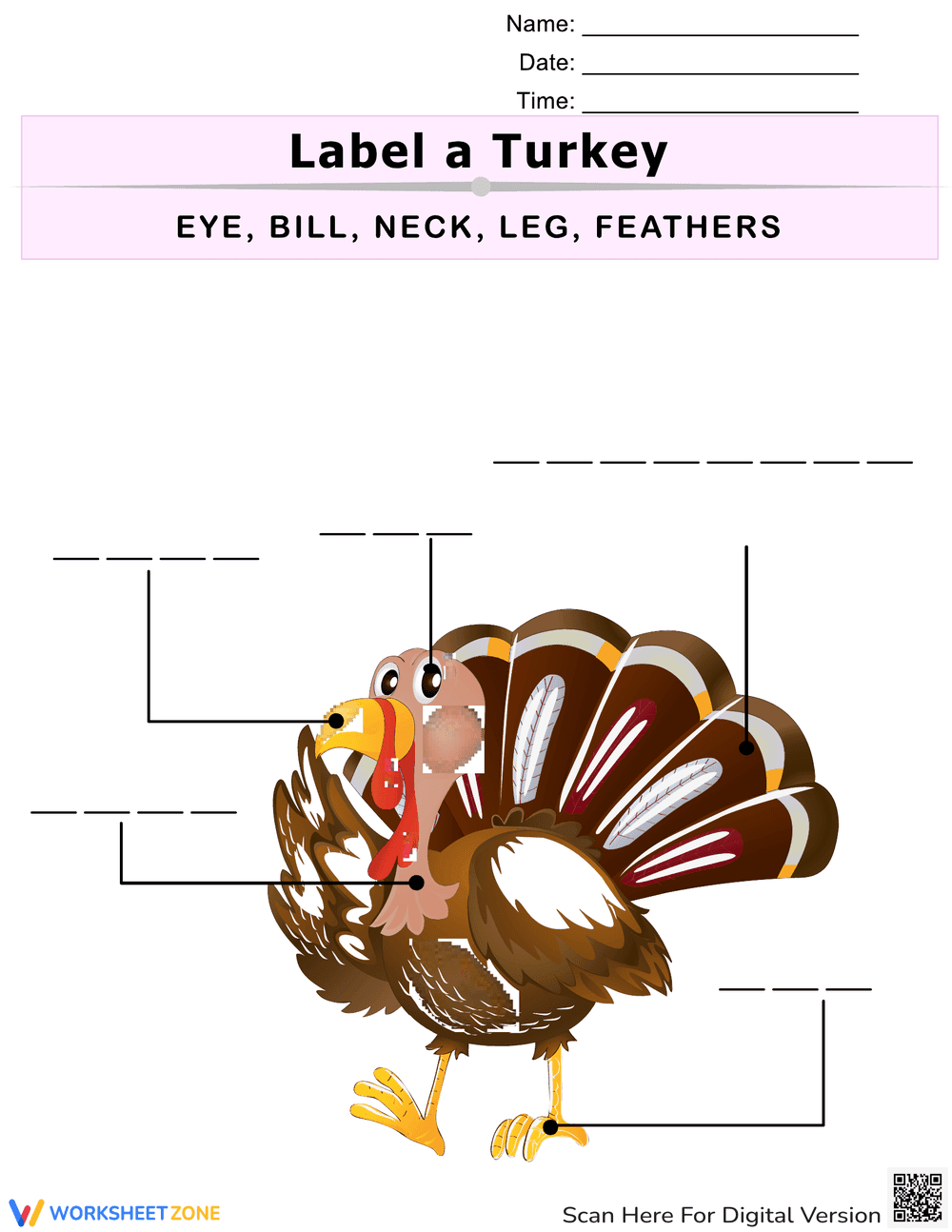

Label Turkey Parts Worksheet | Grade 3 Essential
Paste this activity's link or code into your existing LMS (Google Classroom, Canvas, Teams, Schoology, Moodle, etc.).
Students can open and work on the activity right away, with no student login required.
You'll still be able to track student progress and results from your teacher account.
This Grade 3 Label Turkey Parts worksheet helps students identify key anatomical structures of a turkey through a clear, visual diagram. By matching vocabulary terms to specific physical features, learners develop foundational biological observation skills. This activity ensures students can accurately name and locate parts like the bill, neck, and feathers in a structured format.
At a Glance
At a Glance
- Grade: 3-8 · Subject: Science
- Standard:
3-LS1-1— Develop models to describe that organisms have unique and diverse life cycles- Skill Focus: Animal anatomy identification
- Format: 1 page · 5 problems · Answer key included · PDF
- Best For: Thanksgiving science or vocabulary lessons
- Time: 10–15 minutes
What's Inside
This single-page PDF features a high-quality illustration of a turkey with five distinct call-out lines. A clear word bank containing "Eye, Bill, Neck, Leg, Feathers" is provided at the top to support spelling and word recognition. The layout includes dedicated space for student name, date, and completion time, making it easy to track individual progress during the lesson.
Zero-Prep Workflow
The zero-prep design allows for immediate classroom implementation. Teachers can print the single sheet in less than 30 seconds, distribute it to the class in 1 minute, and review the five answers collectively in under 2 minutes. This efficient workflow makes it an ideal choice for morning work, a quick science warm-up, or a reliable emergency sub plan during the holiday season.
Standards Alignment
This resource aligns with 3-LS1-1, focusing on the physical characteristics of organisms. By identifying specific body parts, students begin to understand how different structures support an animal's survival and life cycle. This standard code can be copied directly into lesson plans, IEP goals, or district curriculum mapping tools to ensure instructional compliance.
How to Use It
Use this worksheet during a life science unit on birds or as a thematic Thanksgiving activity. It works best after a brief direct instruction session on avian anatomy. For a formative assessment, observe if students can correctly identify the "bill" versus the "neck" without referring back to the word bank. Completion typically takes 10 to 15 minutes for most learners.
Who It's For
This worksheet is designed for third-grade students but is suitable for English Language Learners (ELL) or students requiring visual supports in higher grades. It pairs naturally with a non-fiction passage about turkeys or an anchor chart displaying bird characteristics. The clear visual cues provide necessary scaffolding for diverse learners in any classroom setting.
According to the RAND AIRS 2024 report, visual labeling tasks are highly effective for reinforcing domain-specific vocabulary in elementary science. This worksheet targets the 3-LS1-1 standard by requiring students to identify five specific anatomical parts of a turkey, including the bill and feathers. Research from Fisher & Frey (2014) suggests that providing a word bank alongside a visual model supports the gradual release of responsibility, allowing students to move from recognition to recall. By engaging with this structured diagram, Grade 3 learners build the foundational knowledge necessary for more complex biological comparisons. The 10-minute completion time aligns with NAEP recommendations for focused, single-skill practice sessions. This resource provides a practical application of life science standards, ensuring that students can accurately describe the physical traits of organisms within their environment while developing essential literacy skills through technical labeling and identification.


