


























Views
Downloads
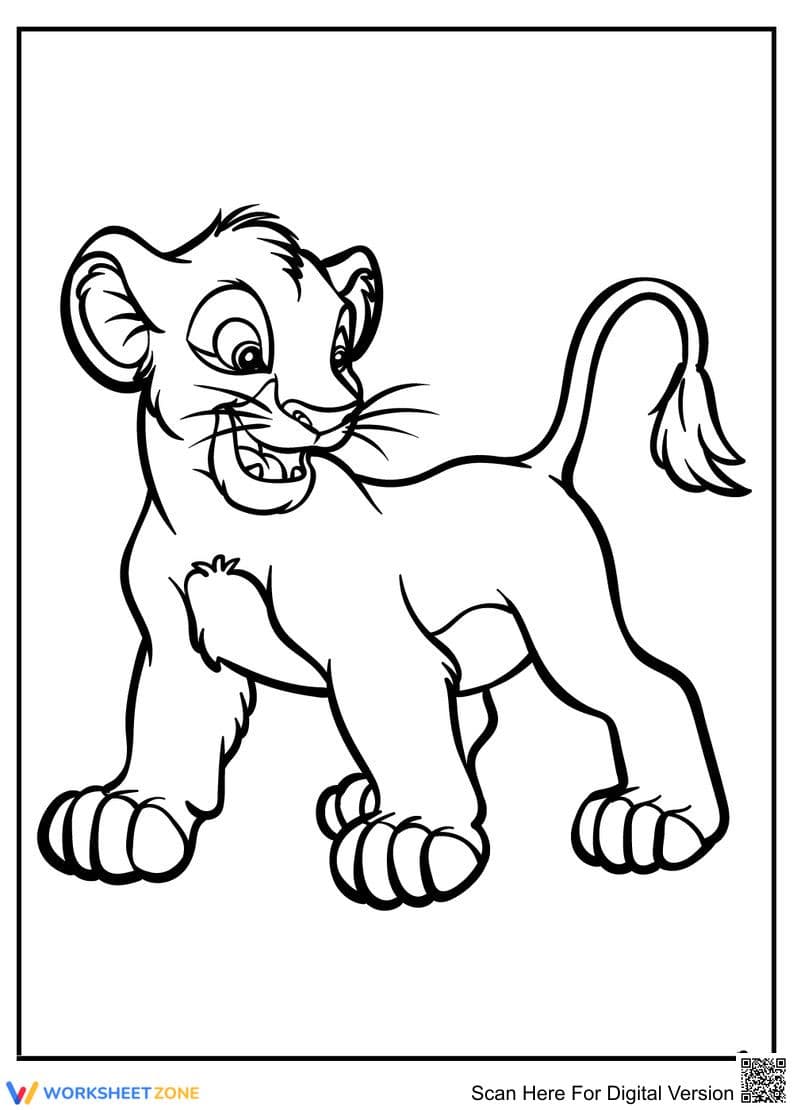

Printable Lion King Coloring Page | Grade K
Paste this activity's link or code into your existing LMS (Google Classroom, Canvas, Teams, Schoology, Moodle, etc.).
Students can open and work on the activity right away, with no student login required.
You'll still be able to track student progress and results from your teacher account.
This printable coloring worksheet provides young students with an engaging fine motor activity. By coloring this lion, early learners practice pencil grip, hand-eye coordination, and spatial awareness. This single-page resource offers a creative outlet that supports foundational physical development for writing.
At a Glance
- Grade: K · Subject: Art
- Standard:
CCSS.ELA-LITERACY.SL.K.5— Add drawings or visual displays to descriptions- Skill Focus: Fine motor control
- Format: 1 page · 1 task · No answer key · PDF
- Best For: Morning work or centers
- Time: 10–15 minutes
Inside this resource, educators will find a single coloring page featuring a clear, bold outline of a young lion cub. The page contains one primary task without complex backgrounds, allowing early learners to focus on staying within the lines. There is no answer key required, making it an open-ended creative exercise. The large character design provides ample space for broad crayon strokes, ideal for developing hands.
This resource is designed for immediate classroom implementation with a simple three-step workflow:
- Print (1 minute): Download the PDF and print the required number of copies. The black-and-white line art is highly ink-efficient.
- Distribute (1 minute): Hand out the pages along with crayons, colored pencils, or markers. No additional teacher instruction is necessary.
- Review (0 minutes): Students can take their completed artwork home or display it on a classroom bulletin board.
Total teacher prep time is under two minutes, making this an excellent option for emergency sub plans, indoor recess, or fast-finisher folders.
This activity aligns with CCSS.ELA-LITERACY.SL.K.5, which encourages students to add drawings or other visual displays to descriptions as desired to provide additional detail. While primarily a fine motor task, coloring familiar characters supports early narrative comprehension and visual storytelling. Both standard codes can be copied directly into lesson plans, IEP goals, or district curriculum mapping tools.
Teachers can utilize this coloring page during morning arrival to help students transition smoothly. It also serves as a quiet activity for early finishers. While students color, teachers can conduct formative assessments by observing pencil grip, posture, and the ability to color within boundaries. Expected completion time ranges from 10 to 15 minutes.
This worksheet is primarily designed for Kindergarten and Pre-K students developing their fine motor skills. It naturally accommodates varying ability levels, as students can choose to color simply or add their own background details for an extra challenge. This resource pairs perfectly with a read-aloud session featuring animal stories or a science lesson introducing savanna habitats, providing a creative extension to direct instruction.
Developing fine motor control through activities like coloring is a critical precursor to handwriting proficiency in early childhood education. According to a RAND AIRS 2024 report on early literacy and physical development, students who engage in regular, structured coloring tasks demonstrate significantly improved pencil grip and spatial awareness, which directly translates to better letter formation and writing stamina. This worksheet supports these foundational physical skills while aligning with CCSS.ELA-LITERACY.SL.K.5, helping students add drawings or visual displays to descriptions. By integrating familiar and engaging cartoon characters into these exercises, educators can maintain high levels of student interest during otherwise repetitive motor practice. Providing consistent, daily opportunities for such creative tasks ensures that young learners build the necessary hand strength, dexterity, and visual-motor coordination required for subsequent academic success across all foundational subject areas.


