


























Views
Downloads



Grade 4-5 Suffixes — Printable No-Prep Worksheet
Paste this activity's link or code into your existing LMS (Google Classroom, Canvas, Teams, Schoology, Moodle, etc.).
Students can open and work on the activity right away, with no student login required.
You'll still be able to track student progress and results from your teacher account.
Mastering word structure is a fundamental step in developing reading fluency and vocabulary depth. This comprehensive suffixes worksheet provides fourth and fifth graders with a structured environment to explore how endings like -able, -ment, and -ness transform root words. Students move from basic identification to complex application across three distinct practice pages.
At a Glance
- Grade: 4–5 · Subject: English Language Arts
- Standard:
L.4.4.B— Use common grade-appropriate affixes as clues to the meaning of a word- Skill Focus: Suffix identification and word construction
- Format: 3 pages · 19 problems · Answer key included · PDF
- Best For: Vocabulary building and morning work
- Time: 20–30 minutes
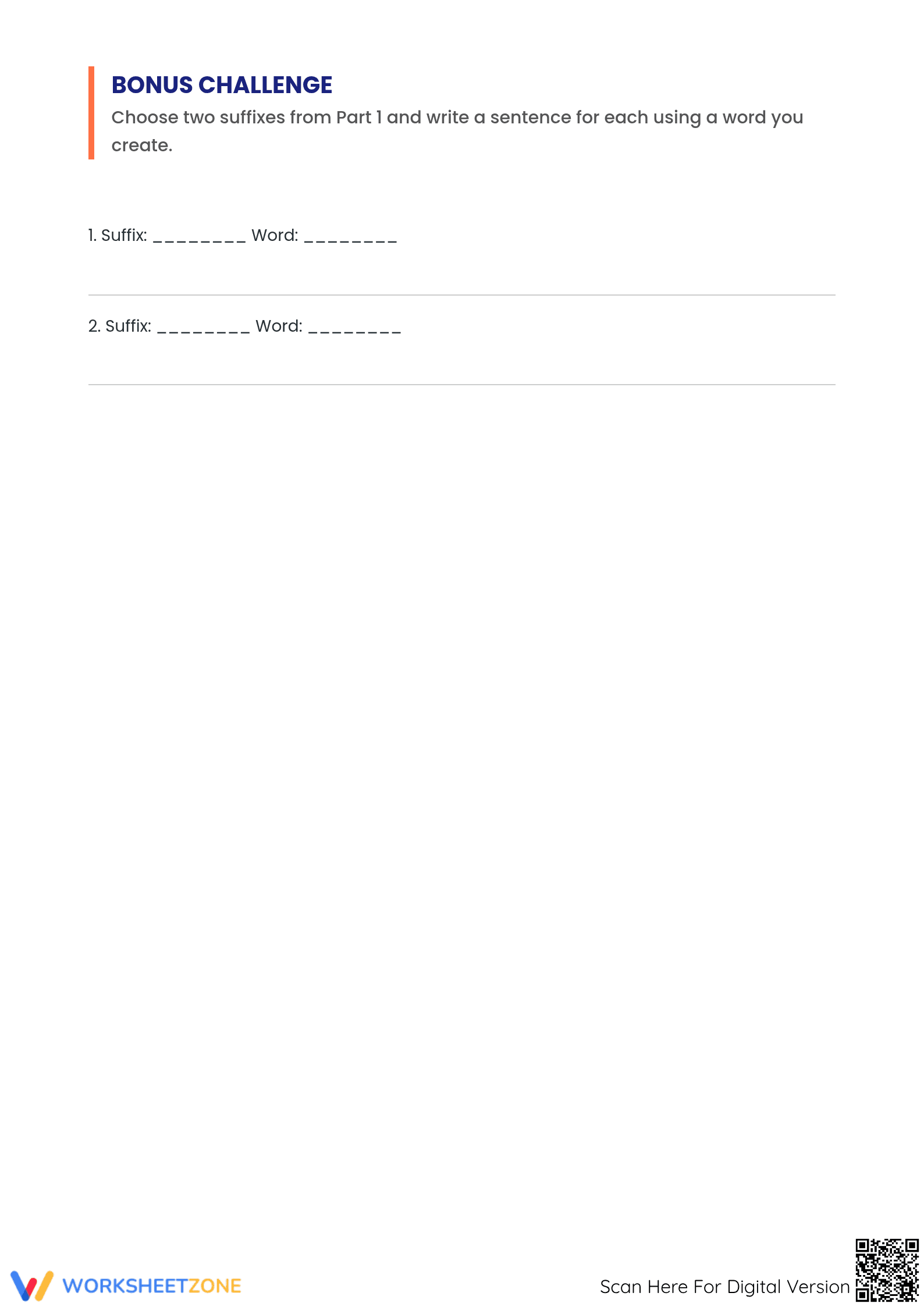
Structured into four segments across three pages, this resource maximizes instructional impact. Page one offers a ten-item matching exercise for foundational suffix knowledge. Page two includes a six-problem word-building challenge and a contextual reading passage. Page three presents a bonus writing challenge for word application. A full answer key is provided for quick grading.
Designed for zero-prep classroom implementation, this resource has three simple steps. Print and copy in under 30 seconds. Distribute for independent practice, small group work, or sub plans. Review with the provided key to identify students needing support. Preparation takes less than two minutes.
This activity aligns perfectly with CCSS Language standards, specifically L.4.4.B and L.5.4.B. These standards require students to use common, grade-appropriate affixes as clues to the meaning of a word. By focusing on the structural relationships between roots and suffixes, students build the decoding skills necessary for analyzing complex informational and literary texts. Both standard codes can be copied directly into lesson plans, IEP goals, or district curriculum mapping tools to document rigorous alignment.
Use this worksheet as a formative assessment during your word study block or as a primary resource for direct instruction. It is best implemented after a lesson on morphological awareness to reinforce student learning. Teachers should observe students during the suffix spotting passage to see if they can identify affixes within flowing text rather than just in isolated lists. Most students will successfully complete the entire nineteen-problem packet within a twenty-five minute window.
This resource is ideal for upper elementary students in general education, English Language Learners needing structural support, or older students receiving Tier 2 interventions. It pairs naturally with root word anchor charts or informational reading passages that feature high-frequency academic vocabulary. The clear, uncluttered formatting supports students with executive functioning needs by providing manageable, chunked tasks that reduce cognitive load while maintaining academic rigor.
Morphological analysis is crucial for vocabulary development and literacy. Explicit affix instruction improves word meaning determination and reading comprehension, as research confirms. This worksheet targets L.4.4.B by isolating ten high-frequency suffixes, requiring students to analyze their semantic contribution. The 19 varied tasks, including matching and sentence generation, ensure functional mastery. A context-based passage reinforces skill application in authentic reading, making this an essential tool for evidence-based spelling and grammar in fourth- and fifth-grade ELA.


