


























Views
Downloads


Beginning Blends Worksheet | Grade 1 ELA Printable
Paste this activity's link or code into your existing LMS (Google Classroom, Canvas, Teams, Schoology, Moodle, etc.).
Students can open and work on the activity right away, with no student login required.
You'll still be able to track student progress and results from your teacher account.
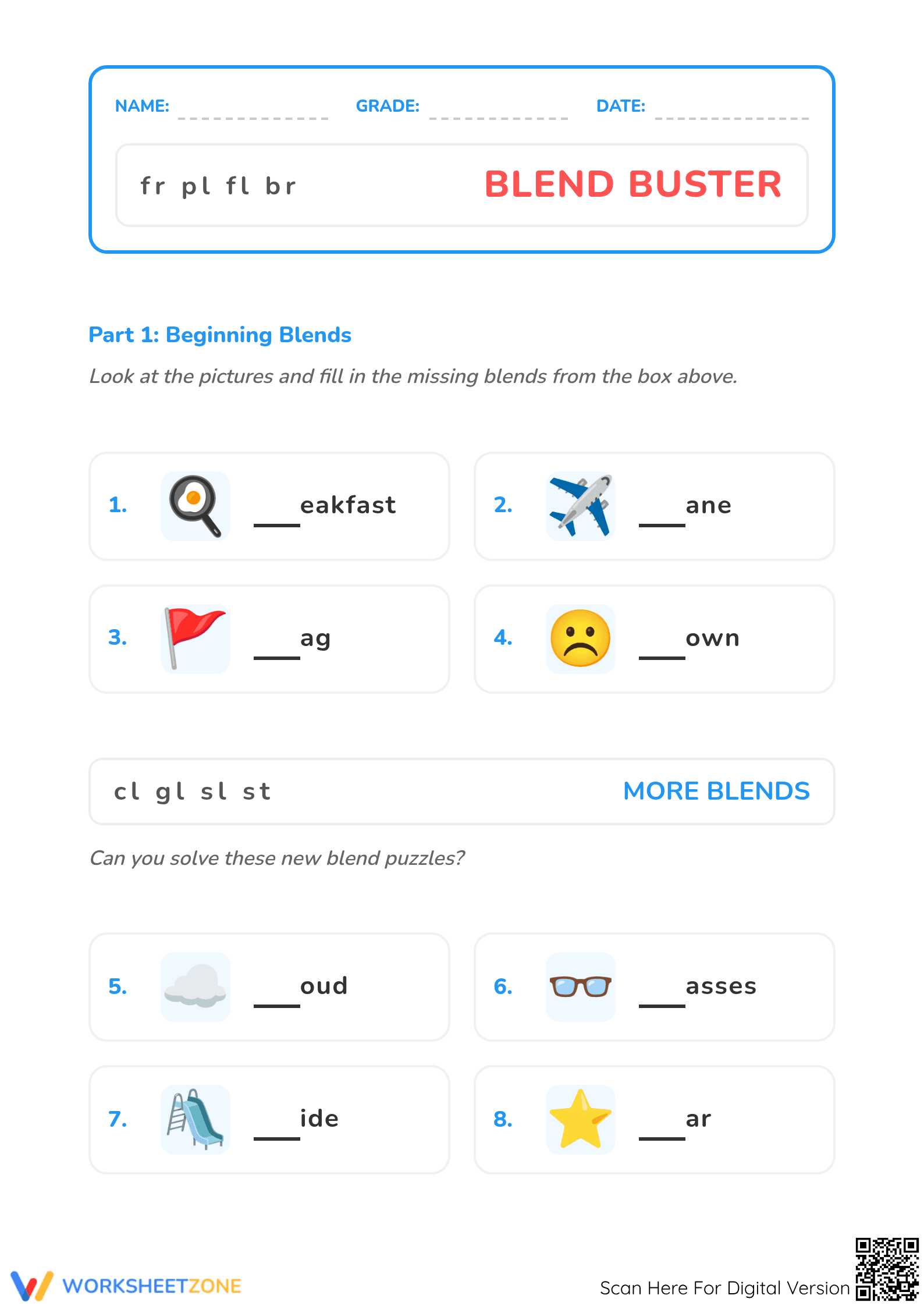
This beginning blends worksheet helps first-grade students master phonics by matching the correct consonant blends to familiar picture cues. By completing these fill-in-the-blank puzzles, young learners strengthen decoding skills, improve spelling accuracy, and build foundational reading fluency needed for early literacy success.
At a Glance
- Grade: 1 · Subject: ELA
- Standard:
CCSS.ELA-LITERACY.RF.1.2.B— Blend sounds to produce single-syllable words- Skill Focus: Beginning Consonant Blends
- Format: 2 pages · 12 problems · Answer key included · PDF
- Best For: Independent practice and literacy centers
- Time: 10–15 minutes
Inside this printable resource, educators will find two pages of visual phonics activities. The worksheet features 12 fill-in-the-blank problems divided into three sections, each providing a specific word bank of consonant blends. Students use picture cues to determine the missing beginning sounds. A complete answer key is provided for quick grading.
This resource is designed to support a gradual release of responsibility:
- Guided practice: The first four problems introduce common blends with recognizable images, allowing teachers to model sounding out words.
- Supported practice: The next four problems offer a new word bank, encouraging students to apply decoding skills.
- Independent practice: The final section tests mastery with four additional blends, requiring students to confidently match sounds to spelling patterns.
This structured I Do, We Do, You Do approach ensures students build confidence as they progress through the activity.
This worksheet is directly aligned to CCSS.ELA-LITERACY.RF.1.2.B, requiring students to orally produce single-syllable words by blending sounds, including consonant blends. It also supports broader foundational reading skills by reinforcing letter-sound correspondences. Both standard codes can be copied directly into lesson plans, IEP goals, or district curriculum mapping tools.
This versatile phonics activity is perfect for morning work, literacy centers, or as a quick formative assessment after direct instruction on consonant blends. Teachers can observe students as they work to identify whether they are struggling with specific sound combinations, such as distinguishing between "cl" and "cr". The entire activity is designed to be completed in 10 to 15 minutes, making it an efficient addition to any daily reading block.
This resource is primarily designed for first-grade students developing their foundational reading skills, but it also serves as excellent review material for second graders who need extra phonics support. The clear visual cues make it highly accessible for English Language Learners (ELLs) and students receiving targeted reading interventions. For a complete lesson, pair this worksheet with a classroom anchor chart detailing common consonant blends.
Mastering foundational phonics skills is a critical milestone in early childhood education. This resource specifically targets CCSS.ELA-LITERACY.RF.1.2.B, helping students blend sounds to produce single-syllable words. According to a comprehensive EdReports 2024 analysis, explicit and systematic instruction in phonics, including the targeted practice of consonant blends, significantly improves students' overall reading fluency and reading comprehension trajectories. When young learners engage with structured, visually supported decoding tasks, they develop the automaticity required to tackle more complex texts in later grades. By integrating these targeted fill-in-the-blank exercises into daily literacy routines, educators provide the essential repetition needed to solidify letter-sound correspondences. This evidence-based approach ensures that students not only memorize spelling patterns but also deeply understand the phonetic building blocks of the English language, setting a strong, reliable foundation for lifelong literacy and academic success.


