


























Views
Downloads

Field Trip Reminder Template | Essential Teacher Tool
Paste this activity's link or code into your existing LMS (Google Classroom, Canvas, Teams, Schoology, Moodle, etc.).
Students can open and work on the activity right away, with no student login required.
You'll still be able to track student progress and results from your teacher account.
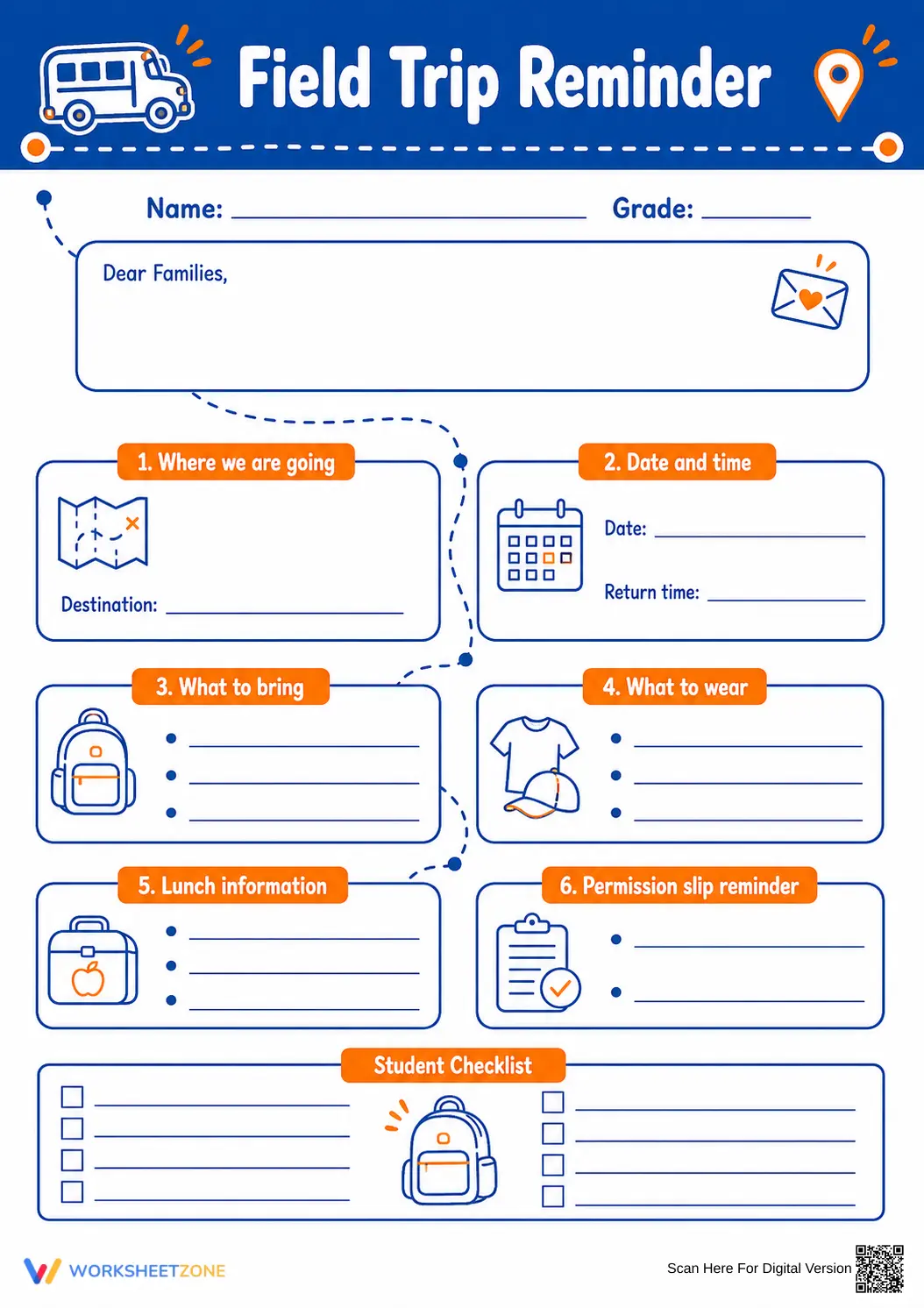
This Field Trip Reminder template streamlines school-to-home communication by providing a structured, visually engaging layout for essential trip details. It ensures families receive clear information regarding logistics, safety, and preparation, ultimately increasing permission slip return rates and student readiness. Teachers can quickly fill in specific destination and timing data to keep parents informed.
At a Glance
- Grade: K-5 · Subject: Classroom Management
- Standard:
CCSS.ELA-LITERACY.W.3.2— Write informative texts to convey ideas and information clearly to an audience.- Skill Focus: Family Communication & Organization
- Format: 1 page · 7 sections · Template · PDF
- Best For: Elementary field trip logistics and reminders
- Time: 5–10 minutes
What's Inside: This single-page PDF features a playful travel-path design with a blue and orange color palette. It includes six dedicated information panels: Destination, Date/Time, Packing List, Dress Code, Lunch Details, and Permission Slip status. A bonus student checklist area at the bottom allows for personalized preparation items. The layout uses clear icons like a bus, map, and backpack to support visual literacy for all families.
Zero-Prep Workflow:
- Print: Select the "Fit to Page" setting and print the required number of copies for your class in under 60 seconds.
- Distribute: Fill in the destination and date fields by hand or via PDF editor, then place in student take-home folders.
- Review: Spend 2 minutes during morning meeting explaining the checklist to students to ensure they are prepared for the upcoming event. Total teacher preparation time is less than 5 minutes.
Standards Alignment: The primary standard addressed is `CCSS.ELA-LITERACY.W.3.2`, which focuses on writing informative and explanatory texts to examine a topic and convey ideas clearly. By using this structured template, educators model effective informational organization for their students. This standard code can be copied directly into lesson plans, IEP goals, or district curriculum mapping tools.
How to Use It: Use this form as a final reminder sent home three days before a scheduled excursion to ensure all logistics are fresh in parents' minds. It serves as an excellent formative assessment tool for student responsibility; observe which students independently check off their "What to bring" list. Completion time for the teacher is approximately 5 to 10 minutes.
Who It's For: This resource is designed for elementary educators in grades K-5 who need a professional yet friendly way to communicate with families. It is particularly helpful for English Language Learners (ELL) families due to the heavy use of visual icons. Pair this with a digital calendar invite or a classroom newsletter for comprehensive coverage.
Effective school-to-home communication is a cornerstone of student success, particularly regarding off-campus learning experiences. Research from the RAND AIRS 2024 study indicates that structured, visually segmented information increases parental engagement and reduces administrative friction in elementary settings. By utilizing a template aligned to `CCSS.ELA-LITERACY.W.3.2`, teachers provide a clear informational text that adheres to best practices in technical writing and document design. This specific layout addresses the plain-English requirement for accessibility, ensuring that logistical details like "What to wear" and "Lunch information" are not lost in dense paragraphs. Fisher & Frey (2014) emphasize that clear organizational scaffolds in teacher-produced materials help set high expectations for student organization and responsibility. This printable resource serves as a functional bridge between classroom instruction and real-world application, ensuring that the 1-page document remains a practical asset for busy educators.


