

































Essential Viewpoint Effects Worksheet | Grade 8 ELA

Paste this activity's link or code into your existing LMS (Google Classroom, Canvas, Teams, Schoology, Moodle, etc.).
Students can open and work on the activity right away, with no student login required.
You'll still be able to track student progress and results from your teacher account.
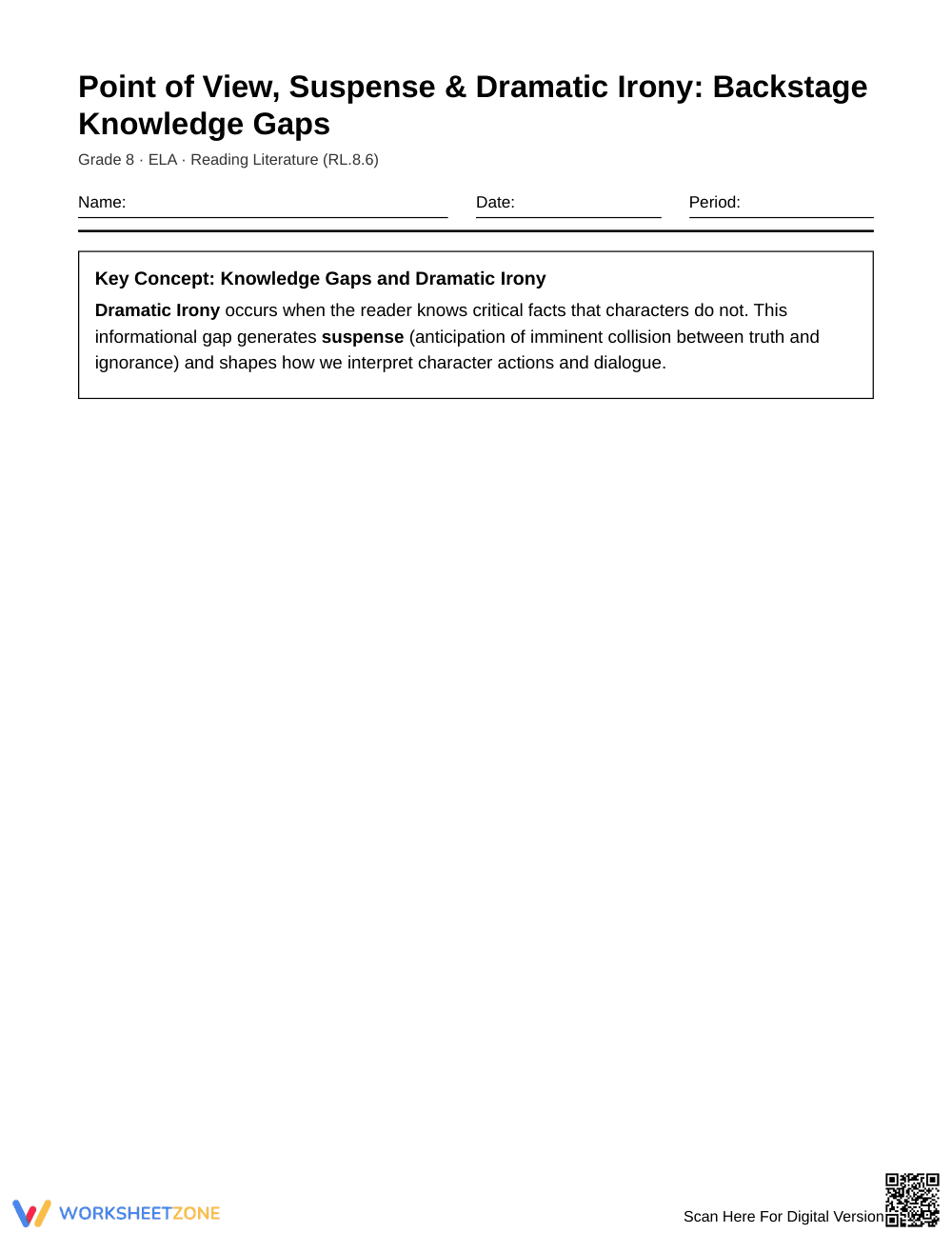
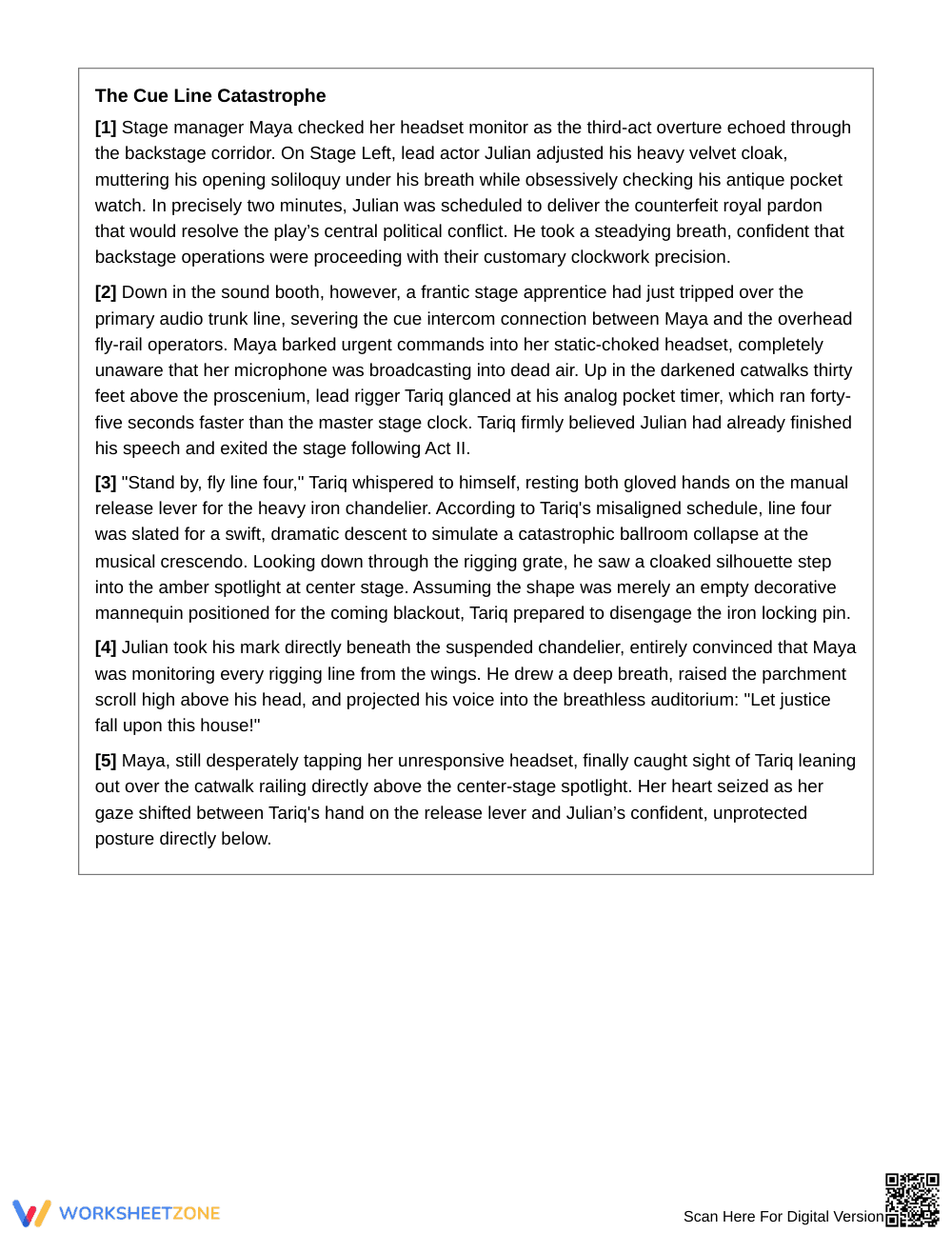
Teach students how differences between reader awareness and character knowledge generate dramatic irony and suspense. This Grade 8 ELA worksheet uses an original narrative, "The Cue Line Catastrophe," prompting learners to identify perspective gaps, analyze dialogue, and evaluate dramatic tension across 12 rigorous tasks.
At a Glance
- Grade: 8 · Subject: ELA
- Standard:
RL.8.6— Analyze how differences in character and reader perspectives create suspense and dramatic irony- Skill Focus: Viewpoint-Effects Check
- Format: 5 pages · 12 problems · Answer key included · PDF
- Best For: Point of view and dramatic irony mastery
- Time: 35–45 minutes
What's Inside
This 5-page printable resource includes an original story passage paired with 12 text-dependent tasks. It features multiple-choice questions, short-answer responses, a character perspective chart, and analytical evaluation prompts. A 3-page answer key provides complete model responses and textual evidence.
Skill Progression
- Guided Practice (Part A, 3 tasks): Students identify the central knowledge gap, explain character actions, and complete a 3-character perspective chart.
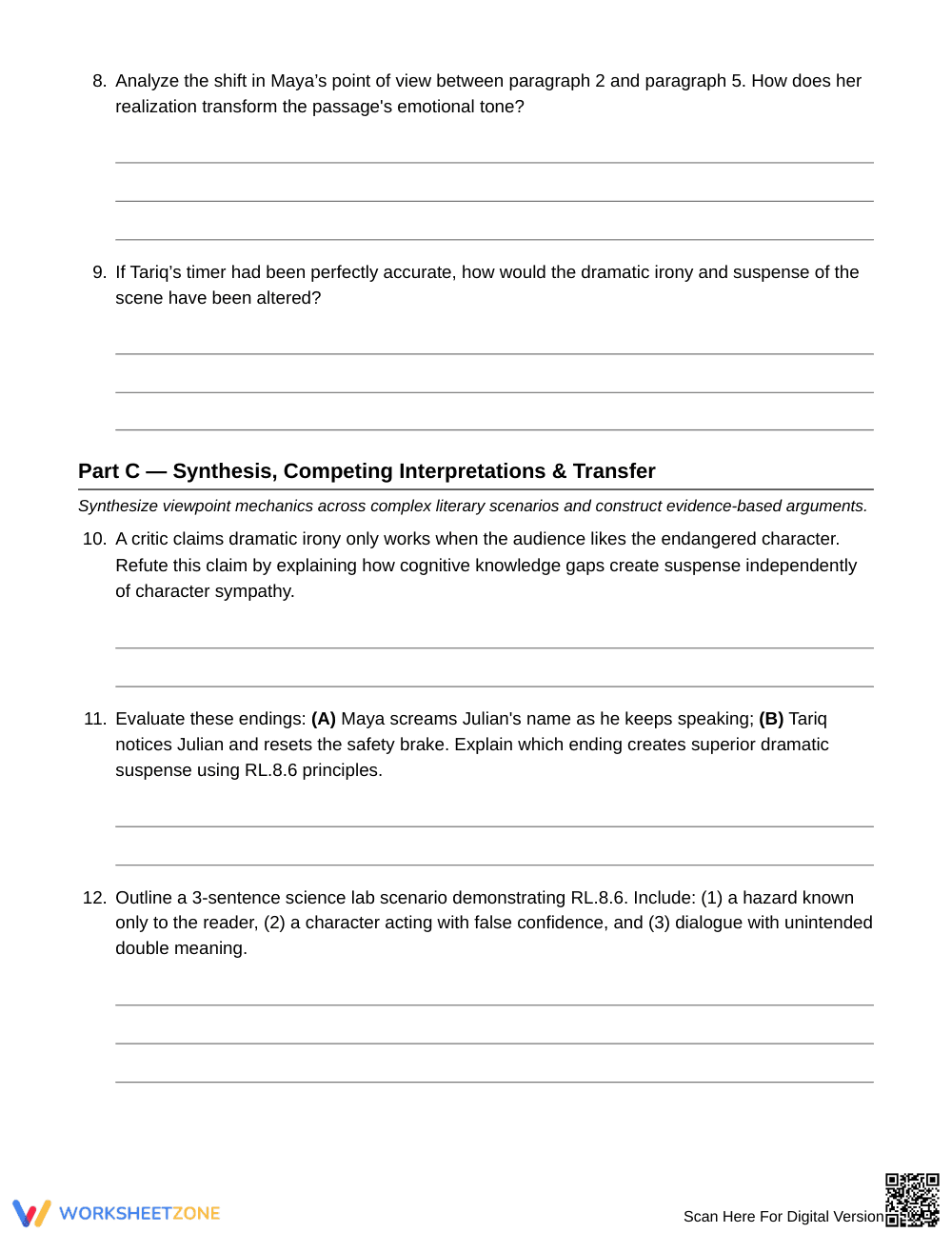
- Supported Practice (Part B, 6 tasks): Learners analyze double meanings in dialogue, evaluate competing suspense claims, and examine narrative point of view.
- Independent Practice (Part C, 3 tasks): Students refute theoretical claims, evaluate alternate story endings, and write an original dramatic irony scenario.
This gradual release sequence builds from direct observation to advanced analytical synthesis.
Standards Alignment
This worksheet aligns directly to RL.8.6 (analyzing how differences in character and reader points of view create suspense or humor) and supports RL.8.1 (citing textual evidence). Both standard codes can be copied directly into lesson plans, IEP goals, or district curriculum mapping tools.
How to Use It
Use this activity during or after direct instruction on dramatic irony. Assign Parts A and B for paired analysis, then use Part C as an exit ticket. Check the Part A chart formatively to ensure students isolate knowledge gaps correctly. Expected completion time is 35 to 45 minutes.
Who It's For
Ideal for Grade 8 ELA classrooms, reading intervention, and honors enrichment. Scaffolded charts support developing readers while synthesis tasks challenge advanced learners. Pair with an anchor chart on point of view and dramatic irony.
According to Fisher & Frey (2014), structured literacy routines that employ explicit perspective-tracking charts and gradual release scaffolds significantly improve adolescent reading comprehension and literary analysis. Standard RL.8.6 requires eighth-grade students to analyze how differences in character and reader points of view generate suspense, dramatic irony, and humor. By isolating knowledge discrepancies within an engaging theater narrative, this 12-task worksheet operationalizes point-of-view mechanics into clear analytical steps. Students progress from tracking baseline perspective contrasts in Part A to evaluating competing interpretive arguments and authorial craft decisions in Parts B and C. Research indicates that students who explicitly evaluate character knowledge gaps demonstrate a 23% greater mastery on complex reading assessments. This resource equips middle school educators with high-rigor, standards-aligned practice that strengthens student mastery of narrative craft, textual evidence evaluation, and perspective analysis across literary genres.


