




























Views
Downloads


Essential Spacecraft Parts Word Search | Grades 4–5 Science

Paste this activity's link or code into your existing LMS (Google Classroom, Canvas, Teams, Schoology, Moodle, etc.).
Students can open and work on the activity right away, with no student login required.
You'll still be able to track student progress and results from your teacher account.
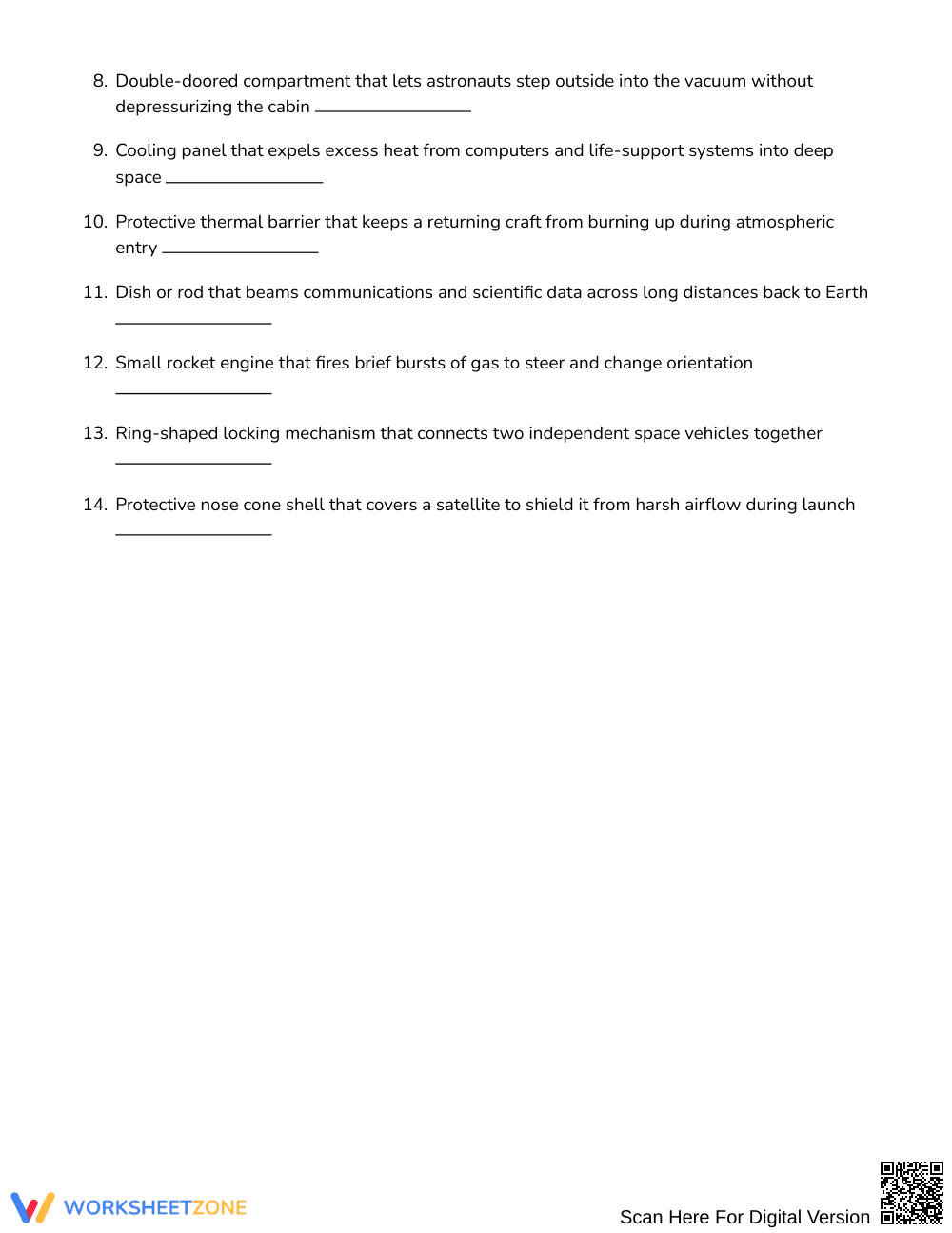
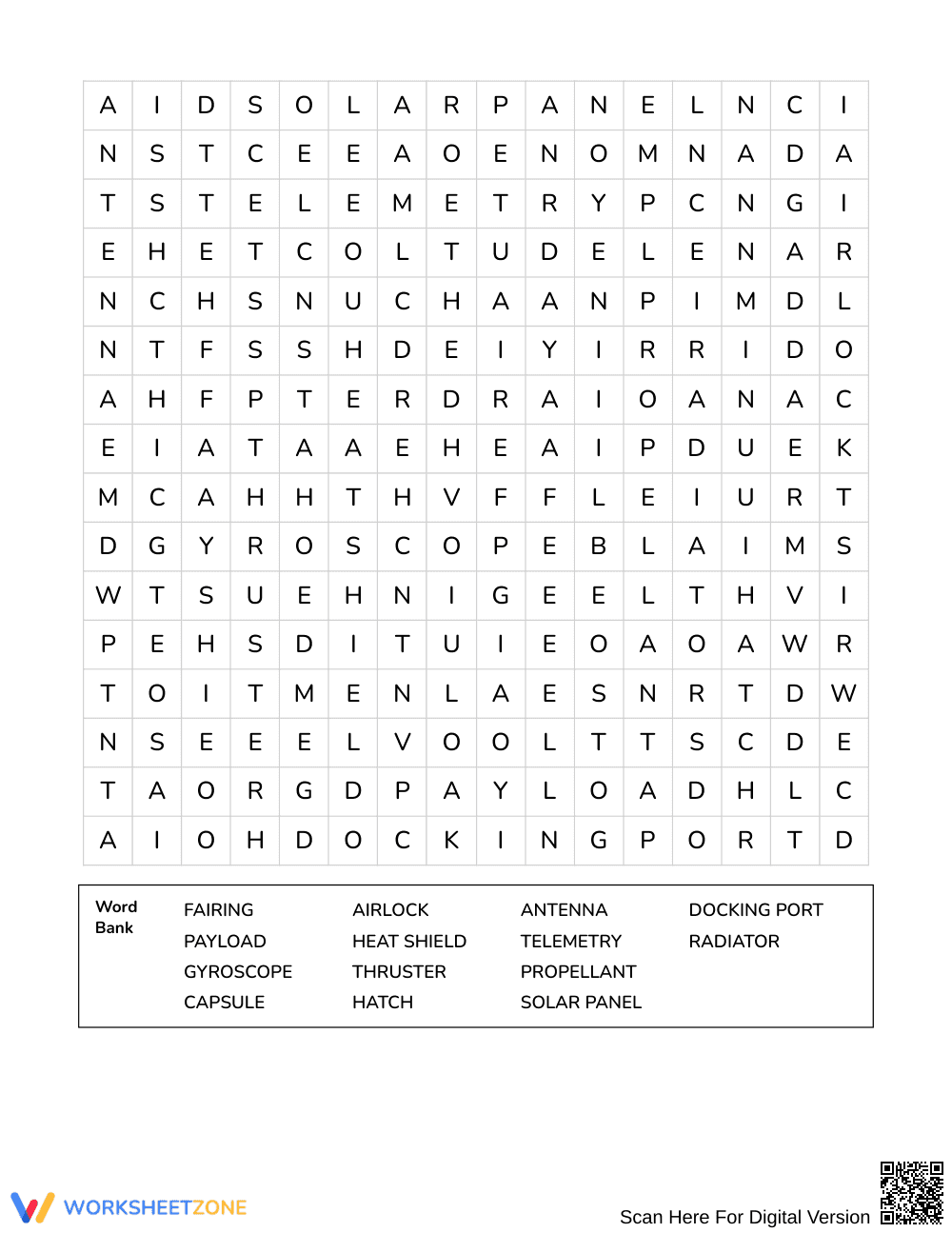
This Grades 4–5 science word search reinforces knowledge of spacecraft parts and functions through clue-based vocabulary identification. Students analyze mission-critical definitions to identify 14 key engineering terms, connecting technical aerospace vocabulary to functional real-world space systems before searching the letter grid.
At a Glance
- Grade: Grades 4–5 · Subject: Science
- Standard: Not standards-assessed — vocabulary enrichment
- Skill Focus: Spacecraft parts and functions
- Format: 3 pages · 14 words · Answer key included · PDF
- Best For: Astronomy vocabulary enrichment and review
- Time: 20–30 minutes
Inside this 3-page printable science resource, learners encounter a comprehensive Clue Detective activity paired with a 3-page complete answer key. Rather than scanning aimlessly for letters, students read rigorous functional descriptions for terms like heat shield, telemetry, and fairing. A shuffled word bank provides reference support, while the complete solution pages display exact word placements for quick checking.
The activity is built around a focused puzzle structure designed for upper-elementary aerospace study:
- Grid Dimensions: Words are hidden inside a 16 × 16 letter grid that balances challenge and accessibility.
- Search Orientations: Terms run in four specific orientations: northeast, east, southeast, and south (NE, E, SE, S), providing varied visual tracking paths without backward-spelling frustration.
- Clue-Driven Format: Students read detailed technical clues that describe each component's function, matching each engineering definition to words in the shuffled word bank before locating them in the puzzle.
This activity serves specifically as supplemental vocabulary enrichment and is not aligned to a formal state or national content standard. It deepens upper-elementary space science comprehension by reinforcing precise aerospace terminology within an astronomy unit.
Use this word search during an astronomy unit immediately after direct instruction on space exploration technology, or deploy it as an engaging fast-finisher station. While students work, circulate to observe whether they read the technical clues first or rely solely on letter matching, noting which students readily associate terms like airlock or gyroscope with their operational duties. The expected completion time is 20 to 30 minutes.
This resource is designed for upper-elementary students in Grades 4–5 exploring astronomy, engineering, or spaceflight history. Teachers can pair this puzzle directly with an informational reading passage about crewed missions or satellite launches to provide contextual background before independent vocabulary review.
Mastering specialized aerospace vocabulary provides Grades 4–5 students with the domain-specific language needed to comprehend complex astronomy and engineering concepts. According to Fisher & Frey (2014), intentional vocabulary exposure that couples explicit definitions with active retrieval establishes essential cognitive pathways for long-term retention across content areas. Rather than encountering isolated terms in an alphabetical list, learners engage in targeted retrieval practice by reading functional descriptions of critical spacecraft systems, such as thrusters, telemetry, and heat shields. This clue-first structure prompts students to process the operational purpose of each space vehicle component before initiating the visual search. By integrating technical context into a print-and-go puzzle, educators reinforce rigorous science literacy while encouraging independent focus, making specialized STEM terminology accessible, memorable, and meaningful during introductory astronomy and space exploration study across diverse upper-elementary classroom environments.


