


























Views
Downloads





Essential Rhetoric vs Logic Worksheet | Grade 10 English II
Paste this activity's link or code into your existing LMS (Google Classroom, Canvas, Teams, Schoology, Moodle, etc.).
Students can open and work on the activity right away, with no student login required.
You'll still be able to track student progress and results from your teacher account.
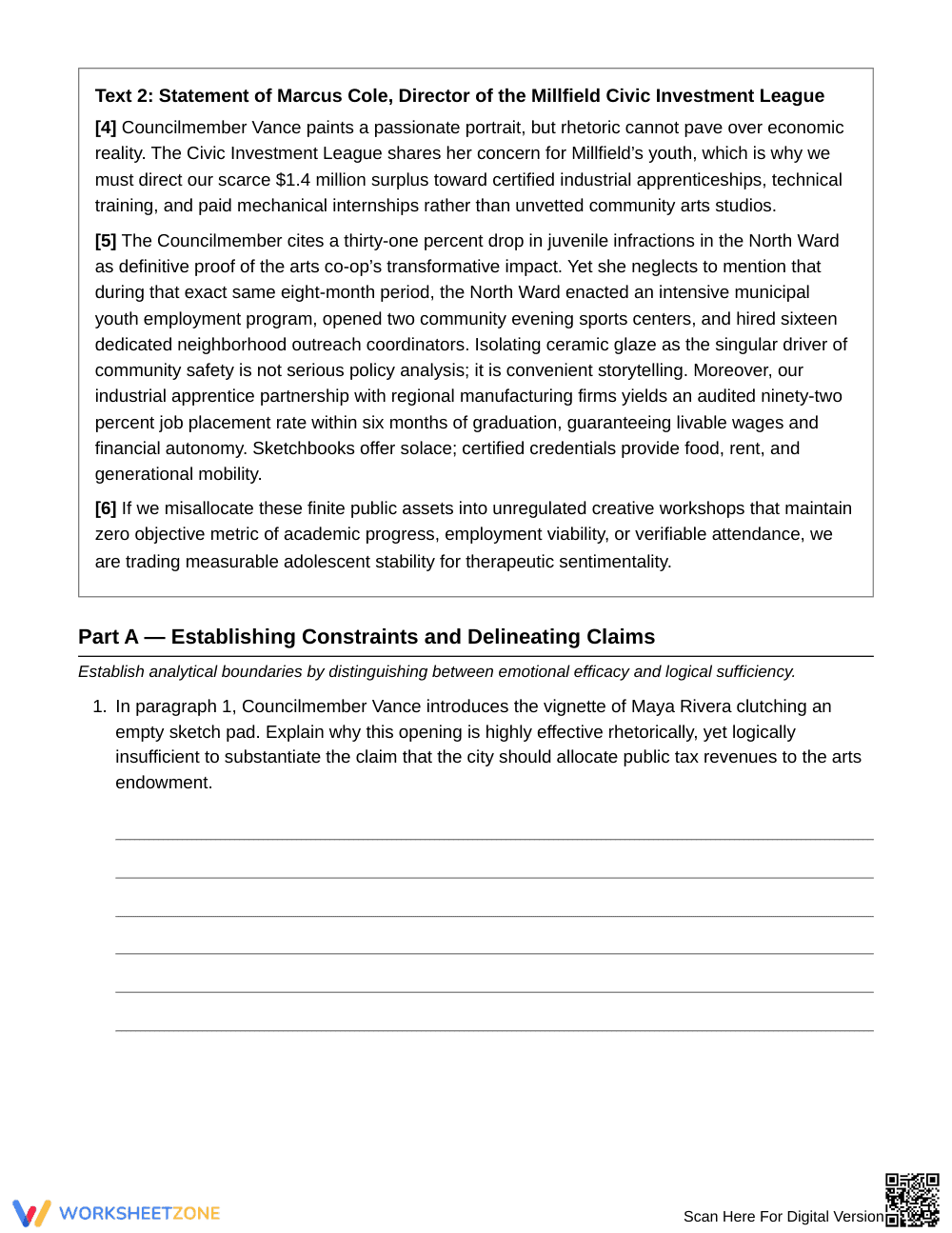
This Grade 10 English II worksheet trains students to evaluate the critical divide between rhetorical effectiveness and logical validity. High school learners analyze two paired municipal policy speeches, dissecting emotional anecdotes, false dilemmas, and ad hominem attacks to determine why persuasively compelling arguments can remain logically unsound.
At a Glance
- Grade: 10 · Subject: English II
- Standard:
RI.9-10.8— Evaluate arguments and claims for reasoning validity and logical sufficiency- Skill Focus: Explaining logical weakness in rhetorically effective appeals
- Format: 6 pages · 8 problems · Answer key included · PDF
- Best For: Rhetorical analysis and argument evaluation lessons
- Time: 45–55 minutes
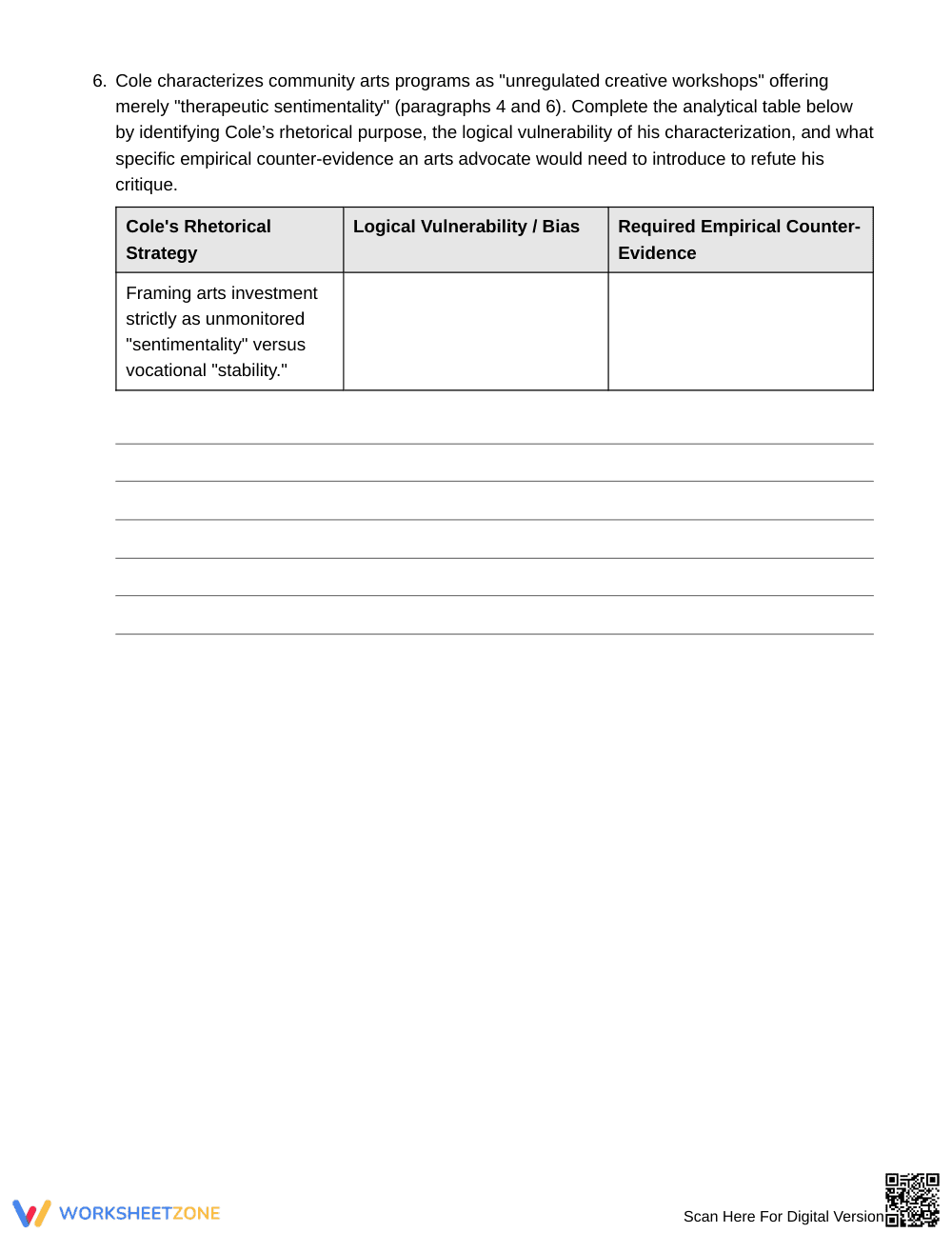
What's Inside: The resource features two paired speeches debating municipal budget allocations between youth arts and technical apprenticeships. Across 6 pages, students complete 8 analytical prompts organized in three sections, an analytical strategy matrix, and a 3-page answer key with exemplar responses.
Skill Progression
- Guided Practice: Tasks 1–2 establish analytical boundaries by asking students to contrast emotional pathos with logical proof and identify false dilemma fallacies.
- Supported Practice: Tasks 3–6 require learners to test competing causal assertions, unpack unstated warrants, dissect ad hominem attacks, and complete an analytical bias matrix.
- Independent Practice: Tasks 7–8 challenge students to overcome the fallacy fallacy and construct a qualified, evidence-based argument synthesizing opposing metrics.
This sequence follows the gradual release of responsibility model, moving students from guided fallacy identification to independent synthesis.
Standards Alignment
This worksheet directly targets `RI.9-10.8`: Delineate and evaluate the argument and specific claims in a text, assessing whether reasoning is valid and evidence is sufficient, while identifying fallacies. It also supports `W.9-10.1` through written synthesis. Both standard codes can be copied directly into lesson plans, IEP goals, or district curriculum mapping tools.
How to Use It
Deploy this resource after direct instruction on rhetorical appeals and logical fallacies. For close reading, have student pairs complete Parts A and B collaboratively before drafting Part C independently. Formative assessment tip: observe whether students conflate emotional resonance with factual validity during paragraph analysis. Expected completion time is 45–55 minutes.
Who It's For
This worksheet serves Grade 10 English II students mastering argumentative analysis. For emerging readers, provide highlighters to isolate empirical metrics from emotional appeals; for advanced learners, assign counter-rebuttal extensions. Pair this resource with direct instruction on informal fallacies or persuasive writing units.
According to Fisher & Frey (2014), explicit scaffolded instruction in argumentative analysis empowers secondary students to distinguish persuasive emotional resonance from sound evidentiary validity. This 6-page Grade 10 English II instructional resource targets standard RI.9-10.8 by challenging students to explain why an appeal that successfully moves an audience through pathos or ethos may remain logically deficient. Through 8 structured tasks, learners dissect paired municipal speeches, evaluate causal overgeneralizations, examine false dilemmas, and articulate how unstated warrants influence policy claims. By requiring students to recognize formal fallacies while avoiding the dismissive fallacy fallacy, the resource cultivates essential critical thinking skills necessary for college-level reading and civic literacy. Educators can deploy these paired texts to reinforce rigorous evidentiary evaluation across standards-aligned rhetoric curricula. This comprehensive practice prepares high schoolers to evaluate complex real-world arguments with objective precision.


