

































Essential Research Brief Worksheet | Grade 12 English IV

Paste this activity's link or code into your existing LMS (Google Classroom, Canvas, Teams, Schoology, Moodle, etc.).
Students can open and work on the activity right away, with no student login required.
You'll still be able to track student progress and results from your teacher account.
This Grade 12 research brief worksheet guides students to synthesize complex, competing perspectives into a qualified policy synthesis. High school seniors analyze two primary source excerpts on archival preservation, map critical tensions, evaluate empirical limitations, and draft an evidence-limited brief without overclaiming. Students build advanced academic writing skills essential for college research.
At a Glance
- Grade: 12 · Subject: English IV
- Standard:
W.11-12.7— Conduct research projects to synthesize multiple sources and resolve conflicting data- Skill Focus: Write an Evidence-Limited Research Brief
- Format: 6 pages · 8 problems · Answer key included · PDF
- Best For: Senior research units and policy synthesis
- Time: 60–90 minutes
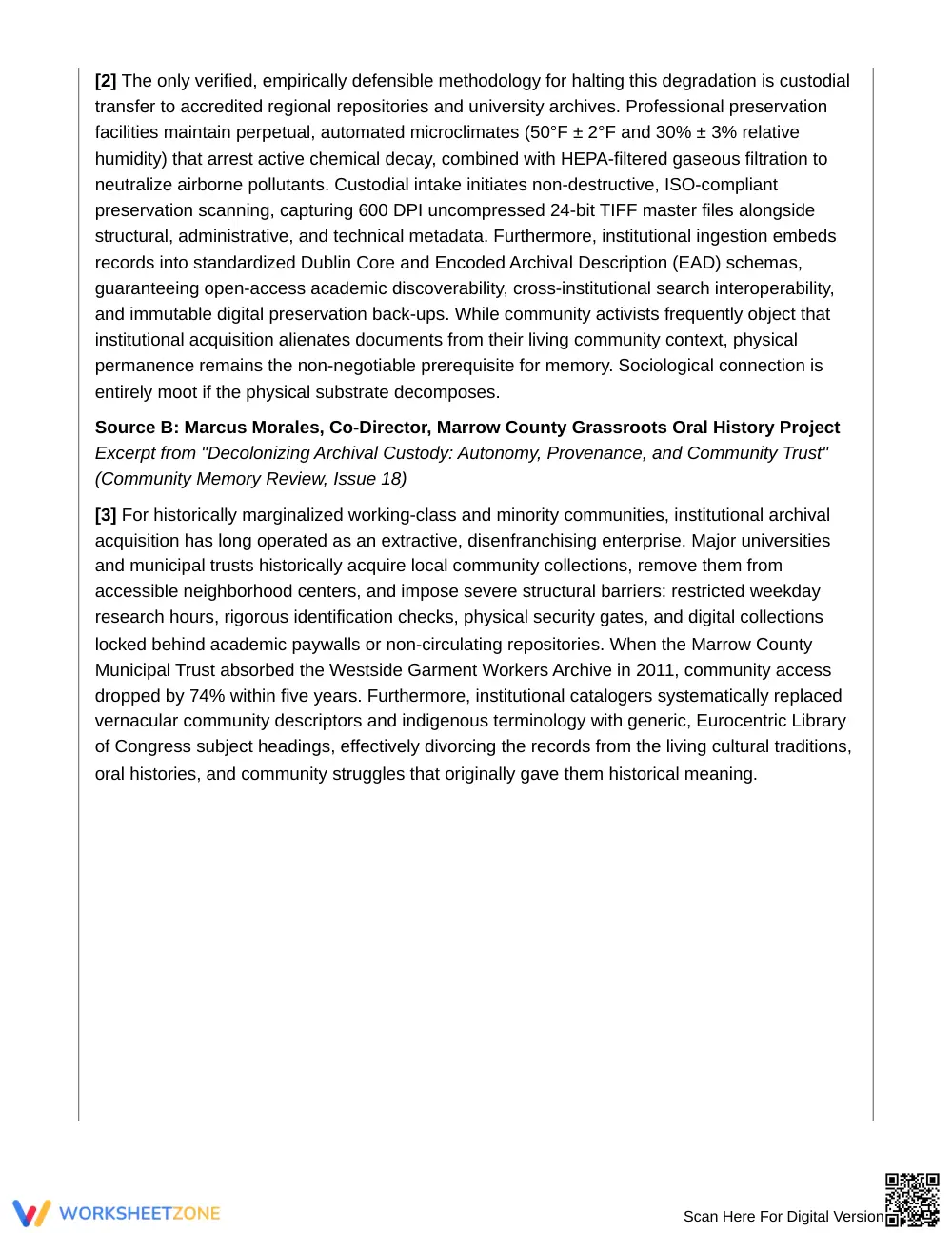
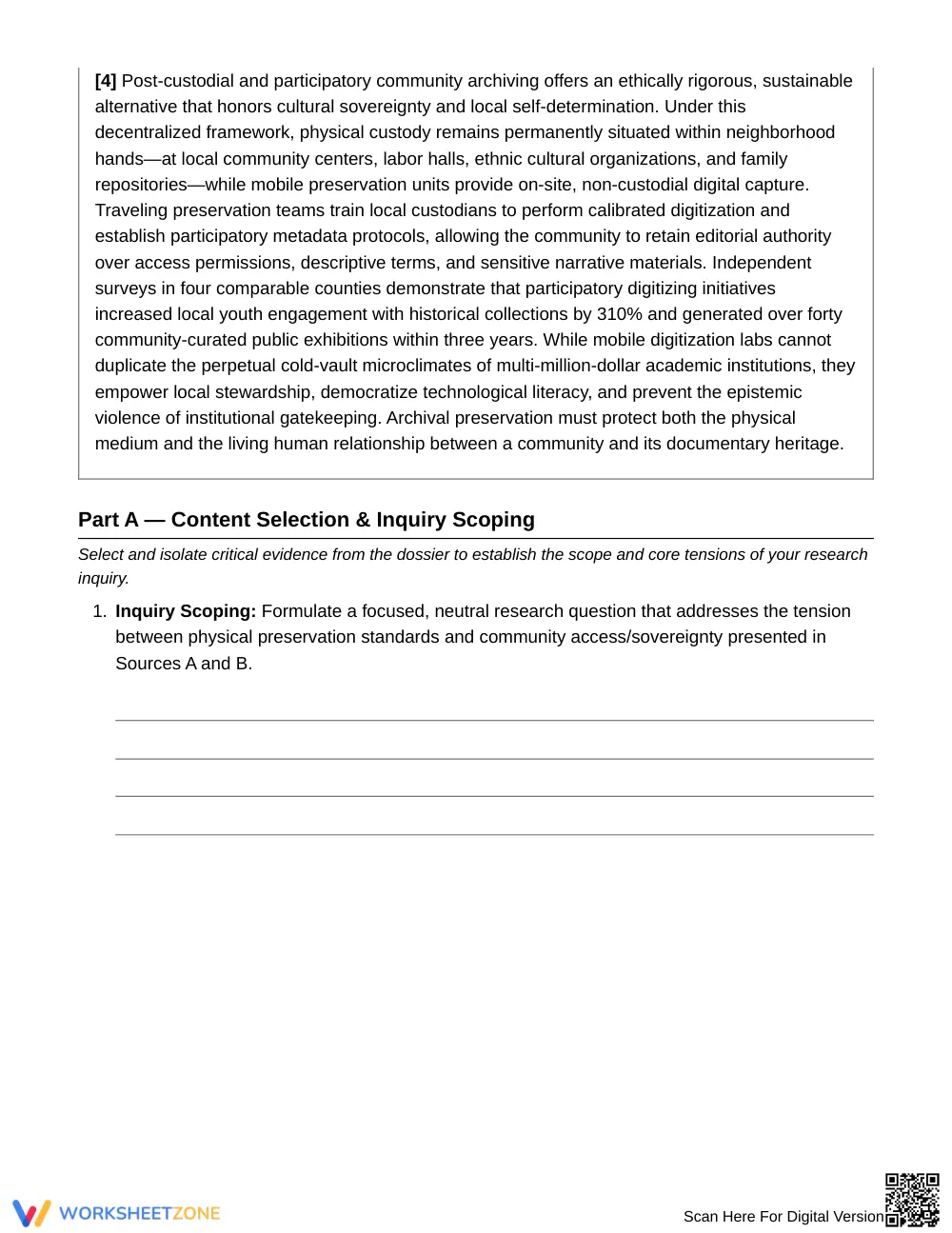
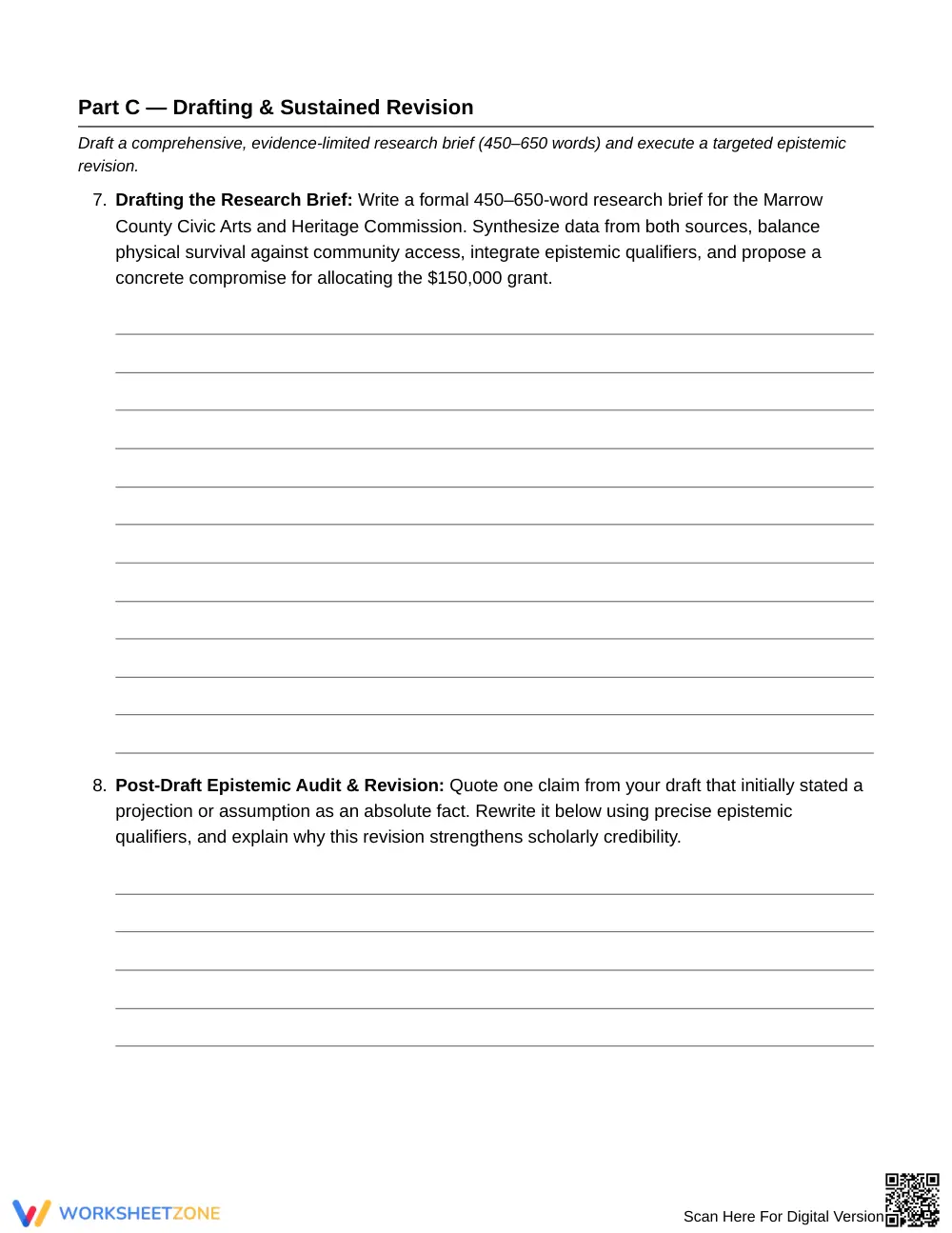
The 6-page printable packet includes a foundational framework on epistemic qualification, a two-text source dossier contrasting institutional custody against grassroots community archiving, and 8 structured student tasks. Learners engage with an evidence mapping matrix, stakeholder planning guides, a four-part synthesis blueprint, and an epistemic revision audit, supported by an exhaustive 4-page annotated answer key.
Skill Progression
- Guided Practice (Tasks 1–2): Students scope the research inquiry and map operational advantages and limitations across both archival models in a structured matrix.
- Supported Practice (Tasks 3–6): Learners complete stakeholder analysis, evaluate empirical data gaps, plan a balanced rebuttal, and outline a four-part synthesis blueprint.
- Independent Practice (Tasks 7–8): Students draft a formal 450–650-word research brief and revise overgeneralized claims using precise epistemic markers.
This scaffolded sequence follows gradual release, building analytical independence before full drafting.
Standards Alignment
This worksheet directly aligns to W.11-12.7: Conduct short as well as more sustained research projects to answer a question or solve a problem; narrow or broaden the inquiry when appropriate; synthesize multiple sources on the subject, demonstrating understanding of the subject under investigation. Both standard codes can be copied directly into lesson plans, IEP goals, or district curriculum mapping tools.
How to Use It
Assign after direct instruction on source synthesis and academic hedging. For an in-class policy simulation, have students complete Parts A and B in pairs before writing Part C individually. For formative assessment, review Task 4 data gap analyses and Task 8 epistemic audits to identify students who struggle with overstatement. Expected completion time is 60 to 90 minutes.
Who It's For
Designed for Grade 12 English IV, AP Seminar, and dual-enrollment writing courses. Support emerging writers by providing sentence stems for Task 5 counter-arguments, and challenge advanced students to incorporate budgetary constraints. Pair this packet with an anchor chart on epistemic qualification markers.
Instructional research by Fisher & Frey (2014) demonstrates that structured gradual release frameworks significantly improve adolescent academic literacy when navigating complex, multi-text argumentative tasks. This Grade 12 English IV worksheet operationalizes that research by guiding students through source evaluation, inquiry scoping, and evidence qualification under standard W.11-12.7. Rather than prompting unconstrained opinion essays, the resource requires students to write an evidence-limited research brief, isolating methodological trade-offs between centralized preservation and grassroots community autonomy. By analyzing empirical gaps, anticipating opposing perspectives, and executing targeted epistemic audits, learners transform raw source data into nuanced policy recommendations without making unwarranted claims. This structured approach directly reinforces college-ready analytical writing, ensuring high school seniors develop the critical disciplinary literacy needed to evaluate contradictory data sets, balance competing stakeholder priorities, and articulate defensible, evidence-bounded conclusions across complex informational texts.


