

































Essential Energy Coupling Worksheet | Grade 10 Biology

Paste this activity's link or code into your existing LMS (Google Classroom, Canvas, Teams, Schoology, Moodle, etc.).
Students can open and work on the activity right away, with no student login required.
You'll still be able to track student progress and results from your teacher account.
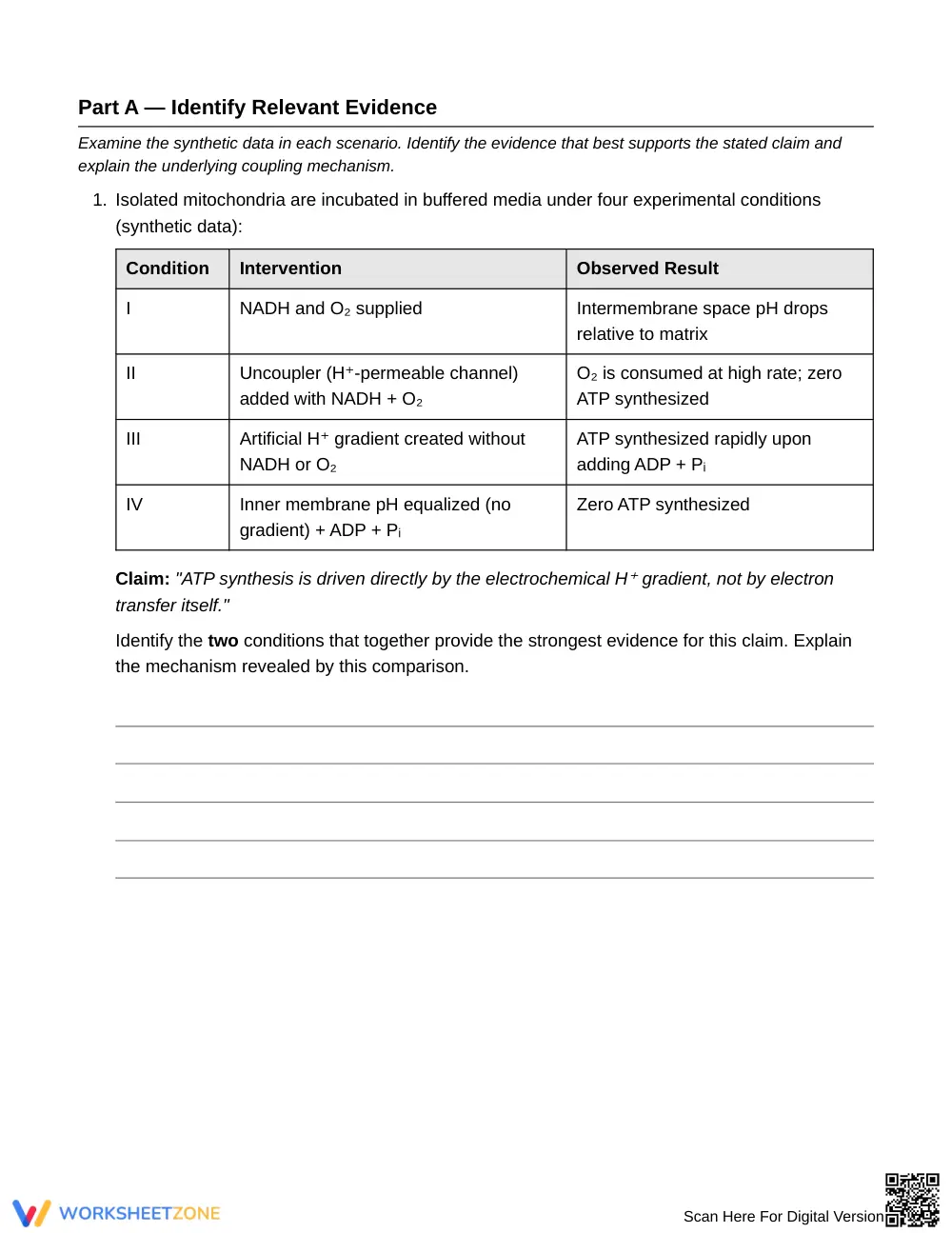
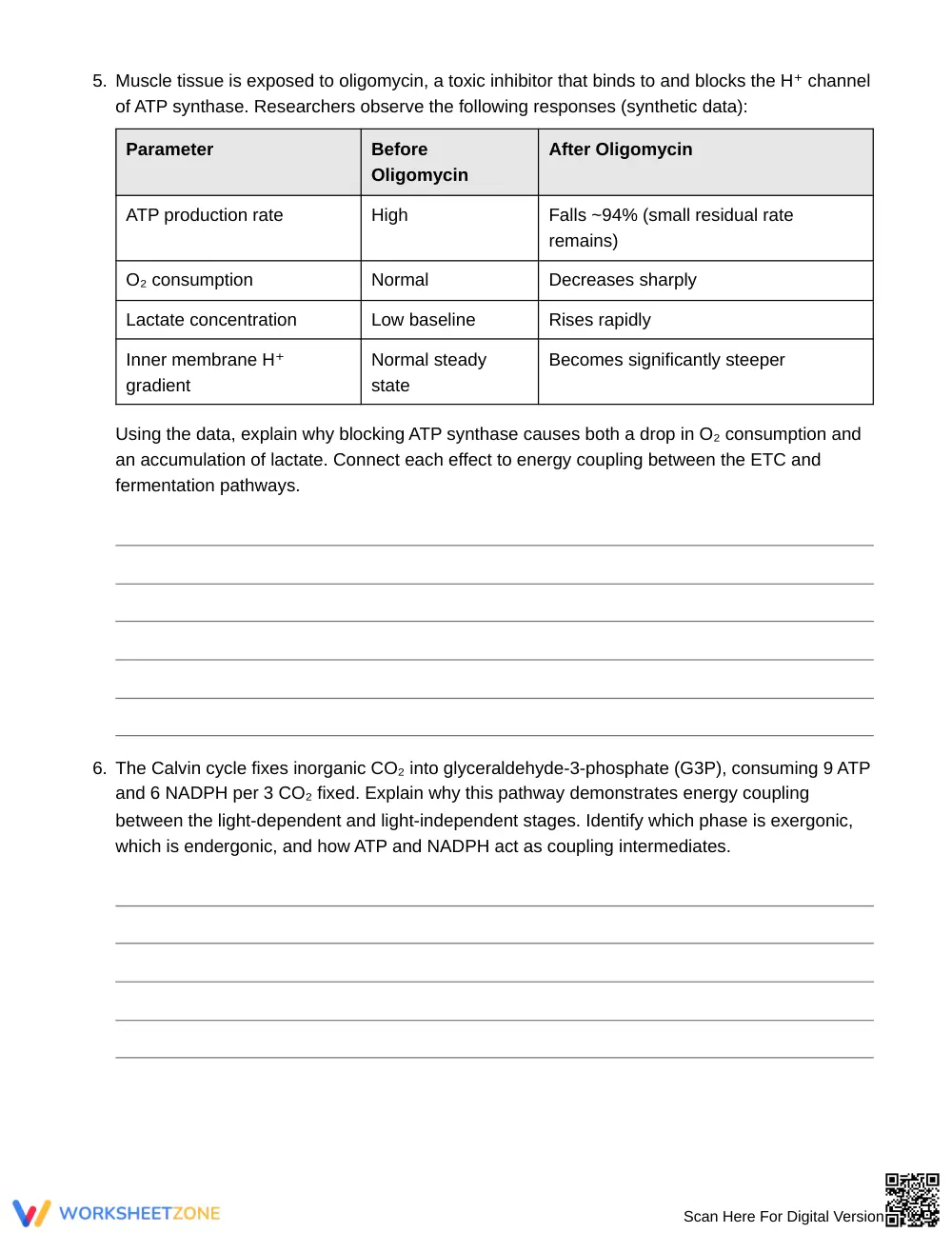
This six-page biology worksheet asks Grade 10 students to defend energy-coupling explanations by analyzing synthetic experimental data, calculating free-energy changes, and evaluating competing biochemical claims. Students move from evidence identification through mechanism construction to critical evaluation, building argumentation skills central to modern biology.
At a Glance
- Grade: 10 · Subject: Biology
- Standard: Cellular Energy — Defend energy-coupling explanations using thermodynamic evidence and ATP mechanisms
- Skill Focus: Defend an Energy-Coupling Explanation
- Format: 6 pages · 8 problems · Answer key included · PDF
- Best For: Post-instruction practice or review
- Time: 40–55 minutes
What's Inside
The worksheet opens with a concise reference box covering ATP hydrolysis values, glucose oxidation energetics, and chemiosmosis fundamentals. Eight problems span three structured parts across six student-facing pages, followed by a three-page answer key with worked solutions. Task types include data-table analysis, free-energy calculations, mechanism-based responses, and claim evaluations. Synthetic data provides identical numbers for all students, keeping grading efficient and consistent.
Skill Progression
- Guided practice (Part A, Problems 1–2): Students analyze experimental tables and identify supporting evidence for given claims using reference box values.
- Supported practice (Part B, Problems 3–6): Students construct multi-step mechanism explanations connecting observations to ΔG calculations, gradient formation, and ATP synthase function.
- Independent practice (Part C, Problems 7–8): Students evaluate competing scientific claims without scaffolds, identifying valid arguments and explaining misconceptions.
How to Use It
Assign this worksheet after direct instruction on oxidative phosphorylation and photophosphorylation. Part A serves as a guided warm-up where teachers model claim-evidence-reasoning structure, while Parts B and C function well for independent or paired work. Most students complete the 8 problems in 40 to 55 minutes, providing clear formative data on student understanding of proton gradients and bioenergetics.
Energy coupling is the biochemical principle that allows cells to power thermodynamically unfavorable reactions by linking them to favorable ones, most commonly ATP hydrolysis. This Grade 10 biology worksheet targets that principle through 8 problems requiring students to calculate free-energy changes, interpret synthetic experimental data, and evaluate competing scientific claims about ATP synthesis, oxygen's role in respiration, and energy-storage strategies. Research from Fisher and Frey (2014) demonstrates that gradual-release instructional design moving from guided to independent practice significantly improves student transfer of complex reasoning skills. The structured three-part framework directly applies that sequence: initial evidence identification, mechanism construction, and independent claim evaluation. With a comprehensive answer key spanning three pages, teachers gain an immediate formative-assessment tool for tracking mastery of bioenergetics argumentation, building a core academic skill foundational to success in advanced high school science and college-level biochemistry courses.


