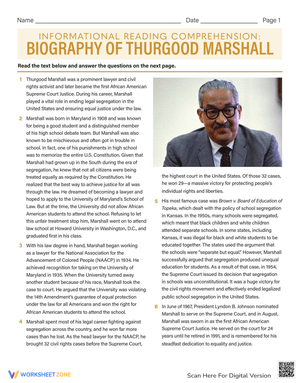
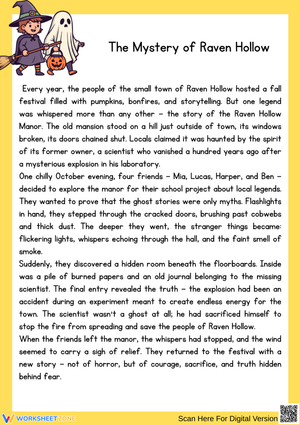
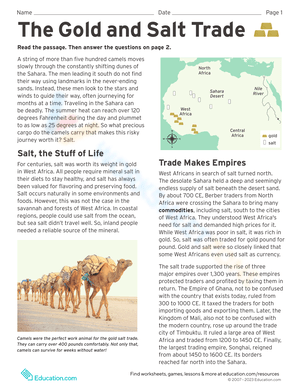
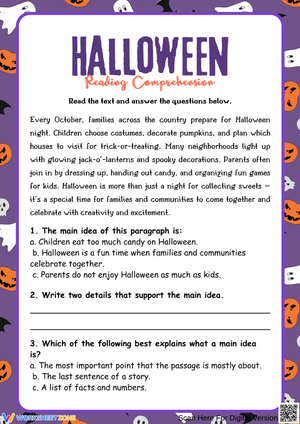
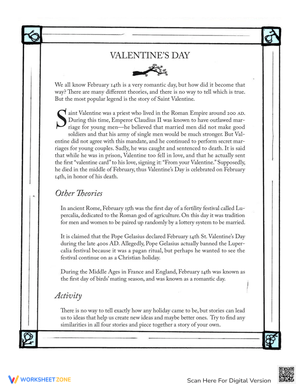
These main idea worksheets pdf resources give teachers a set of targeted reading practice materials built around one of comprehension's hardest-to-teach distinctions: the difference between a topic and the specific claim an author makes about it. Each worksheet presents a passage followed by structured questions that push students from surface-level recall toward genuine analytical reading. The set spans narrative and informational texts across a range of complexity levels, which matters because locating a central argument in a science article is a noticeably different cognitive task than identifying the theme of a short story.
The Specific Skills Each Worksheet Targets
The core work here is distinguishing a main idea from the supporting details that explain or prove it — but that larger skill breaks into several sub-skills worth naming separately:
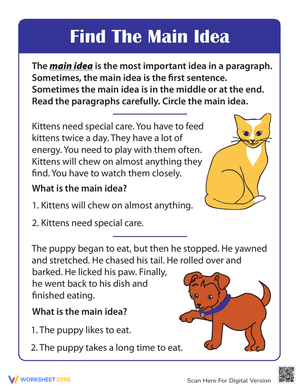
- Separating a broad topic ("volcanoes") from the specific point an author makes about it ("volcanoes form along tectonic plate boundaries, a process driven by predictable geological pressure")
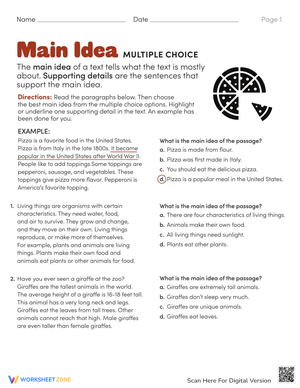
- Recognizing that supporting details answer how or why questions, while the main idea answers what central point is the author making
- Locating an implied main idea when no single sentence states it outright
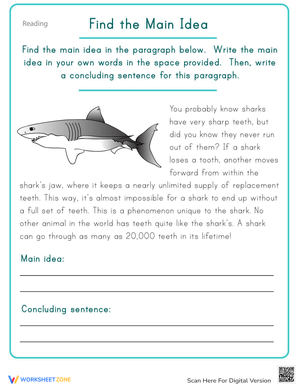
- Restating the central point in the student's own words rather than lifting a sentence directly from the passage
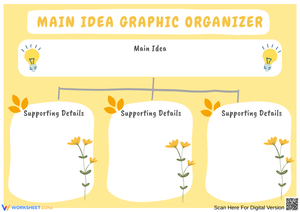
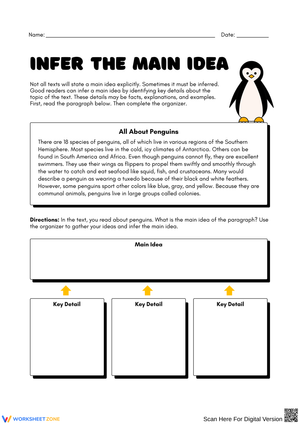
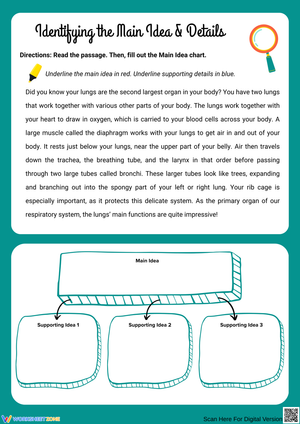
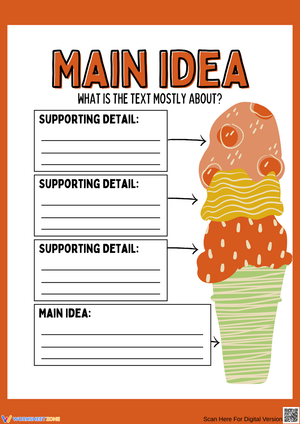
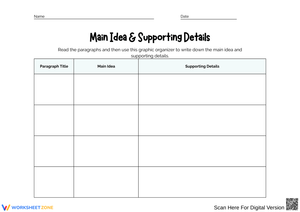
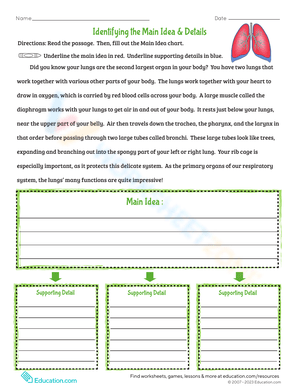
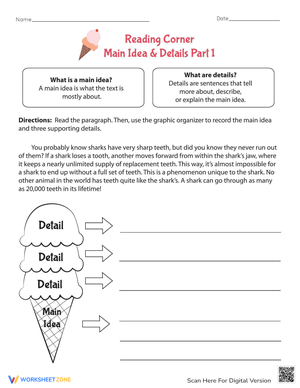
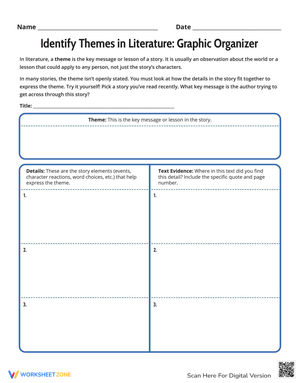
- Using a graphic organizer to map how individual details connect to and support one overarching claim
Several worksheets in the set focus specifically on fiction passages, where students trace recurring ideas across scenes rather than scanning for an explicit thesis statement. That distinction matters: students who learn to find main ideas in nonfiction often apply a sentence-hunting strategy to narrative texts and get stuck, because no single sentence carries the whole theme.
Mistakes Students Make That These Worksheets Help You Catch
The most persistent error is topic substitution. A student writes "weather" as the main idea of a passage that is actually arguing that hurricanes have grown more destructive over the past three decades. Topic substitution is easy to miss in whole-class discussion because students sound close to correct — on paper, the gap becomes immediately visible. These worksheets surface that error consistently.
A second pattern: students treat the first sentence as automatically carrying the main idea. This works often enough in textbooks to harden into a habit. The worksheets include passages where the opening sentence is a hook or a contrasting example — exactly the structure that causes students who rely on that shortcut to mark the wrong sentence. Encountering a few passages where the first sentence is clearly not the central point breaks the habit faster than any direct correction tends to.
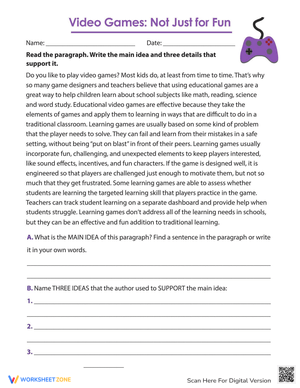
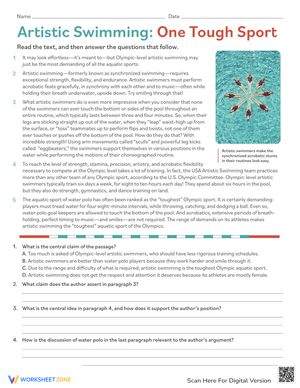
A third error worth watching: students who correctly identify the subject but then record a detail as their answer. A passage about honeybee colony collapse might produce the answer "pesticides harm bees" when the actual claim is broader — that several interacting pressures have destabilized bee populations across agricultural regions. Many worksheets in the set ask students to label each sentence as either the main idea or a supporting detail, which forces that distinction explicitly rather than leaving it implied.
How to Build These Worksheets Into Your Lesson Plans
The most effective pattern is using one worksheet as a Monday warm-up to reactivate a skill introduced the previous week, then returning to a second worksheet on Thursday as a quick check before Friday's independent reading. That spacing — rather than stacking all the practice into a single lesson — draws on spaced retrieval and shows up in noticeably better retention by the time students encounter main idea questions on unit assessments.
For direct instruction days, project the passage on your board while students work on their own copy of the same worksheet. Annotate aloud: underline what feels like a big claim, cross out sentences that seem like examples, and think out loud when a sentence could go either way. Students who watch that process once tend to attempt it independently; students who only hear a definition rarely do.
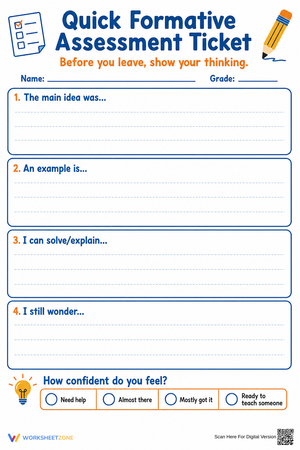
Exit tickets work well with this set. Pull a short passage from the main idea worksheets pdf, cover the questions, and ask students to write one sentence stating the author's central point. If more than a third of the class writes the topic word only — "bees" instead of a full claim — that tells you the concept-versus-claim distinction needs another direct pass before the next skill in your reading unit.
Adjusting the Set for Mixed-Ability Classrooms
For students still developing fluency alongside comprehension, read the passage aloud before they attempt the questions. The cognitive load of decoding an unfamiliar paragraph while simultaneously evaluating which sentences carry the most weight is high enough to look like a main idea deficit when it is actually a decoding issue. Removing the decoding barrier isolates the analytical skill you are actually trying to assess.
One concrete approach: pre-mark two or three sentences on a copy of the worksheet — one main idea candidate and one or two supporting details — and ask the student to label each one rather than search the whole passage. This keeps the analytical task intact without requiring the student to hold the entire text in working memory at once. As fluency builds, remove the pre-marking and return to the standard version.
For students who have the basic concept and need more challenge, extend the task beyond what the worksheet asks: after completing it, have the student write a new passage of their own with a clear central claim and at least three supporting details. That production task reveals understanding at a level that circling or underlining answers cannot.
Standard Alignment
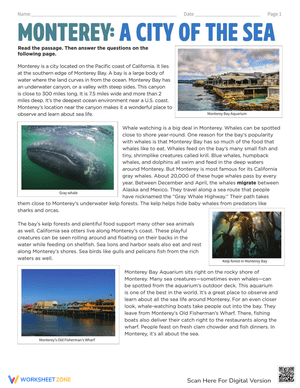
These worksheets align most directly to CCSS.ELA-LITERACY.RI.3.2, RI.4.2, and RI.5.2, which each require students to determine the main idea of an informational text and explain how key details support it. In classroom terms, RI.3.2 is the entry point — students recount details and explain their relationship to a central idea — and the standard increases in complexity through fifth grade, where RI.5.2 asks students to handle multiple main ideas within a single text. The set supports instruction across that three-grade arc, with shorter passages suited to grade 3 and longer, denser informational texts built for grades 4 and 5.
Worksheets using fiction passages address CCSS.ELA-LITERACY.RL.3-5.2, which targets theme and central message in literary texts rather than main idea in the informational sense. Theme and main idea are taught as distinct concepts at most grade levels, but the analytical overlap is significant enough that many teachers use both text types during the same unit — these worksheets accommodate that approach directly.
Frequently Asked Questions
What is the difference between a topic and a main idea?
The topic is the general subject — a noun or short phrase like "renewable energy" or "the water cycle." The main idea is the specific point the author is making about that subject: a claim, an argument, or a central observation. Students who write topics as their answers need practice pairing a subject with a predicate — not just naming what the passage is about, but stating what the author actually says about it.
How do students find the main idea when it isn't directly stated?
The most teachable approach is asking: what one sentence could I write that all of these details are helping to prove or explain? If a passage gives three examples of animals that migrate in winter, the implied main idea is something about why or how migration happens in cold climates — not any single example. A main idea worksheets pdf that includes passages with implied central ideas specifically develops that inference skill, since passages with explicit topic sentences in the first line do not.
Are these worksheets appropriate for middle school students?
Yes, depending on which passages you assign. The set includes shorter passages suited for grades 3 and 4 alongside longer informational texts that require tracking an argument across multiple paragraphs — the latter works well for grades 6 through 8. A middle school teacher using the main idea worksheets pdf with a struggling reader might start with the shorter passages before moving to grade-level complexity, while advanced students can work through the multi-paragraph nonfiction selections that ask them to identify more than one central idea within a single text.
Can these worksheets serve as formative assessment tools?
They work well that way. Assign one worksheet without prior discussion, collect it, and look at whether students are writing topics or actual claims. The structured format — passage, sentence-labeling task, main idea question, detail identification — gives diagnostic information across several sub-skills at once rather than a single right-or-wrong score. If a group consistently writes supporting details when asked for the main idea, that tells you exactly where to focus the next reteaching block.