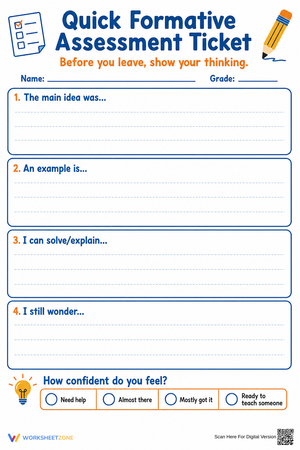
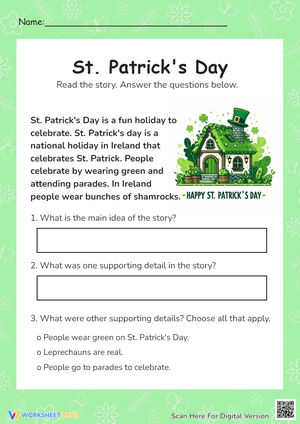
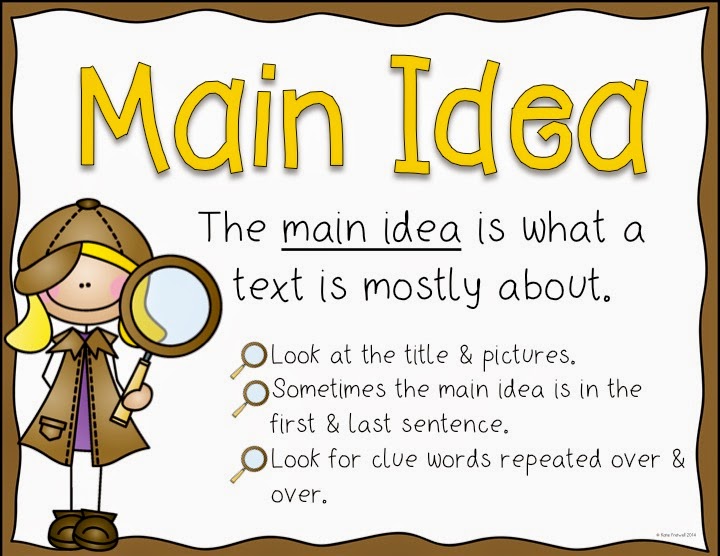
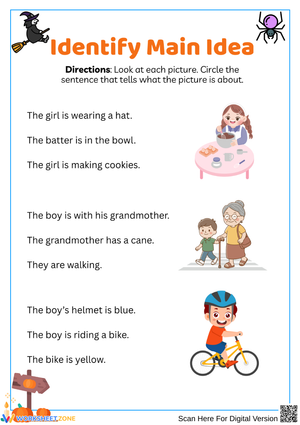
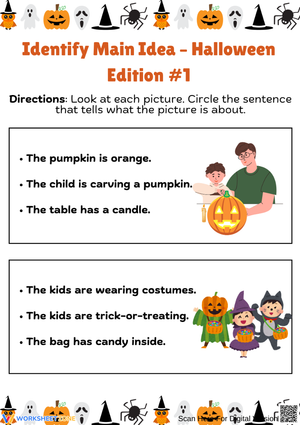
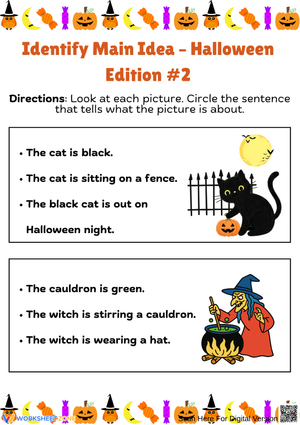
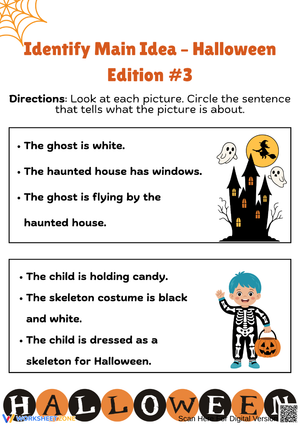
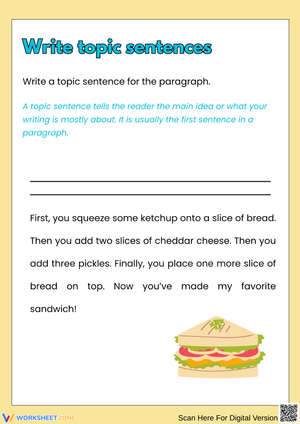
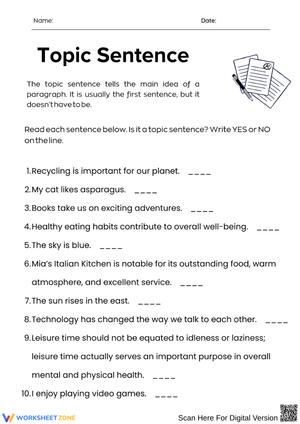
These main idea pdf worksheets give teachers a ready-made set of reading comprehension resources targeting one of the trickiest conceptual moves in elementary literacy: separating what a passage is about from what a passage actually says. The set draws on both informational and narrative texts and includes practice with main ideas that are explicitly stated as well as main ideas students must infer from the surrounding details.
The Specific Reading Skills Targeted
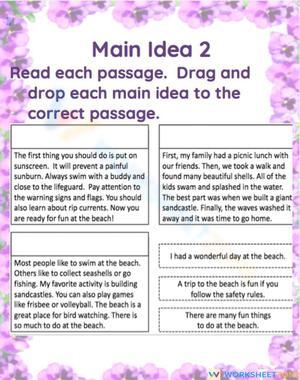
Each worksheet asks students to do one of three things: identify the main idea from a short passage, distinguish the main idea from a list of supporting details, or write a main idea statement in their own words after reading. Those tasks look similar on the surface, but they draw on different cognitive processes. Recognizing a main idea stated in the first sentence requires far less synthesis than constructing a statement when the author never names the central point outright. Both tasks are represented across the set.
Supporting-detail work runs through most exercises. Students underline phrases that directly reinforce the central point, then cross out sentences that are interesting but off-topic — a skill that transfers immediately into paragraph writing. Many passages pull from social studies and science content, so students practice comprehension strategy while absorbing subject-area information in the same ten-minute block.
Mistakes Students Make That These Worksheets Help You Catch
The most consistent error is selecting the most surprising fact in a passage as the main idea. A paragraph about the water cycle produces answers like "water can turn into a gas" instead of something like "water moves constantly between the earth and the atmosphere." The vivid, memorable detail wins over the unifying concept almost every time. Several of these main idea pdf worksheets include a deliberately tempting detail as one of the answer choices, which forces students to compare specificity against scope rather than circle the sentence that caught their attention first.
A second pattern worth watching: students who perform well on explicitly stated main ideas will still struggle when the main idea requires synthesizing information across multiple sentences. They default to copying the first sentence regardless of whether it functions as a thesis. The implied-main-idea exercises are where those students reveal the gap — and where follow-up instruction actually moves comprehension scores in measurable ways.
Smart Ways to Work These Worksheets Into Your Week
The most effective placement for main idea pdf worksheets at the elementary level is immediately after a whole-class think-aloud, not as a cold introduction to the skill. Spend eight to ten minutes modeling your own reading process on a shared text — marking what seems most important, rejecting vivid-but-narrow details, and arriving at a statement that covers all the evidence — then send students into independent practice on a worksheet with a comparable passage. The transfer is faster than asking students to apply a strategy they have only heard described.
During the independent reading block, these worksheets work well as a station or seat-work task while you pull a small guided reading group. Keep a tiered stack ready: two or three easier passages in one folder, harder implied-main-idea exercises in another. Students who finish early pull from the next level rather than waiting. The PDF format means you can print on demand, so refreshing the stack mid-unit takes minutes, not a trip to the curriculum room.
Adapting These Worksheets Across Ability Levels
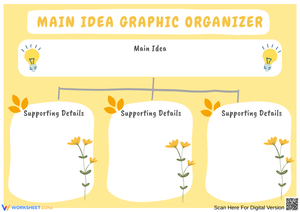
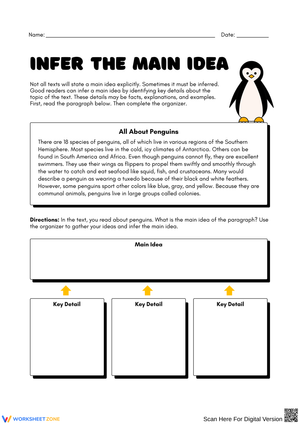
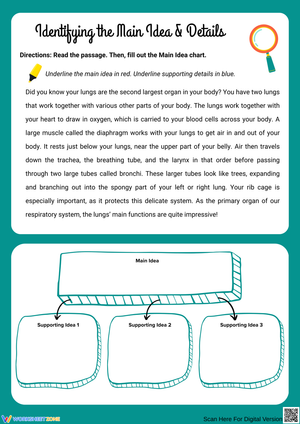
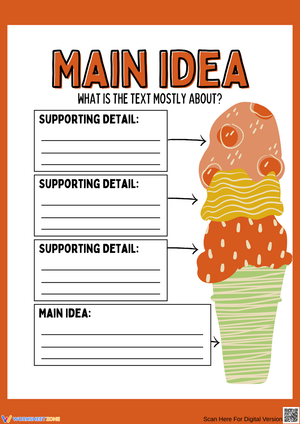
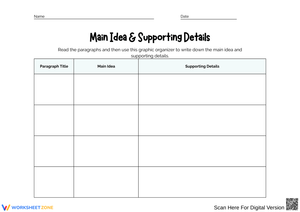
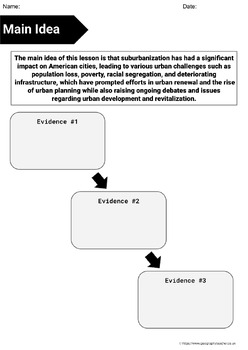
Students still consolidating basic decoding benefit most from shorter passages — four to six sentences — where the main idea appears in the first or last sentence. Pair those exercises with a simple graphic organizer: one large box for the main idea, three smaller boxes below for supporting details. The visual layout handles organizational thinking that verbal instruction sometimes cannot reach on its own.
For students who breeze through the explicit main idea tasks, shift them toward the implied-main-idea exercises and add a writing requirement: after identifying the central point, they write one sentence naming the evidence that pushed them to that conclusion. That metacognitive layer — articulating the reasoning rather than just the answer — prepares students for the analytical reading expected in upper elementary and middle school.
Standard Alignment
These worksheets align primarily to CCSS.ELA-LITERACY.RI.3.2, which asks students to determine the main idea of a text, recount key details, and explain how those details support the main idea. The standard extends through RI.5.2, where students are also expected to summarize — not just identify — the central point. That range means the same set of resources works from early third grade, when students first encounter the standard formally, through fifth-grade review, with passage selection doing the work of differentiation rather than requiring separate materials.
The supporting-detail exercises also address CCSS.ELA-LITERACY.RI.3.8, which covers how sentences and paragraphs connect within a text. When students practice crossing out irrelevant details or ranking evidence by how directly it supports the central claim, they are working both standards at once — main idea identification and text structure analysis — without the lesson feeling like two separate tasks bolted together.
Frequently Asked Questions
What grade levels do these worksheets cover?
The set spans grades 2 through 5. Passage length, sentence complexity, vocabulary load, and whether the main idea is stated or implied all increase across the collection. The shorter, structured-paragraph worksheets work well in late second and early third grade; the multi-paragraph implied-main-idea exercises are better suited to fourth and fifth graders who need to practice synthesis rather than identification.
Can these be used for reading intervention as well as core instruction?
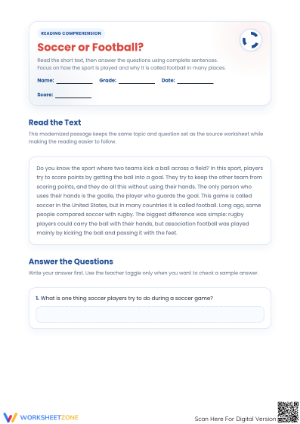
Both uses are common. In core instruction, these worksheets follow a direct teaching segment as guided or independent practice. In intervention, the consistent structure — read a passage, answer targeted questions, record the main idea — gives struggling readers a repeatable routine that reduces the cognitive overhead of figuring out what they are even supposed to do. The main idea pdf worksheets in this set include answer keys, so paraprofessionals running intervention blocks can use them without additional preparation from the classroom teacher.
How long does a typical worksheet take to complete?
Most students finish in ten to fifteen minutes. That makes each worksheet usable as a morning warm-up, an independent work center, or a closing exit task. The implied-main-idea exercises run a few minutes longer because synthesis takes more time than recognition — worth noting if you plan to use them as timed warm-ups at the start of a reading block.












 Interactive Worksheet Maker
 Quiz Maker
 Word Search Maker
 Crossword Puzzle Maker
 Word Scramble Generator
 Sentence Scramble Generator
 Handwriting Worksheet Generator
 Name Tracing Generator
 Fill In The Blank Generator