


























0
Views
0
Downloads

0.0
0
Save
0 Likes
Share
Identify Themes in Literature: Graphic Organizer
0 Views
0 Downloads
Paste this activity's link or code into your existing LMS (Google Classroom, Canvas, Teams, Schoology, Moodle, etc.).
Students can open and work on the activity right away, with no student login required.
You'll still be able to track student progress and results from your teacher account.
Information
Description
What It Is:
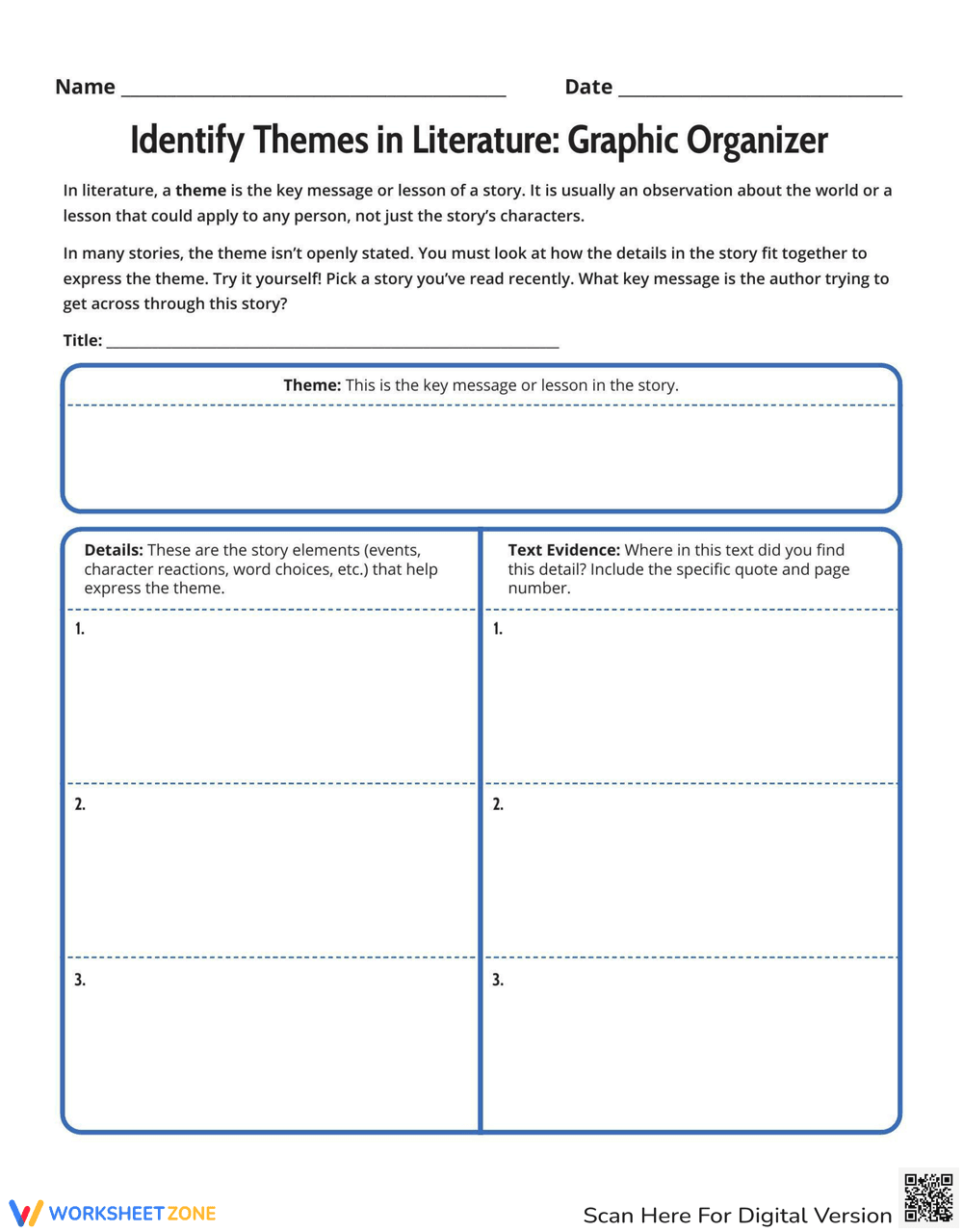
This is a graphic organizer worksheet designed to help students identify themes in literature. It provides a brief explanation of what a theme is and prompts students to identify the title of the story, the theme itself, supporting details from the story, and specific text evidence including quotes and page numbers. The worksheet is organized into sections for Title, Theme, Details, and Text Evidence, each with lined spaces for student responses.
Grade Level Suitability:
This worksheet is suitable for upper elementary (4th-5th grade) and middle school students (6th-8th grade). The concept of identifying themes can be introduced in upper elementary, and the worksheet provides structure for middle school students to analyze literary texts more deeply. The requirement to find text evidence makes it appropriate for developing analytical skills in these grades.
Why Use It:
This worksheet helps students develop critical thinking and reading comprehension skills by guiding them through the process of identifying themes in literature. It encourages them to look beyond the surface level of a story and analyze the author's message. It also reinforces the importance of using textual evidence to support their interpretations.
How to Use It:
Students should first read a story or excerpt. Then, they should fill in the title of the story on the worksheet. Next, they should identify the main theme or message of the story and write it in the 'Theme' section. In the 'Details' section, they should list specific story elements that support the theme. Finally, in the 'Text Evidence' section, they should provide direct quotes from the story and page numbers that demonstrate the theme.
Target Users:
This worksheet is ideal for students in language arts classes who are learning about literary analysis and theme identification. It can also be used by teachers as a tool for assessing student understanding of literary concepts and their ability to support their interpretations with textual evidence. It can be helpful for students who need visual aids to organize their thoughts.
This is a graphic organizer worksheet designed to help students identify themes in literature. It provides a brief explanation of what a theme is and prompts students to identify the title of the story, the theme itself, supporting details from the story, and specific text evidence including quotes and page numbers. The worksheet is organized into sections for Title, Theme, Details, and Text Evidence, each with lined spaces for student responses.
Grade Level Suitability:
This worksheet is suitable for upper elementary (4th-5th grade) and middle school students (6th-8th grade). The concept of identifying themes can be introduced in upper elementary, and the worksheet provides structure for middle school students to analyze literary texts more deeply. The requirement to find text evidence makes it appropriate for developing analytical skills in these grades.
Why Use It:
This worksheet helps students develop critical thinking and reading comprehension skills by guiding them through the process of identifying themes in literature. It encourages them to look beyond the surface level of a story and analyze the author's message. It also reinforces the importance of using textual evidence to support their interpretations.
How to Use It:
Students should first read a story or excerpt. Then, they should fill in the title of the story on the worksheet. Next, they should identify the main theme or message of the story and write it in the 'Theme' section. In the 'Details' section, they should list specific story elements that support the theme. Finally, in the 'Text Evidence' section, they should provide direct quotes from the story and page numbers that demonstrate the theme.
Target Users:
This worksheet is ideal for students in language arts classes who are learning about literary analysis and theme identification. It can also be used by teachers as a tool for assessing student understanding of literary concepts and their ability to support their interpretations with textual evidence. It can be helpful for students who need visual aids to organize their thoughts.


