


























Views
Downloads
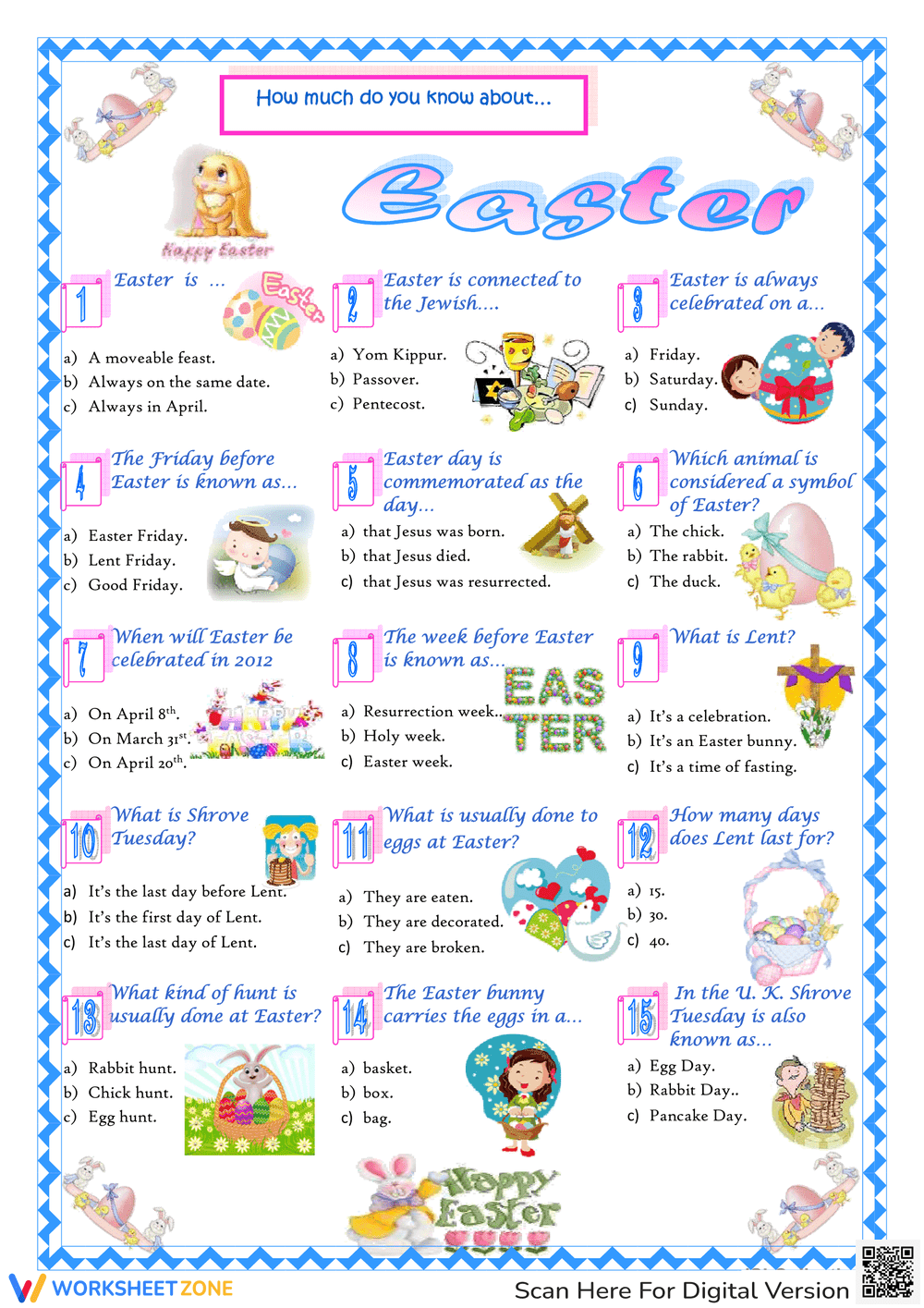

Easter Quiz Printable Worksheet | Grade 3 ELA
Paste this activity's link or code into your existing LMS (Google Classroom, Canvas, Teams, Schoology, Moodle, etc.).
Students can open and work on the activity right away, with no student login required.
You'll still be able to track student progress and results from your teacher account.
This Grade 3 Easter reading comprehension worksheet builds cultural literacy and vocabulary through active recall. Students answer fifteen multiple-choice questions about spring traditions, historical origins, and holiday symbols to demonstrate text-based understanding. It provides immediate feedback on reading comprehension skills.
At a Glance
- Grade: Grade 3 · Subject: English Language Arts
- Standard:
CCSS.ELA-LITERACY.RI.3.1— Ask and answer questions to demonstrate understanding of a text- Skill Focus: Easter traditions and vocabulary
- Format: 1 page · 15 problems · Answer key not included · PDF
- Best For: Spring holiday activity or reading assessment
- Time: 15–20 minutes
This single-page PDF features fifteen structured multiple-choice questions designed for elementary readers. Each question includes three clear options accompanied by colorful, engaging illustrations that provide visual context clues. The layout covers key vocabulary terms like Lent, Shrove Tuesday, and Passover, helping students connect historical context with modern spring celebrations.
This resource features a zero-prep workflow that saves valuable classroom time. First, print the single-page PDF in less than one minute. Second, distribute the sheets to your class in thirty seconds, requiring no additional setup or materials. Finally, review the fifteen questions together in ten minutes for a quick formative check. With a total teacher preparation time of under two minutes, this worksheet serves as an excellent emergency sub plan, morning work option, or holiday filler activity.
This activity aligns directly with the primary standard `CCSS.ELA-LITERACY.RI.3.1`, which requires students to ask and answer questions to demonstrate understanding of a text, referring explicitly to the text as the basis for the answers. Additionally, it supports `CCSS.ELA-LITERACY.L.3.4` by encouraging students to determine the meaning of domain-specific words related to seasonal celebrations. Both standard codes can be copied directly into lesson plans, IEP goals, or district curriculum mapping tools.
Use this worksheet as a post-instruction assessment after a read-aloud session about spring holidays to evaluate student comprehension. Alternatively, assign it as a quiet independent activity during center rotations to keep students engaged. While students work, observe which vocabulary terms cause hesitation to identify areas needing direct instruction. Most students will complete the fifteen questions within a fifteen to twenty minute timeframe.
This worksheet is designed for third-grade students, but it also suits advanced second graders or fourth-grade students needing reading practice. Teachers can differentiate by reading the questions aloud to struggling readers or English language learners who require decoding support. Pair this activity with an informational passage about spring festivals or a holiday anchor chart to build background knowledge before students begin the quiz.
This educational resource targets `CCSS.ELA-LITERACY.RI.3.1` by focusing on the plain-English skill of answering text-dependent questions to demonstrate comprehension of cultural traditions. According to research by Fisher & Frey (2014) on close reading and text-dependent questioning, structured multiple-choice tasks help scaffold literal comprehension before students transition to complex writing tasks. By evaluating fifteen distinct holiday facts, this worksheet provides teachers with immediate data on student vocabulary acquisition and factual recall. The clear formatting ensures accessibility for diverse learners, making it a reliable tool for formative assessment. Educators can utilize this structured layout to measure baseline reading comprehension during seasonal transitions, ensuring students maintain alignment with grade-level expectations. This document serves as a practical application of evidence-based reading strategies in elementary classrooms.


