


























Views
Downloads

Grade 2-3 Would You Rather — Printable No-Prep Worksheet
Paste this activity's link or code into your existing LMS (Google Classroom, Canvas, Teams, Schoology, Moodle, etc.).
Students can open and work on the activity right away, with no student login required.
You'll still be able to track student progress and results from your teacher account.
This Grade 2 and 3 decision-making worksheet helps students evaluate choices and express personal preferences through a tactile cut-and-paste activity. By engaging with "Would You Rather" prompts, learners develop the foundational skills needed for argumentative writing and collaborative discussion. Students will analyze two distinct scenarios, select their favorite, and provide a visual representation of their choice.
At a Glance
- Grade: 2-3 · Subject: ELA
- Standard:
CCSS.ELA-LITERACY.SL.2.1— Participate in collaborative conversations with diverse partners about grade 2 topics- Skill Focus: Decision-making and opinion expression
- Format: 2 pages · 5 problems · Cut-and-paste icons · PDF
- Best For: Morning meetings or back-to-school icebreakers
- Time: 15–20 minutes
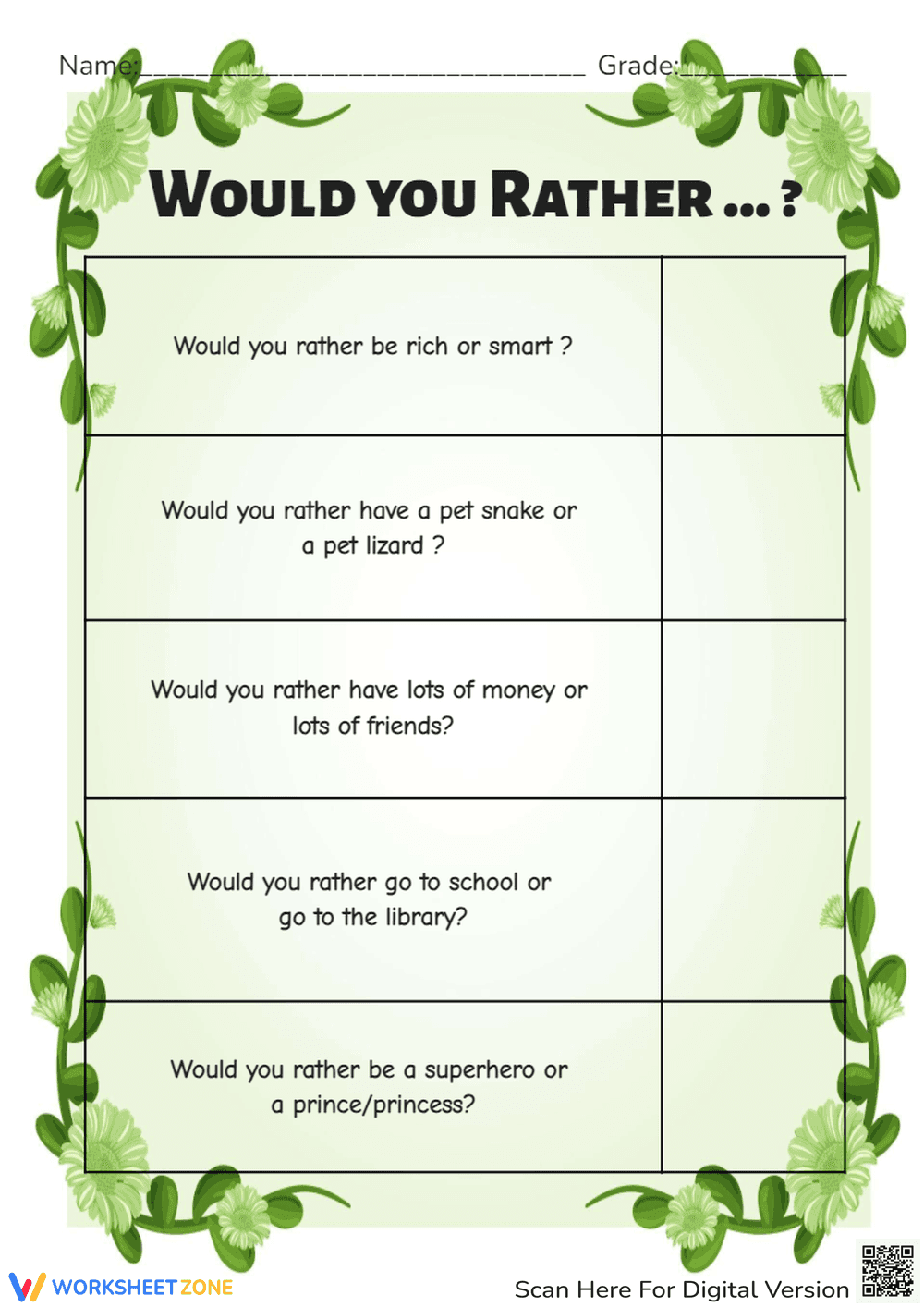
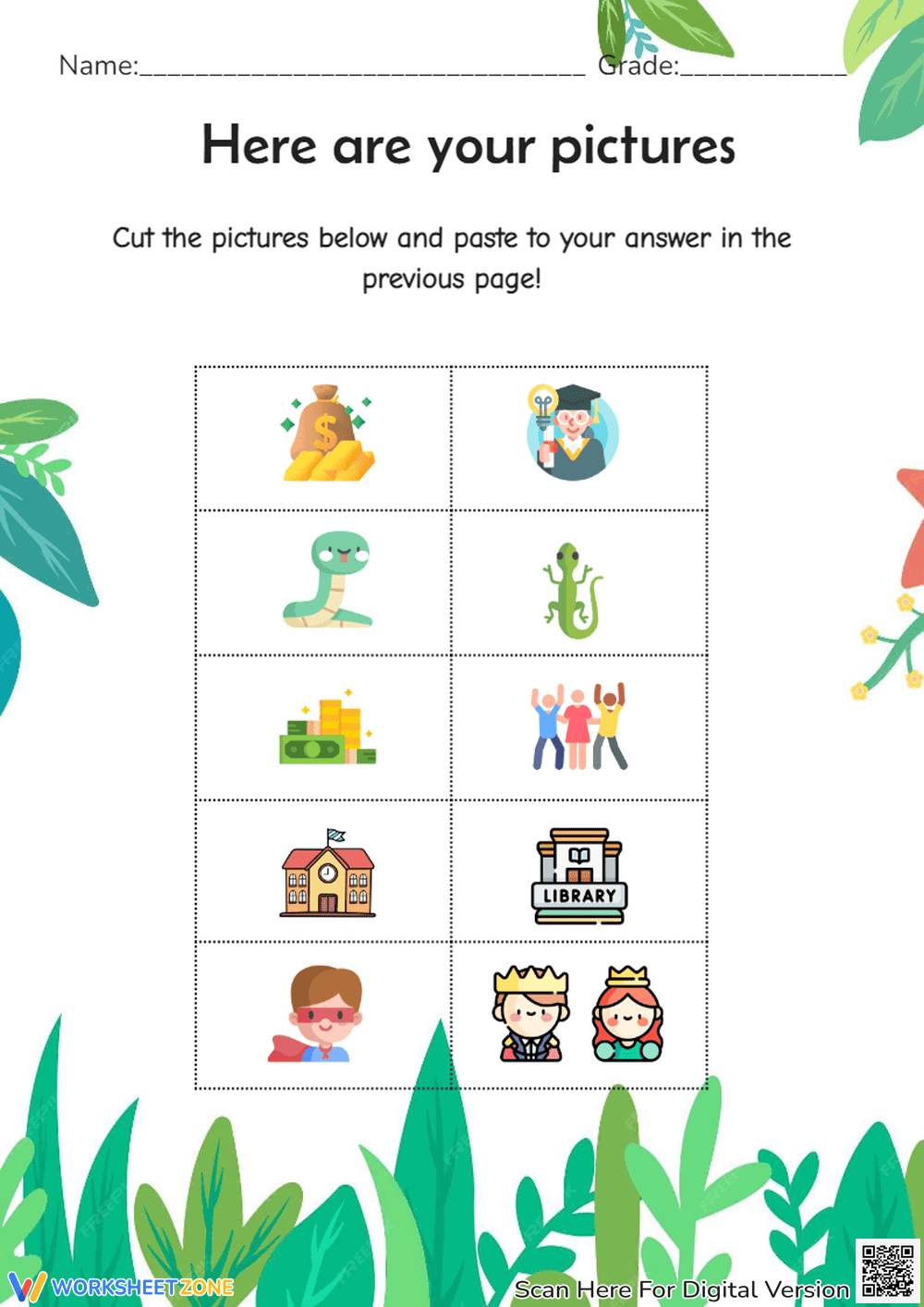
The package contains a 2-page PDF designed for easy handling. Page one features five structured "Would You Rather" prompts with dedicated response boxes. Page two provides ten vibrant, high-quality icons representing each choice, such as a library, a pet snake, or a superhero. The layout is clean and spacious, ensuring that students with developing fine motor skills can easily navigate the cutting and pasting tasks.
This resource is designed for immediate classroom implementation with a total teacher preparation time of under 2 minutes. First, print the two-page PDF for each student or pair. Second, distribute the sheets along with scissors and glue sticks; students will spend approximately 10 minutes selecting and pasting their preferences. Third, spend 5 minutes facilitating a "turn and talk" or whole-group share to review their choices. This streamlined workflow makes it an ideal emergency sub plan or a transition activity between core subjects.
This activity is primarily aligned with `CCSS.ELA-LITERACY.SL.2.1`, which requires students to participate in collaborative conversations with diverse partners about grade-level topics and texts. It also supports SL.3.1 for third-grade learners. Both standard codes can be copied directly into lesson plans, IEP goals, or district curriculum mapping tools to document oral language and social-emotional learning progress.
Use this worksheet as a morning meeting icebreaker to build classroom community during the first week of school. As students work, circulate to perform a formative assessment: observe which students can explain the logic behind their choice, as this indicates readiness for more complex opinion writing. The expected completion time is 15 to 20 minutes, making it a perfect filler for unexpected schedule gaps.
This resource is tailored for general education students in Grades 2 and 3, but it is also highly effective for English Language Learners (ELLs) who benefit from the visual support of the icons. It pairs naturally with an anchor chart on "Opinion Starters" to scaffold full-sentence responses during the follow-up discussion. The activity is accessible for students with varying reading levels due to the clear pictorial support.
According to Fisher & Frey (2014), structured oral language practice like "Would You Rather" prompts provides a low-stakes entry point for students to practice the CCSS.ELA-LITERACY.SL.2.1 standard. By choosing between two distinct options and physically manipulating icons, Grade 2 and 3 learners engage in the cognitive process of evaluation before verbalizing their reasoning. This worksheet facilitates the transition from internal thought to external expression, a critical component of early literacy development. Research indicates that providing visual scaffolds alongside verbal prompts increases participation rates among English Language Learners and students with speech-language IEP goals. The 5-task structure ensures that the activity remains focused and manageable within a standard instructional block, allowing teachers to observe student logic and social interaction patterns in real-time. This resource serves as a foundational tool for building a collaborative classroom culture through shared decision-making exercises.


