


























Views
Downloads



Count the Tree Rings Worksheet | Essential Grade K Math
Paste this activity's link or code into your existing LMS (Google Classroom, Canvas, Teams, Schoology, Moodle, etc.).
Students can open and work on the activity right away, with no student login required.
You'll still be able to track student progress and results from your teacher account.
This Grade Kindergarten math worksheet helps learners master one-to-one correspondence by counting tree rings to determine a tree's age. By merging nature-based inquiry with foundational numeracy, students accurately count objects in a circular arrangement and record corresponding numerals for real-world data collection.
At a Glance
- Grade: Kindergarten · Subject: Math
- Standard:
K.CC.A.3— Write numbers from 0 to 20 and represent objects with a written numeral- Skill Focus: Counting rings and one-to-one correspondence
- Format: 4 pages · 6 problems · Answer key included · PDF
- Best For: Independent math centers or scientific observation units
- Time: 15–20 minutes
What's Inside
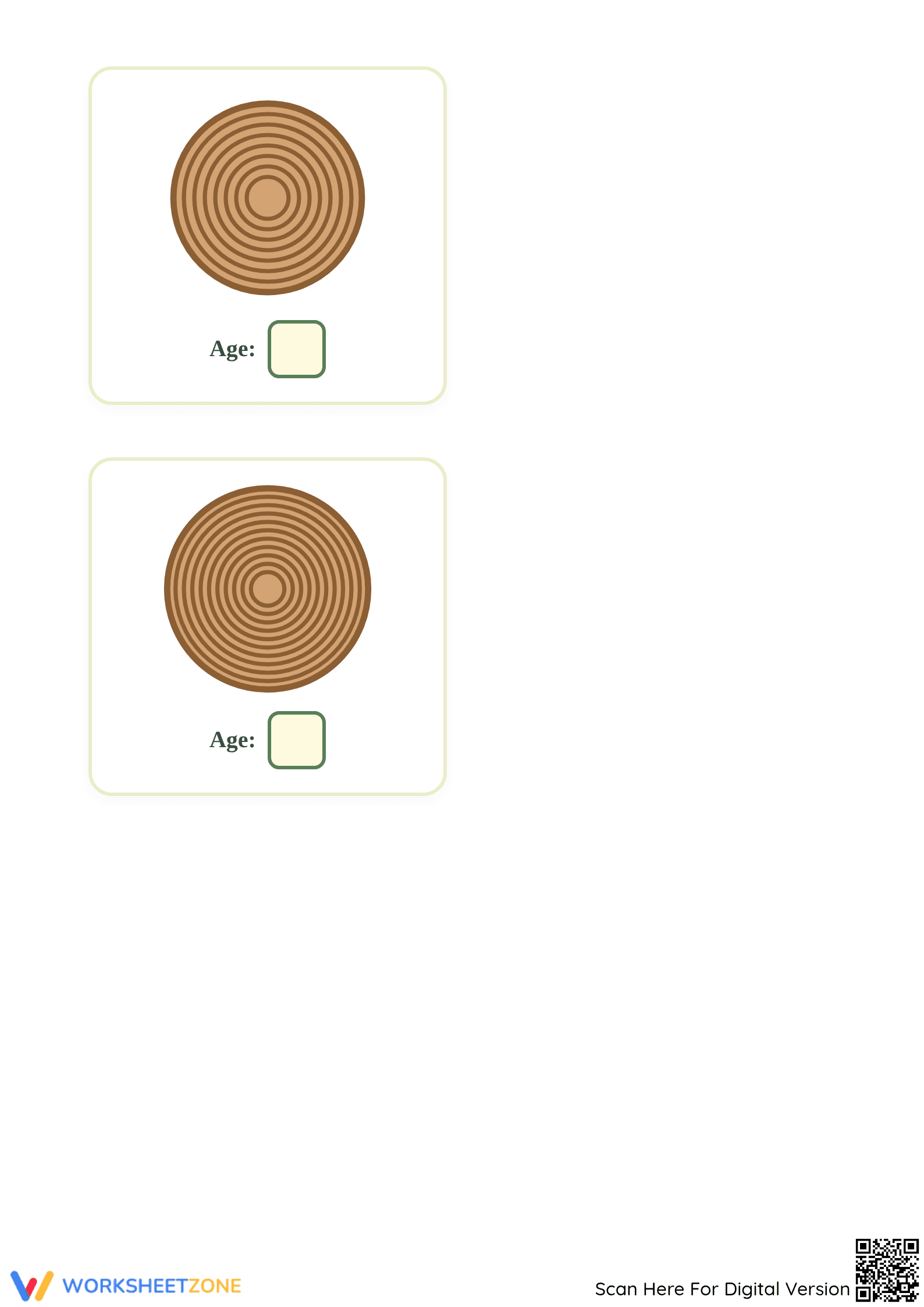
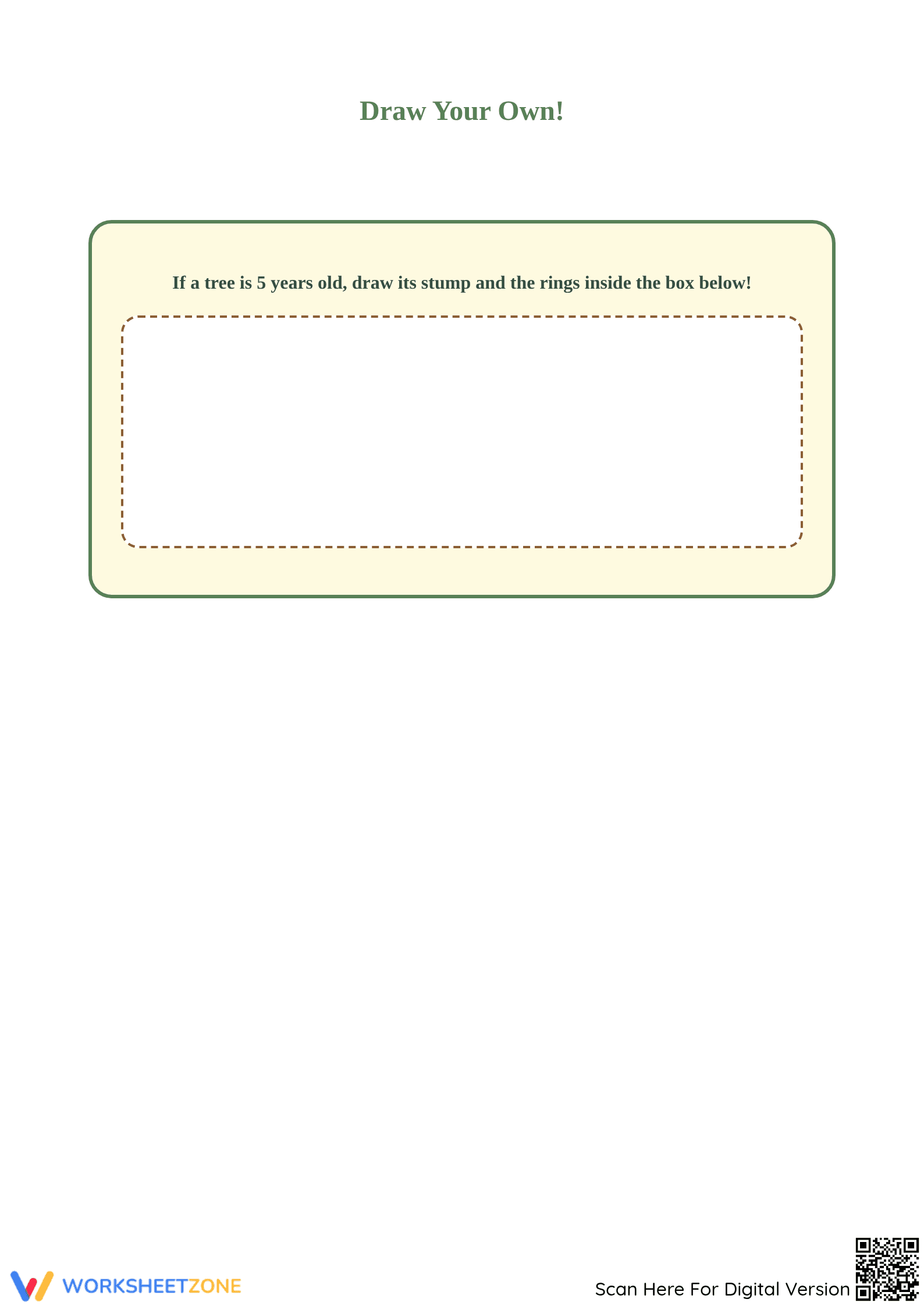
This four-page PDF includes a series of engaging counting tasks. Students start with direct observation on the first two pages, counting rings on varying tree stumps. The third page introduces a creative "color and count" challenge, while the final page reinforces quantity through a drawing task. A complete answer key is provided for quick grading.
Zero-Prep Workflow
The zero-prep design ensures a smooth classroom experience. First, print the four-page packet for your students (30 seconds). Next, distribute the worksheets along with pencils and coloring tools (1 minute). As students work through the sequential counting and drawing tasks, you can circulate for feedback or use the provided answer key for a rapid end-of-lesson review (under 2 minutes).
Standards Alignment
The primary alignment for this activity is K.CC.A.3: "Write numbers from 0 to 20. Represent a number of objects with a written numeral 0-20." Students demonstrate mastery by counting rings and writing the age. Additionally, the resource supports K.CC.B.4. Both standard codes can be copied directly into lesson plans, IEP goals, or district curriculum mapping tools.
How to Use It
Use this worksheet during instruction on counting 1-20 or as a cross-curricular bridge for Science. It serves as an excellent formative assessment tool; observe students to see if they utilize one-to-one correspondence. The 20-minute completion time makes it an ideal choice for a structured math center or a high-quality substitute lesson plan.
Who It's For
This resource is tailored for Kindergarten, though highly appropriate for Preschoolers or Grade 1 students needing cardinality review. The clear visual layout supports English Language Learners by providing concrete context for numerical terms. It pairs naturally with classroom units on life cycles, nature walks, or reading passages about trees and forest ecosystems.
Research from Fisher & Frey (2014) emphasizes that "count and draw" tasks are vital for developing conceptual subitizing skills required for later math operations. This Grade Kindergarten worksheet targets the K.CC.A.3 standard, requiring students to count tree rings and represent data with written numerals. By providing multiple modes of engagement—observation, coloring, and drawing—this resource aligns with evidence-based practices for early numeracy development. The structured layout ensures that students maintain focus on the one-to-one correspondence between physical rings and the abstract concept of age. Educators can utilize this 4-page PDF as a reliable measure of a student's ability to count objects in diverse arrangements and accurately record numerical symbols. This activity transforms a basic counting drill into a meaningful scientific investigation, satisfying both CCSS Math and NGSS observation requirements for early learners.


