


























Views
Downloads
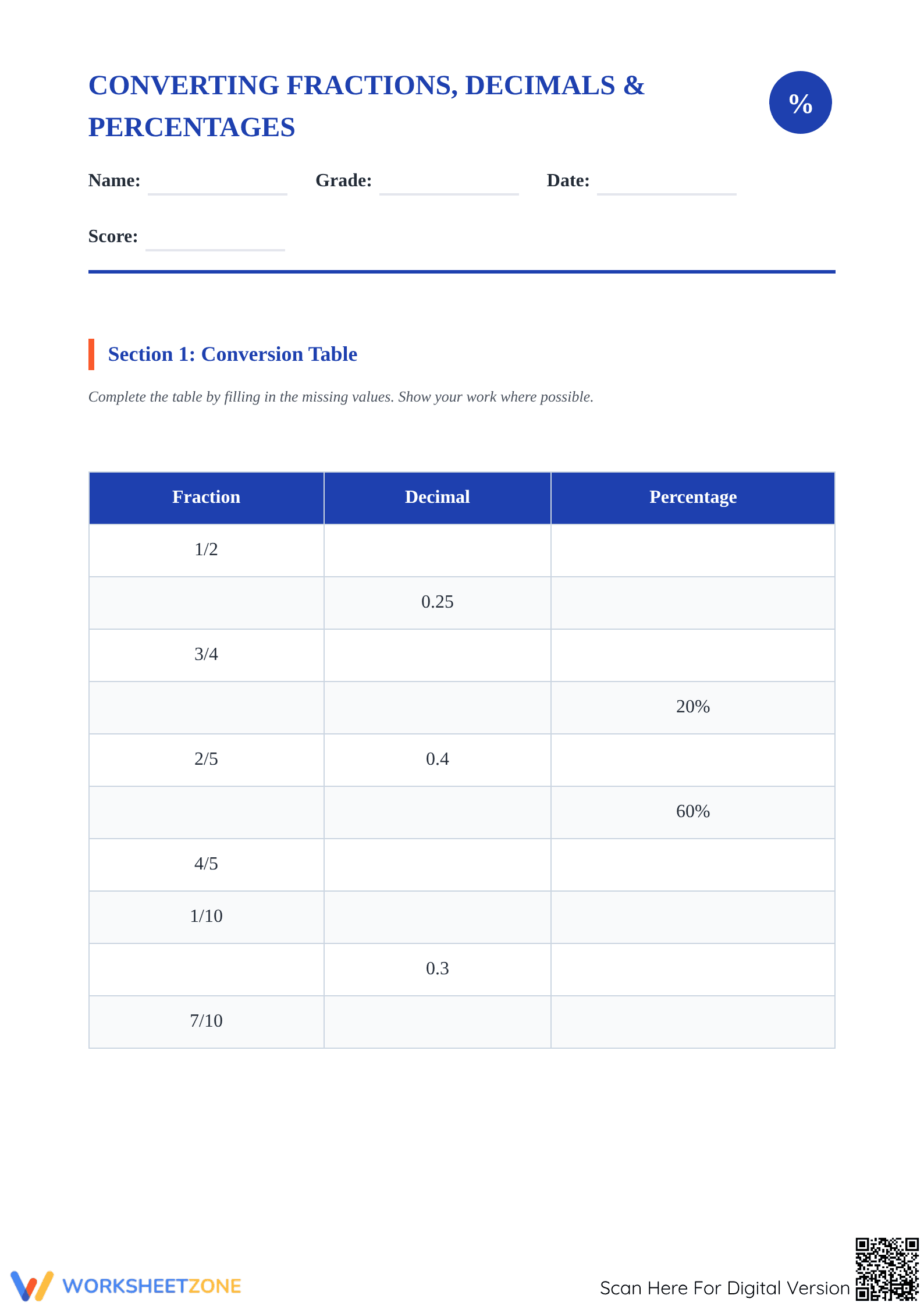
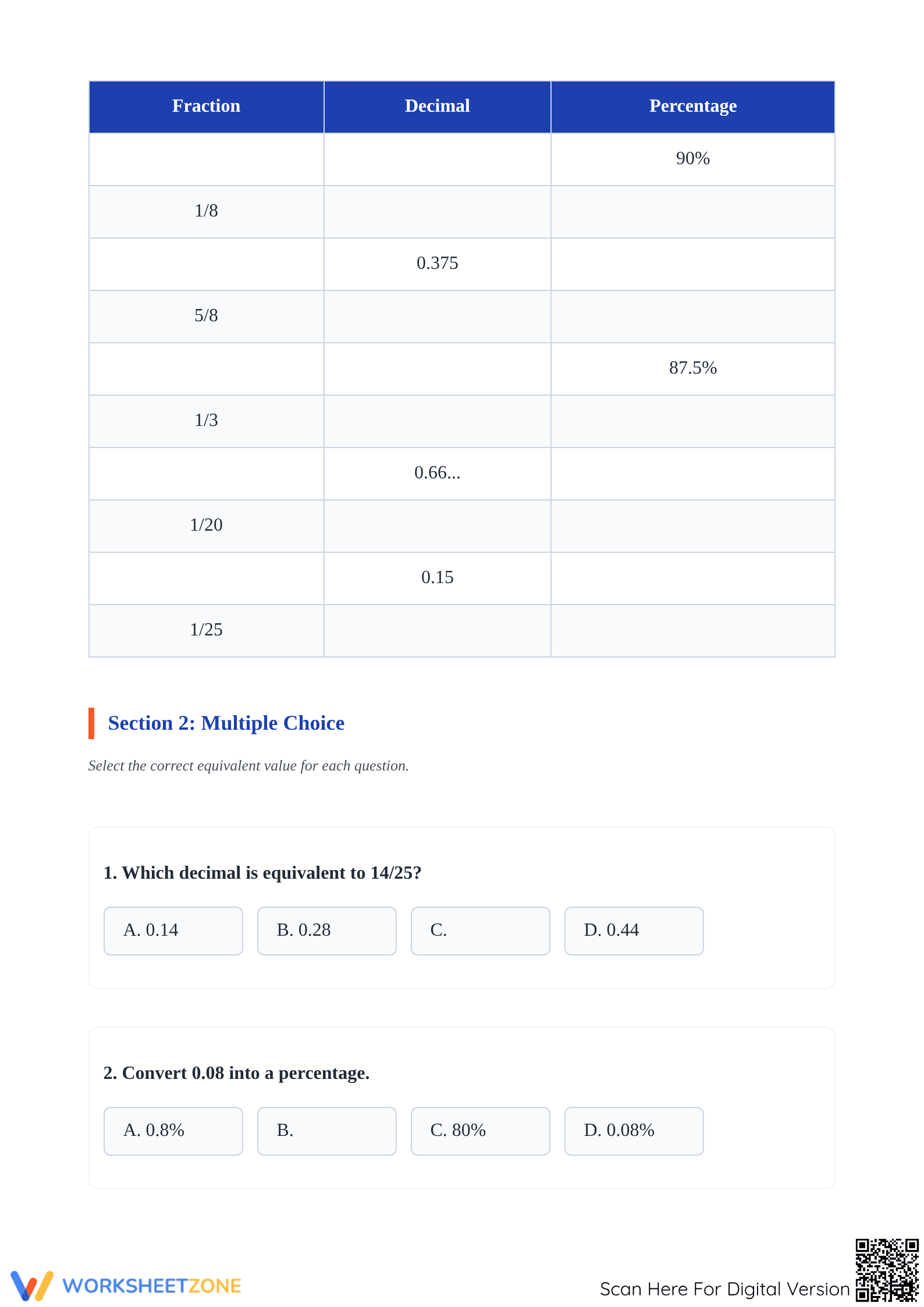
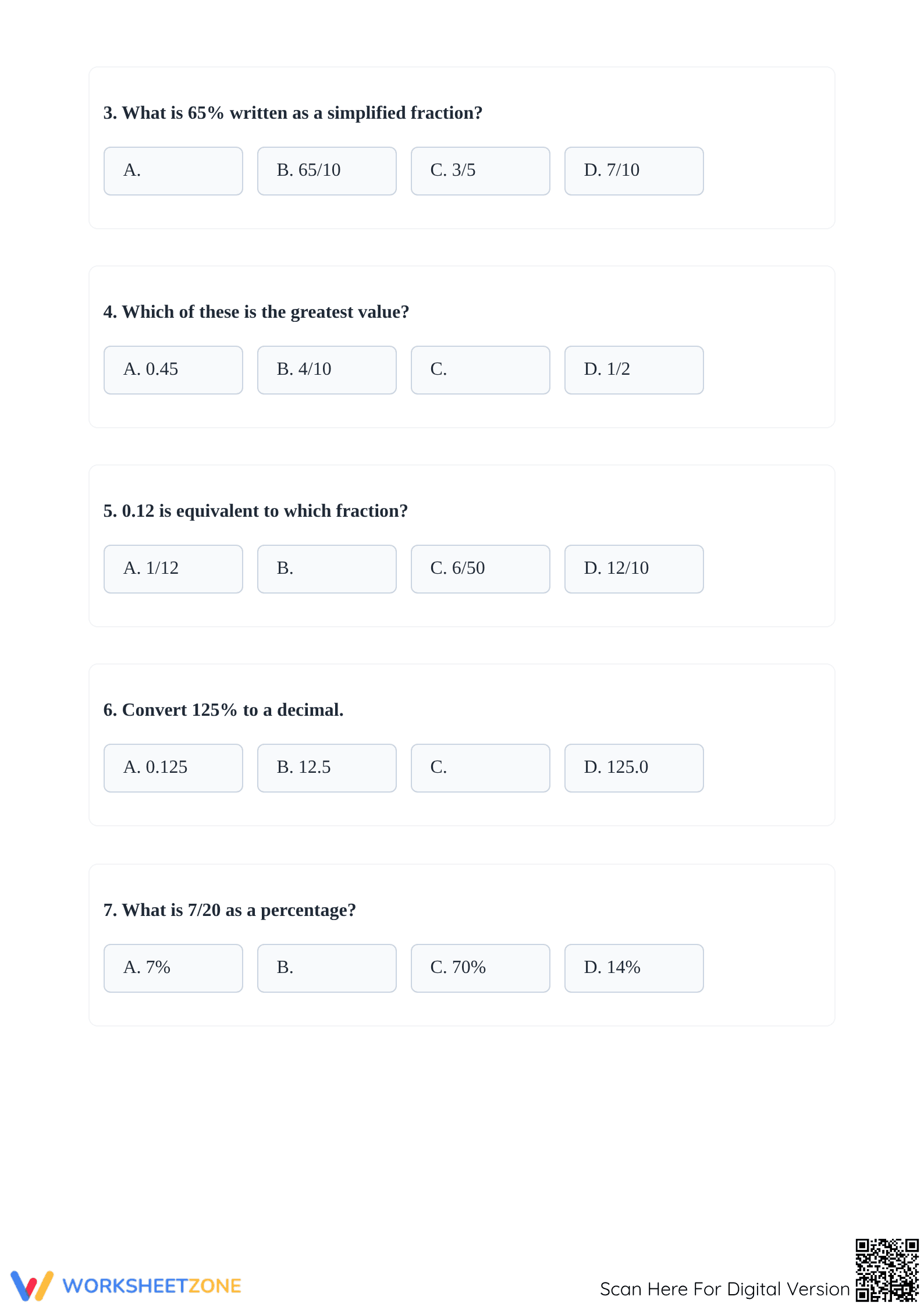
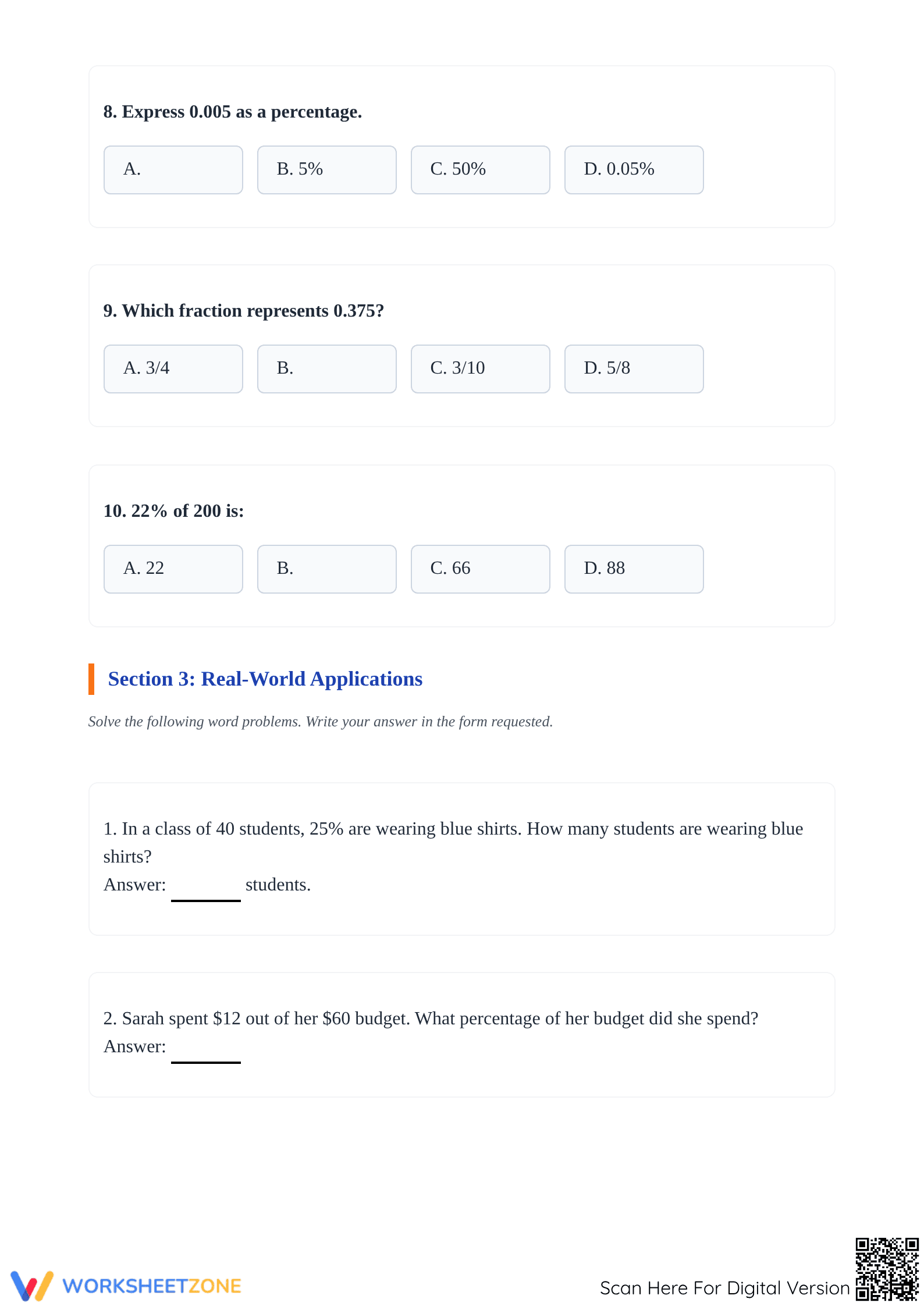
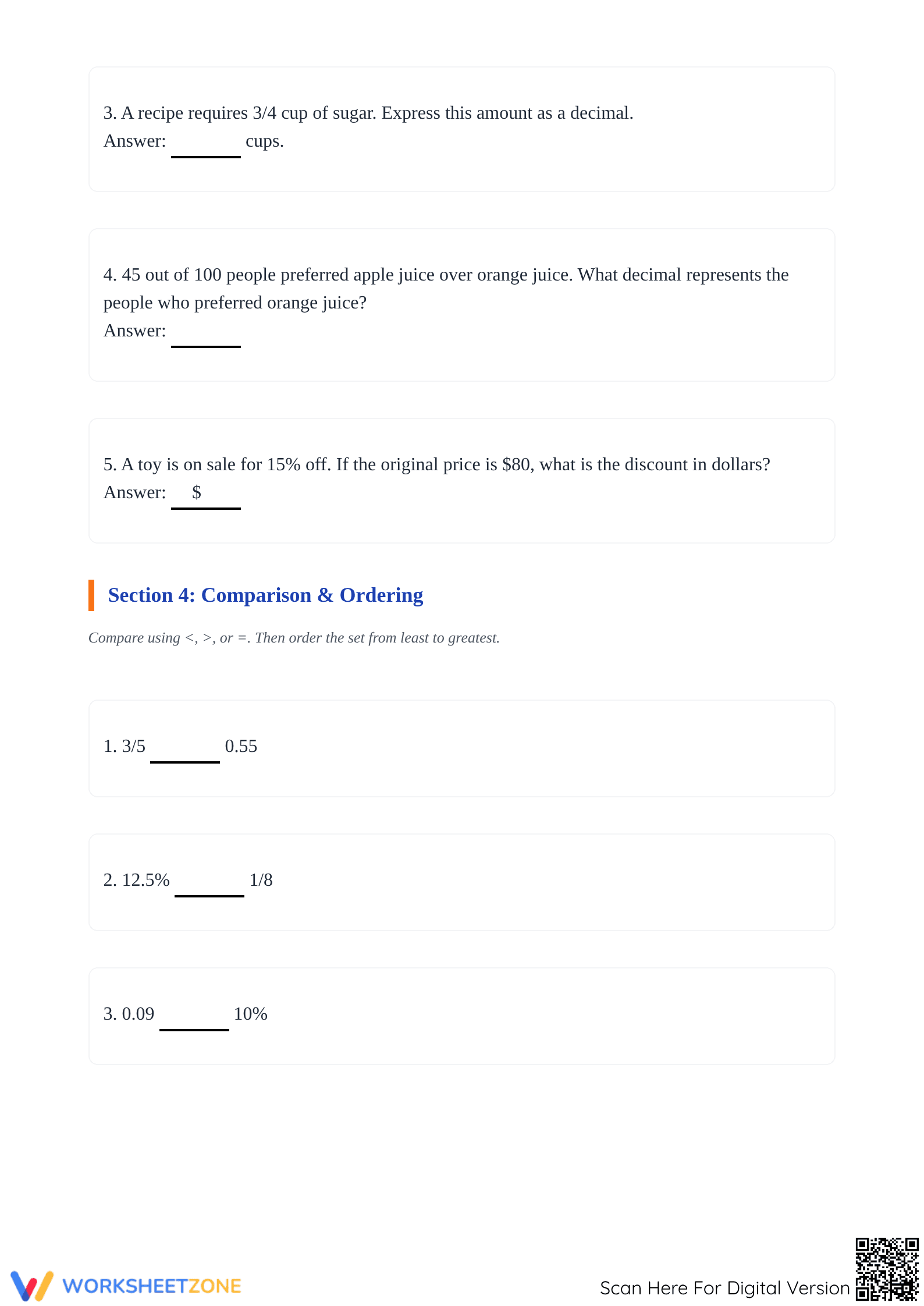

Essential Fractions, Decimals, & Percents Worksheet | Gr 5-6
Paste this activity's link or code into your existing LMS (Google Classroom, Canvas, Teams, Schoology, Moodle, etc.).
Students can open and work on the activity right away, with no student login required.
You'll still be able to track student progress and results from your teacher account.
This comprehensive worksheet provides focused practice for students in grades 5 and 6 on the essential skill of converting between fractions, decimals, and percentages. With 60 structured problems across five pages, learners will methodically build fluency and number sense, preparing them to apply these conversions in more complex ratio and statistics problems.
At a Glance
- Grade: 5–6 · Subject: Math
- Standard:
CCSS.MATH.CONTENT.6.RP.A.3— Use ratio and rate reasoning to solve problems.- Skill Focus: Converting between fractions, decimals, and percentages
- Format: 5 pages · 60 problems · Answer key included · PDF
- Best For: Independent practice, skill reinforcement, or assessment
- Time: 25–40 minutes
This five-page PDF contains extensive practice. Pages 1-3 focus on one conversion type at a time (e.g., fractions to decimals), while pages 4-5 use mixed-format tables requiring students to apply all strategies flexibly. A complete answer key is included for efficient grading.
Skill Progression
The worksheet follows a gradual release model to build independence.
- Guided Practice: The first 30 problems are grouped by conversion type, letting students master one procedure at a time with a clear, repetitive structure.
- Supported Practice: The final 30 problems use a mixed-format table. This requires students to correctly identify the number form and select the right conversion strategy.
- Independent Practice: The entire packet is ideal for students to complete on their own for homework, station work, or as a formative assessment after initial instruction.
This progression ensures students build a solid foundation before tackling mixed problems.
Standards Alignment
This worksheet directly aligns with skills for CCSS standard CCSS.MATH.CONTENT.6.RP.A.3, which involves using ratio and rate reasoning. Fluency with fractions, decimals, and percents is critical for understanding rates per 100. It also supports 5th graders working on CCSS.MATH.CONTENT.5.NBT.A.3 (decimal place value). Both codes can be copied into lesson plans or curriculum maps.
How to Use It
After direct instruction, use pages 1-3 for in-class practice or homework. The tables on pages 4-5 work well as a follow-up quiz or math center activity. To find areas for re-teaching, note which column in the tables causes the most difficulty for students. The entire worksheet can be completed in about 25-40 minutes.
Who It's For
This worksheet is designed for 5th and 6th-grade math students who are learning or reviewing how to convert between fractions, decimals, and percentages. It's particularly helpful for learners who benefit from clear, structured practice with repetition. For students needing extra support, pair this activity with a conversion anchor chart showing worked examples of each process (e.g., fraction to decimal via division).
Mastering the conversion between fractions, decimals, and percentages is a critical gateway skill for middle school mathematics, particularly for engaging with ratio and proportional reasoning as outlined in CCSS.MATH.CONTENT.6.RP.A.3. Procedural fluency with these number forms is a strong predictor of success in higher-level math. Research from the RAND AIRS (2024) report on foundational skills emphasizes that repeated, structured practice of such component skills is essential for reducing cognitive load when students later face complex, multi-step problems. This worksheet provides 60 opportunities for this focused practice. By developing automaticity in converting between these rational number representations, students are better equipped to analyze quantitative relationships and solve real-world problems involving rates, taxes, and discounts, aligning with instructional recommendations that prioritize both conceptual understanding and procedural skill.


