


























Views
Downloads

Grade 1 Compound Words — Printable Essential Worksheet
Paste this activity's link or code into your existing LMS (Google Classroom, Canvas, Teams, Schoology, Moodle, etc.).
Students can open and work on the activity right away, with no student login required.
You'll still be able to track student progress and results from your teacher account.
This printable Grade 1 English Language Arts worksheet provides a comprehensive introduction to compound words through interactive matching and sentence-level application. Students learn to combine two independent words to create a new meaning, strengthening their lexical development. It is a complete, ready-to-use resource for foundational literacy instruction and vocabulary expansion.
At a Glance
- Grade: 1 · Subject: ELA
- Standard:
CCSS.ELA-LITERACY.L.1.4— Identify and use common compound words to build foundational vocabulary and word-solving skills- Skill Focus: Compound Word Formation, Spelling, and Contextual Usage
- Format: 4 printable pages · 18 structured problems · Full answer key included · PDF
- Best For: Individual literacy centers, morning work, and independent vocabulary practice
- Time: 15–20 minutes
What's Inside
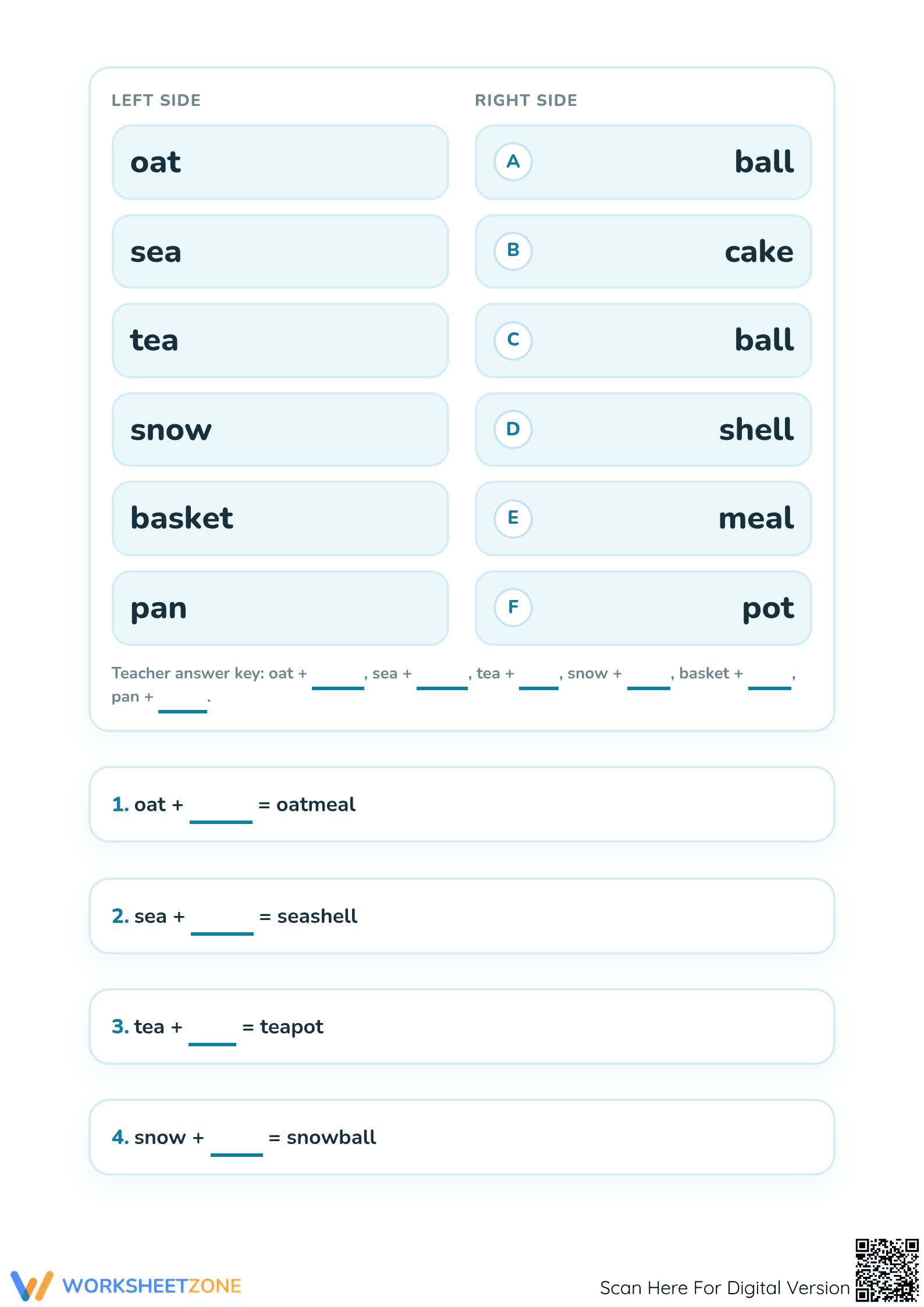
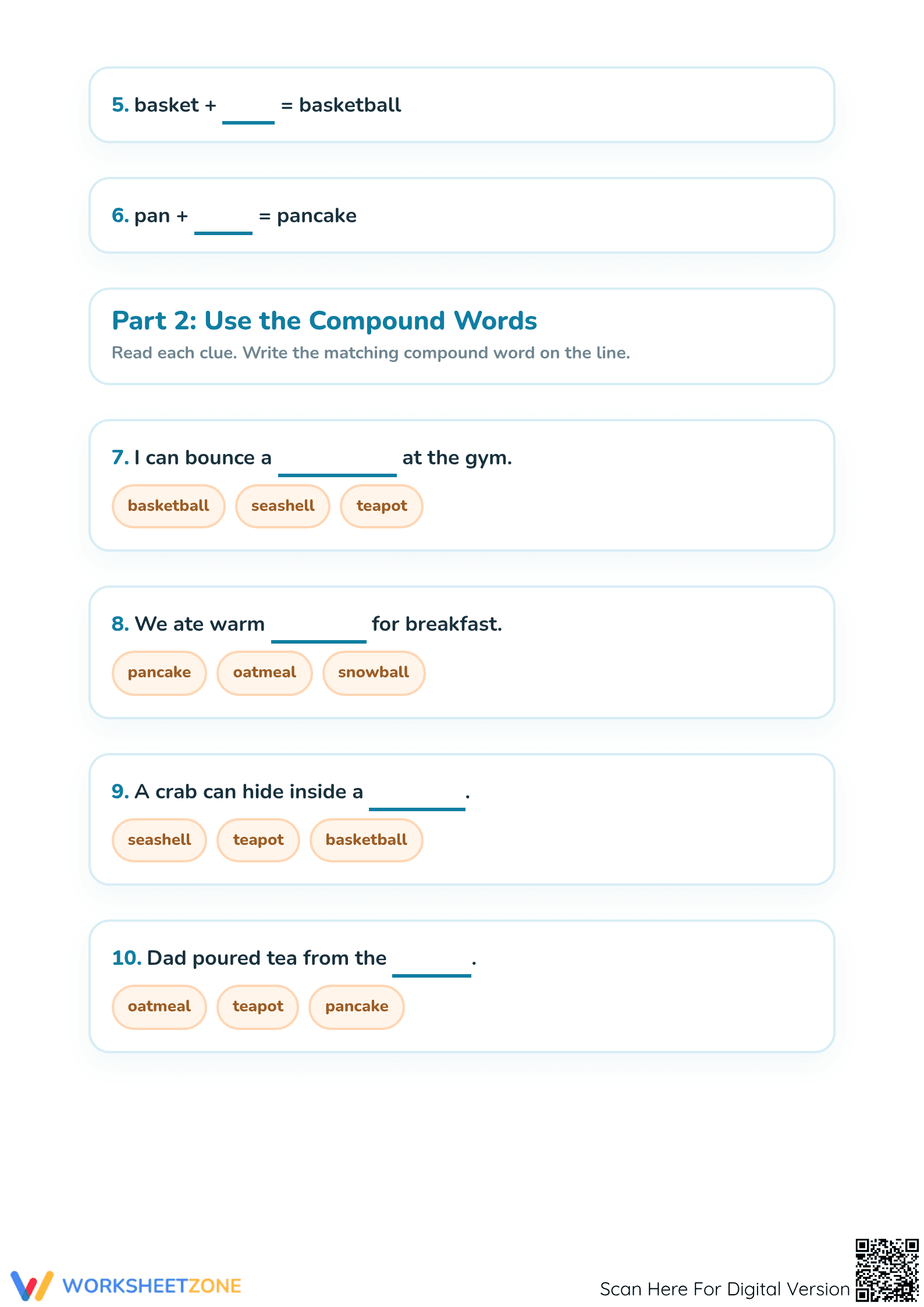
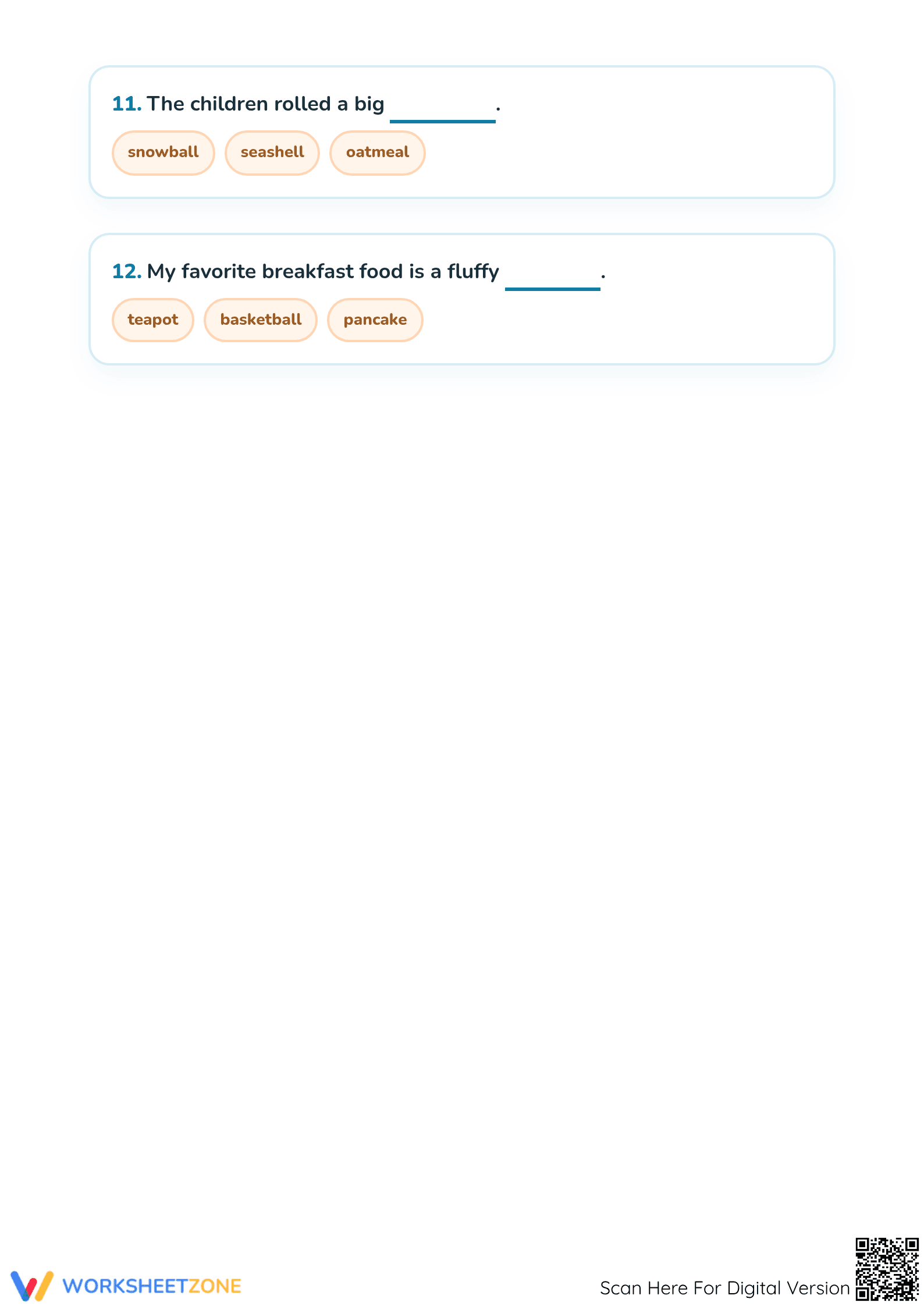
The packet consists of four structured pages designed for young learners. It begins with "Match the Word Halves," where students connect root words like "sea" and "shell" using visual lines. This is followed by word equations to reinforce spelling of the new terms. The final sections challenge students to apply their knowledge by selecting the correct word to complete contextual clues in sentences.
Zero-Prep Workflow
This resource is engineered for immediate classroom implementation with a total teacher prep time of under 90 seconds. Step 1: Print the four-page PDF (30 seconds). Step 2: Briefly model the first matching example to the class (30 seconds). Step 3: Distribute the sheets and allow students to work independently (30 seconds). Its self-explanatory layout makes it an ideal choice for emergency sub plans or morning work.
Standards Alignment
This worksheet aligns directly with `CCSS.ELA-LITERACY.L.1.4`, which requires students to determine or clarify the meaning of unknown and multiple-meaning words. Specifically, it addresses the morphological awareness needed to recognize how individual words contribute to a compound's meaning. Both standard codes can be copied directly into lesson plans, IEP goals, or district curriculum mapping tools.
How to Use It
Introduce this activity after a direct instruction lesson on how compound words work. Use the matching section as a guided practice phase to ensure students understand the concept of combining roots. For a formative assessment observation tip, watch students during the sentence completion; if they struggle to pick the correct word, they may need comprehension support rather than just morphological help.
Who It's For
This worksheet is designed for first-grade students but serves as an excellent intervention tool for second-graders needing phonics reinforcement. It pairs naturally with a Compound Word Anchor Chart or a high-interest picture book. Differentiation is built into the scaffolding, moving from simple visual matching to more abstract sentence completion tasks.
According to NAEP and recent findings in the ScienceDirect TpT Analysis, explicit instruction in morphology, including the identification of compound words, is a critical predictor of long-term reading fluency and comprehension. This Grade 1 ELA worksheet addresses `CCSS.ELA-LITERACY.L.1.4` by requiring students to identify frequently occurring root words and understand how they merge into new lexical units. Research by Fisher & Frey (2014) emphasizes that word-solving strategies, such as breaking down compound words, empower students to tackle increasingly complex texts independently. This four-page resource provides 18 structured opportunities for students to practice these skills, moving from recognition to application. By engaging in both matching and contextual usage, learners bridge the gap between phonics and semantic understanding. The inclusion of a clear answer key ensures that teachers can provide immediate feedback, a practice proven to accelerate learning outcomes in early childhood education settings.


