




























Views
Downloads




Complete Suspense & Irony Worksheet | Grade 8 ELA

Paste this activity's link or code into your existing LMS (Google Classroom, Canvas, Teams, Schoology, Moodle, etc.).
Students can open and work on the activity right away, with no student login required.
You'll still be able to track student progress and results from your teacher account.
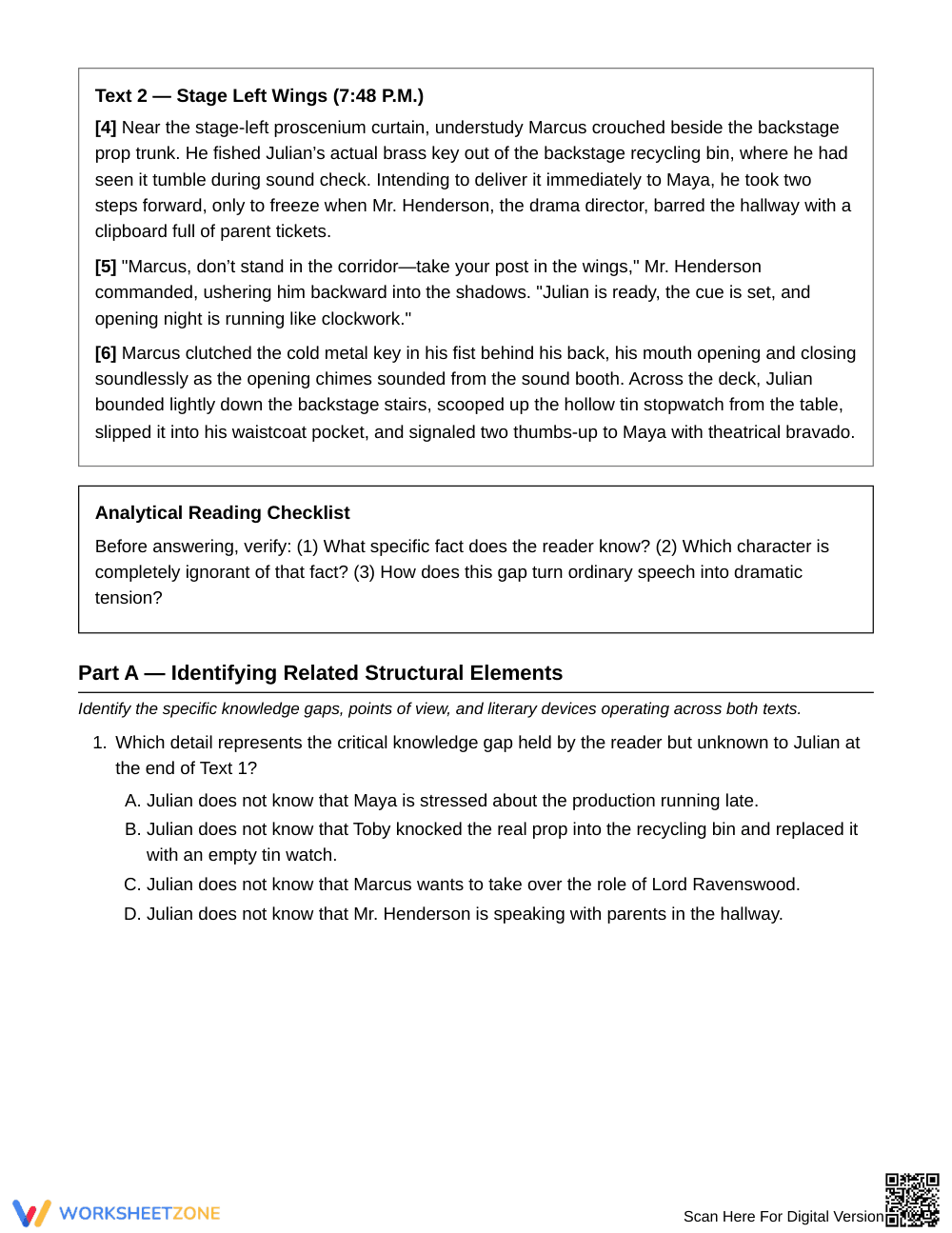
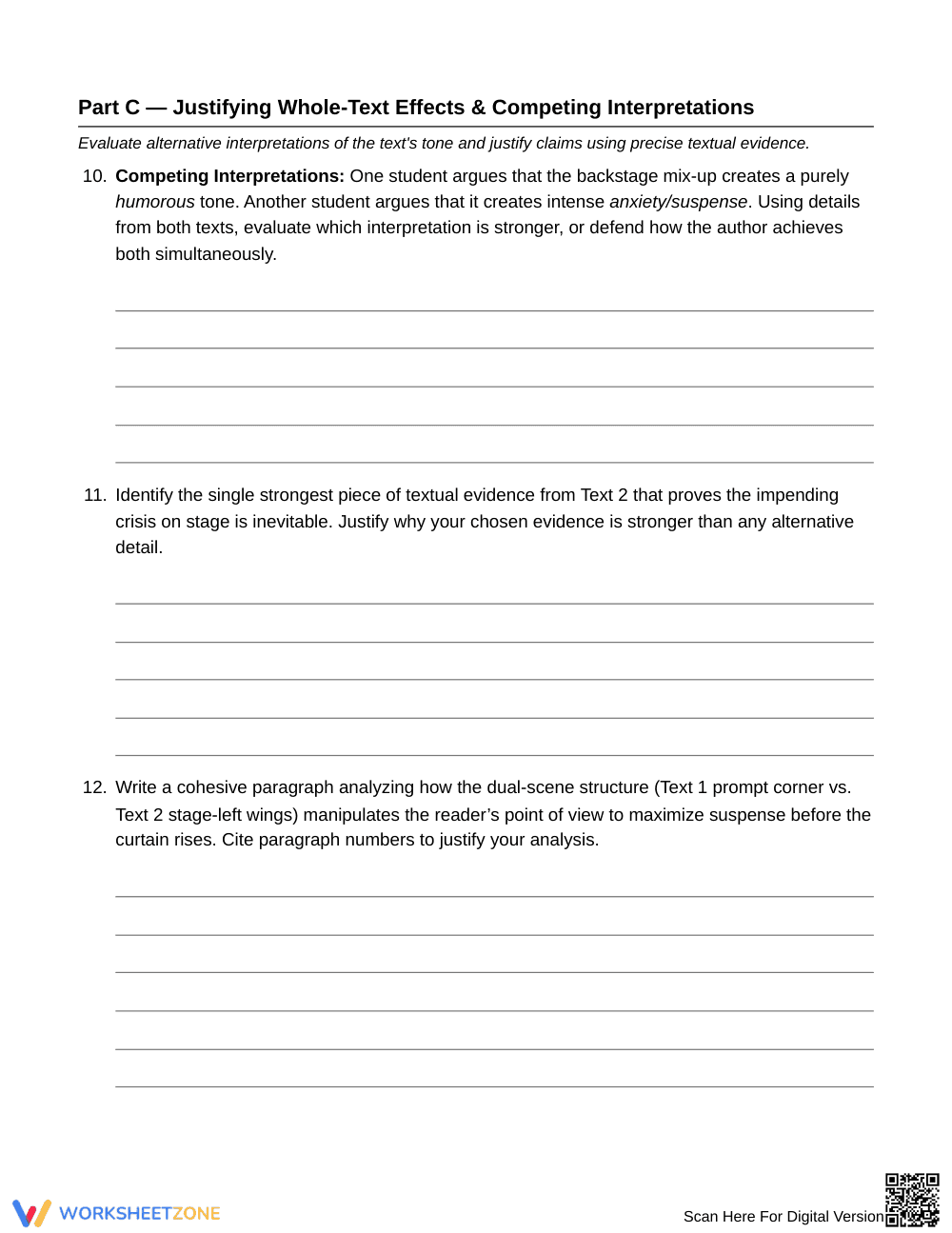
This Grade 8 ELA worksheet guides students to analyze how differences in character and audience points of view generate suspense and dramatic irony. Working through paired narrative texts, students evaluate informational gaps and explain how structural contrasts build tension across 12 analytical tasks.
At a Glance
- Grade: 8 · Subject: ELA
- Standard:
RL.8.6— Analyze how point-of-view differences create suspense or humor- Skill Focus: Connect Viewpoint, Suspense, and Irony
- Format: 5 pages · 12 problems · Answer key included · PDF
- Best For: Literary analysis and close reading
- Time: 40–50 minutes
The 5-page packet features two backstage narrative scenes, an explicit concept anchor box, and a 3-step Analytical Reading Checklist. Students complete 12 text-dependent questions across multiple-choice identification, short-response analysis, and an extended evaluative paragraph, supported by a thorough 3-page explanatory answer key.
Skill Progression
- Guided practice (Part A, 3 items): Students identify discrete structural elements and pinpoint which characters lack critical information.
- Supported practice (Part B, 6 items): Students analyze how mismatched awareness, dialogue, and staging turn ordinary statements into sources of suspense.
- Independent practice (Part C, 3 items): Students evaluate competing tonal interpretations and compose an evidence-based paragraph analyzing the dual-scene structure.
This sequence implements a gradual-release model, moving from basic recognition to independent analytical synthesis.
Standards Alignment
This resource targets RL.8.6: "Analyze how differences in the points of view of the characters and the audience or reader create such effects as suspense or humor." It also reinforces supporting standard RL.8.1 by requiring textual citations. Both standard codes can be copied directly into lesson plans, IEP goals, or district curriculum mapping tools.
How to Use It
Assign this worksheet after direct instruction on dramatic irony and perspective. Use it for small-group guided analysis where students map character knowledge using the checklist, or assign the full packet for 40–50 minutes of independent practice. Formatively assess whether students clearly differentiate what Julian knows from what the reader knows during Part B responses.
Who It's For
This activity is designed for eighth-grade ELA students mastering standard RL.8.6, advanced seventh graders, and high school intervention groups. Concept definitions and checklist scaffolds support English learners and students with accommodations. Pair this packet with a dramatic script or point-of-view anchor chart.
According to research by Fisher & Frey (2014) on close reading and text-dependent questioning, students build durable interpretive literacy when instructional tasks require them to trace textual evidence across parallel viewpoints. Standard RL.8.6 challenges eighth-grade learners to move beyond basic perspective by examining the structural tension created when readers possess privileged narrative facts. This 5-page worksheet operationalizes that standard through 12 progressive tasks anchored in dramatic irony, dual-scene staging, and tone analysis. By requiring students to isolate character knowledge deficits, evaluate competing tonal readings, and defend interpretive claims in synthesized analytical writing, the resource directly reinforces the close-reading stamina highlighted in contemporary adolescent literacy research. Teachers can efficiently evaluate student mastery of dramatic tension and literary devices using the comprehensive 3-page explanatory answer key provided with the packet.


