

































Complete Source Evaluation Worksheet | Grade 11 English III

Paste this activity's link or code into your existing LMS (Google Classroom, Canvas, Teams, Schoology, Moodle, etc.).
Students can open and work on the activity right away, with no student login required.
You'll still be able to track student progress and results from your teacher account.
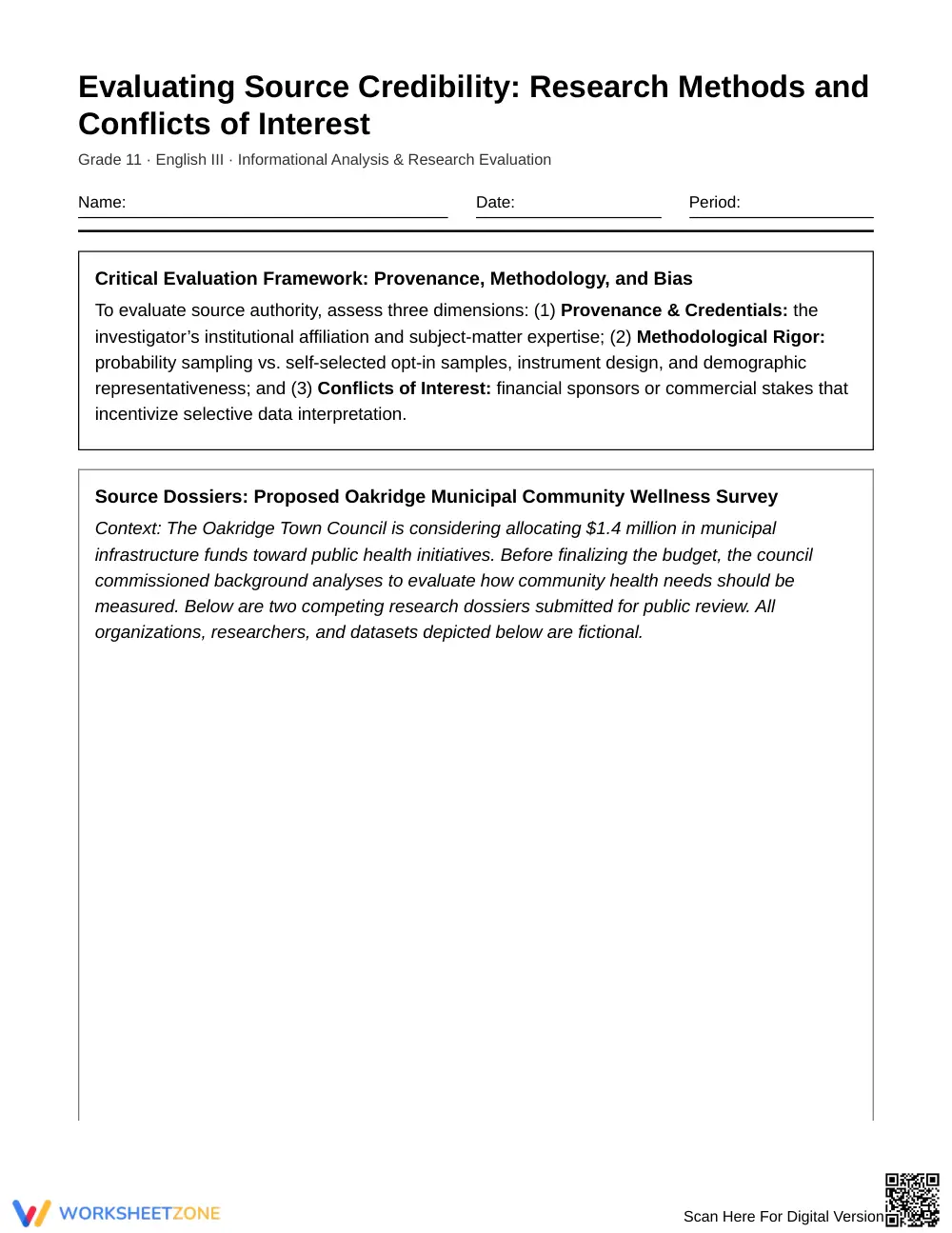
This research analysis worksheet guides eleventh-grade English III students through evaluating methodology, sampling validity, and financial conflicts of interest across competing municipal proposals. Students audit two survey dossiers, learning to distinguish between robust probability sampling and corporate opt-in data to substantiate defensible civic policy recommendations.
At a Glance
- Grade: 11 · Subject: English III
- Standard:
W.11-12.8— Evaluate source credibility, methodology, and bias in research data- Skill Focus: Evaluate Methods and Conflicts of Interest
- Format: 6 pages · 12 problems · Answer key included · PDF
- Best For: Informational text critique and research evaluation
- Time: 45–60 minutes
What's Inside
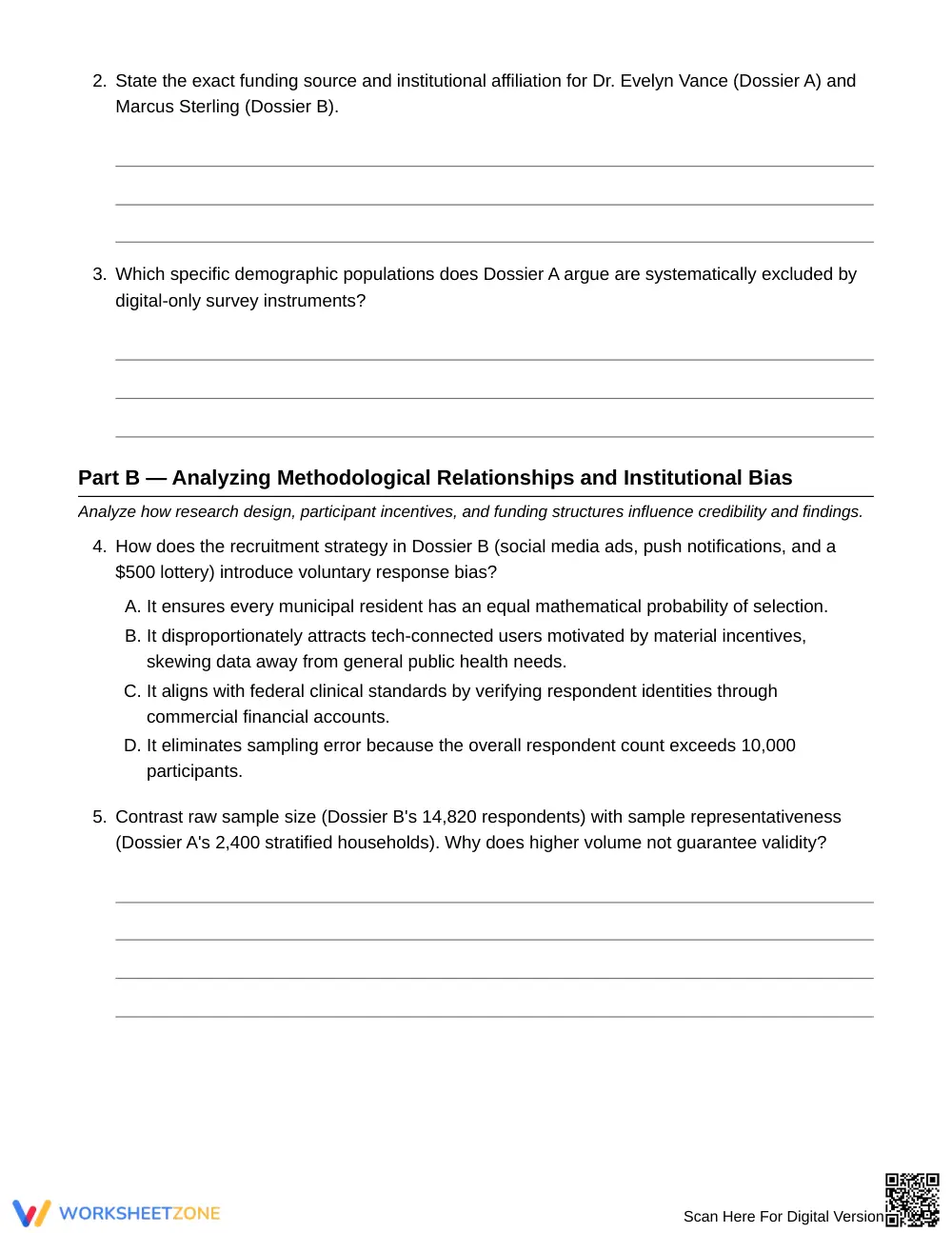
This 6-page worksheet features two contrasting survey research dossiers accompanied by a foundational evaluation framework. Across 12 tasks, students complete text-dependent fact-finding, multiple-choice bias checks, methodological critique questions, a comparative evaluation matrix, and an evidence-based policy recommendation. A 4-page answer key provides complete analytical exemplars and scoring guidelines.
Skill Progression
- Guided practice (Tasks 1–3): Students extract factual baselines from the dossiers, identifying sampling methodologies, sample sizes, investigator credentials, and financial disclosures.
- Supported practice (Tasks 4–9): Learners critique voluntary response bias, contrast sample size with demographic representativeness, and unpack corporate conflicts of interest.
- Independent practice (Tasks 10–12): Students refute statistical misconceptions, complete an evaluative matrix, and author an evidence-based policy recommendation.
This gradual release of responsibility moves students from textual fact-finding to independent analytical synthesis.
Standards Alignment
Primary Standard: W.11-12.8 — Gather relevant information from multiple authoritative sources, assessing strengths and limitations in terms of task, purpose, and audience.
Supporting Standard: RI.11-12.7 addresses integrating and evaluating multiple sources of information to solve a problem. Both standard codes can be copied directly into lesson plans, IEP goals, or district curriculum mapping tools.
How to Use It
Use this worksheet after direct instruction on research credibility. Walk through Dossier A collaboratively before students analyze Dossier B in pairs. Use Task 5 as a formative check to assess whether students confuse sample size with validity. Expect completion within 45 to 60 minutes.
Who It's For
This resource serves Grade 11 English III and AP English Language students analyzing informational texts. Scaffolded prompts support on-grade learners, while policy synthesis challenges advanced researchers. Pair this resource with direct lessons on statistical fallacies or civic argument writing.
Evaluating research methods and institutional conflicts of interest under standard W.11-12.8 equips secondary students with essential analytical skills for academic research and civic literacy. According to Fisher & Frey (2014), implementing structured gradual release frameworks—progressing intentionally from direct textual evidence extraction to independent evaluative synthesis—significantly improves high school students' ability to critique informational sources and detect latent bias. When learners examine the distinction between probability sampling models and self-selected opt-in surveys, they build critical awareness of statistical validity, sponsor motivations, and rhetorical manipulation. This 6-page worksheet reinforces these critical competencies through 12 rigorous tasks situated in an authentic municipal civic planning scenario. By interrogating how commercial funding can distort data interpretation, students learn to defend empirical objectivity against corporate bias, establishing lasting analytical habits essential for college-level research, scholarly writing, and informed citizenship.


