
































Complete Research Methods Worksheet | Grade 12 English IV

Paste this activity's link or code into your existing LMS (Google Classroom, Canvas, Teams, Schoology, Moodle, etc.).
Students can open and work on the activity right away, with no student login required.
You'll still be able to track student progress and results from your teacher account.
This Grade 12 informational text worksheet equips students to evaluate research methodology, sampling validity, and additionality in public policy dossiers. Learners analyze conflicting municipal reports to distinguish genuine intervention effects from macroeconomic trends, building critical evaluation skills essential for college research and civic literacy.
At a Glance
- Grade: 12 · Subject: English IV
- Standard:
RH.11-12.8— Evaluate an author's premises and evidence across informational texts- Skill Focus: Evaluate Methods and Representativeness
- Format: 7 pages · 12 problems · Answer key included · PDF
- Best For: Source credibility and policy analysis
- Time: 45–60 minutes
What's Inside
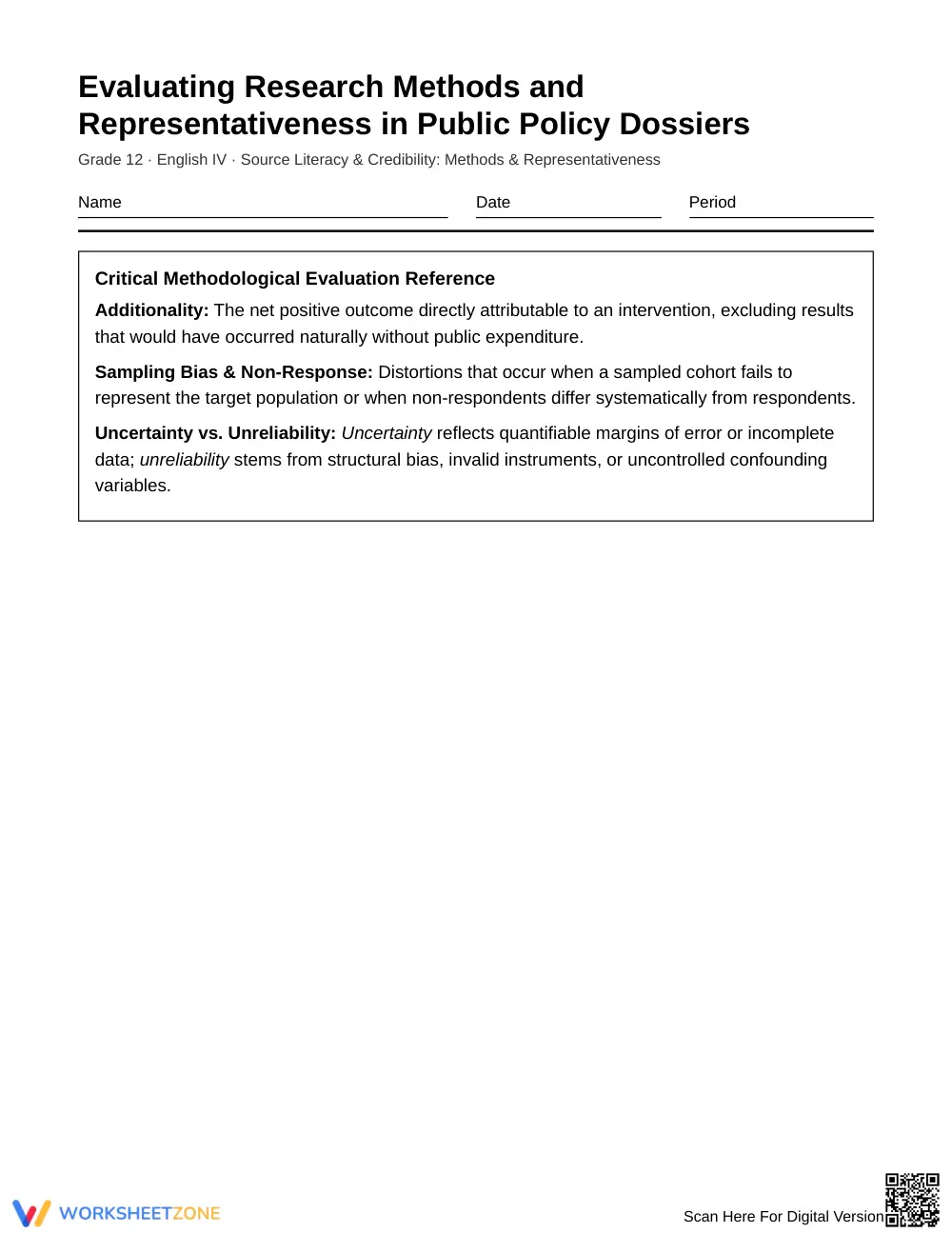
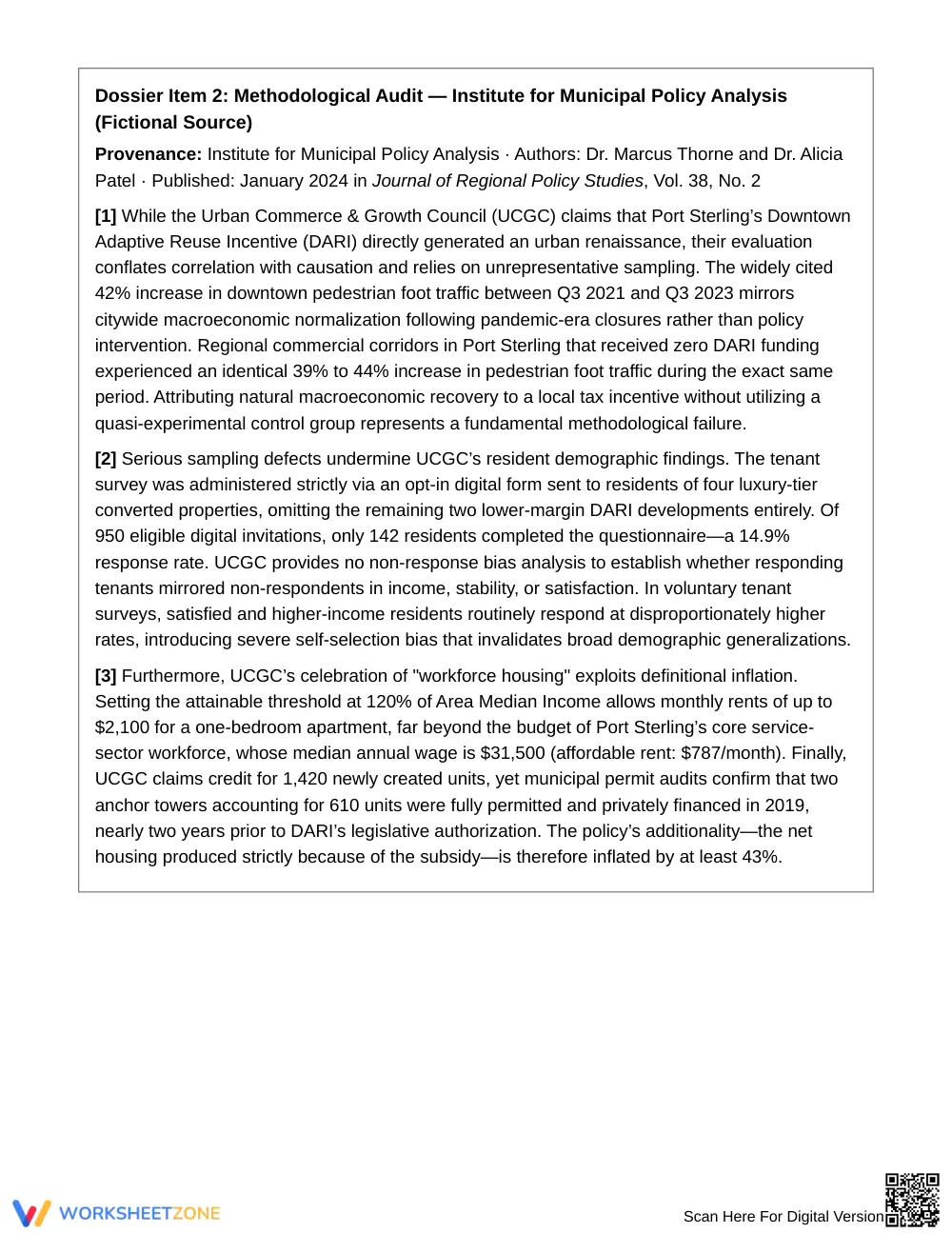
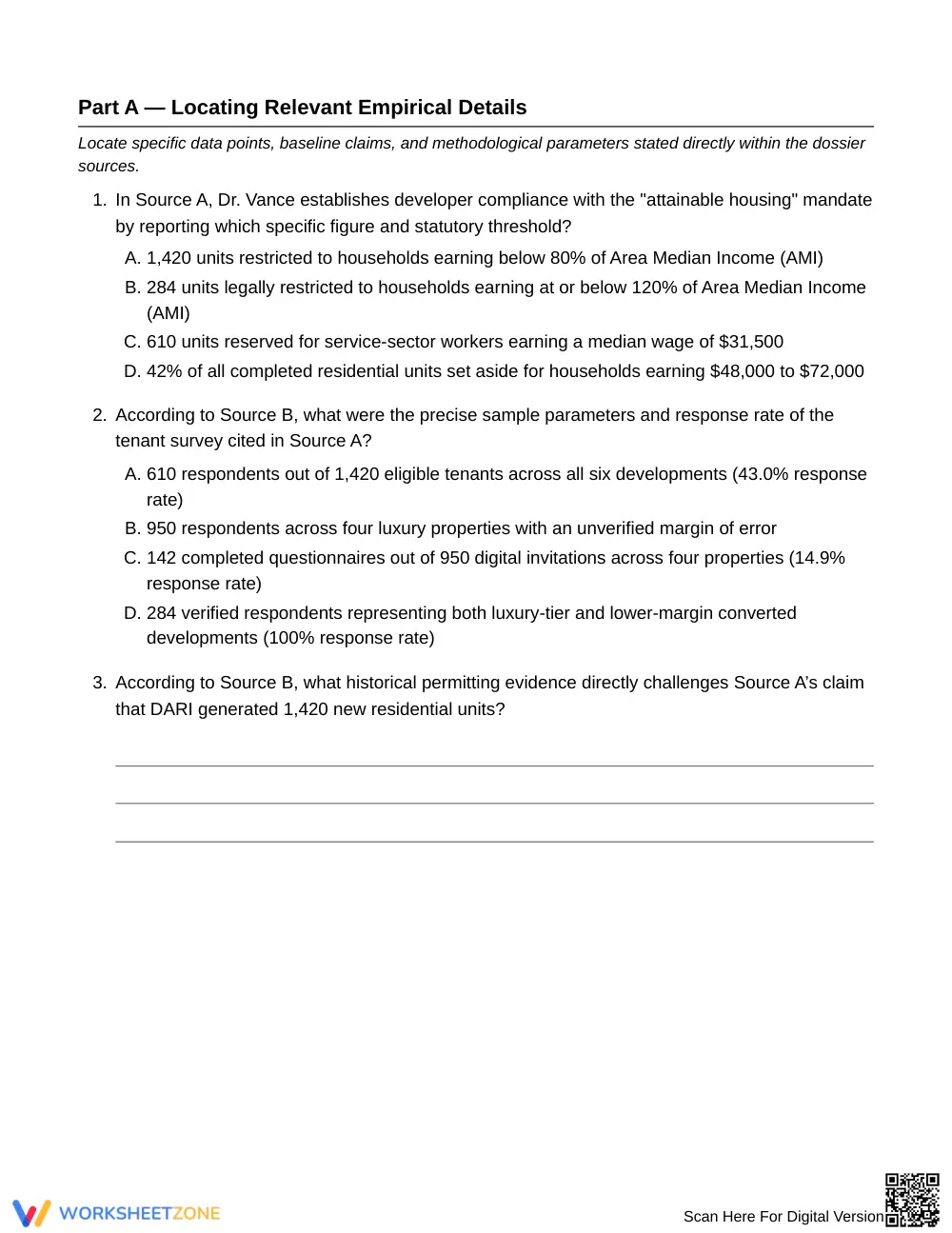
This 7-page print-ready dossier features two competing policy reports paired with 12 analytical tasks. Students complete data-verification multiple-choice items, short-answer methodology breakdowns, and synthesis prompts. A built-in reference guide defines additionality and sampling bias, supported by a 5-page answer key.
Skill Progression
- Guided practice (Tasks 1–3): Students extract baseline data points, response rates, and permitting records from paired texts.
- Supported practice (Tasks 4–9): Learners analyze sampling bias, housing affordability benchmarks, and additionality distortions with structured prompts.
- Independent practice (Tasks 10–12): Students independently synthesize conflicting findings, design an unbiased evaluation protocol, and evaluate policy premises.
This gradual-release model moves students from data retrieval to independent methodological critique.
Standards Alignment
This resource aligns with primary standard `RH.11-12.8`: Evaluate an author's premises, claims, and reasoning by corroborating or challenging them with other information. It also supports standard `RI.11-12.7` through multi-source integration. Both standard codes can be copied directly into lesson plans, IEP goals, or district curriculum mapping tools.
How to Use It
Use this worksheet after direct instruction on source credibility and research design. Assign Parts A and B for guided partner analysis, observing whether students distinguish quantifiable uncertainty from structural unreliability. Assign Part C as an independent synthesis task. Expected completion time is 45 to 60 minutes.
Who It's For
Designed for Grade 12 English IV and AP Language students mastering informational literacy. Built-in definitions scaffold developing readers, while synthesis items challenge advanced analysts. Pair with a lesson on empirical methodology and logical fallacies.
According to research from Fisher & Frey (2014), structured gradual-release frameworks improve secondary students' ability to critique complex arguments when analytical tasks progress from guided comprehension to independent synthesis. This Grade 12 English IV worksheet operationalizes standard RH.11-12.8 by requiring learners to evaluate an author's premises, claims, and evidence across competing informational policy texts. Students examine technical research design flaws, identify sampling bias, assess non-response errors, and calculate additionality discrepancies across 12 structured tasks. By analyzing authentic policy dossiers, high school seniors develop the evaluative discernment necessary to interrogate conflicting real-world data claims. This structured approach ensures students build verifiable mastery in distinguishing sound empirical evidence from unrepresentative methodology across academic research and civic literacy contexts.


