

































Complete Narrator Point of View Worksheet | Grade 6 ELA

Paste this activity's link or code into your existing LMS (Google Classroom, Canvas, Teams, Schoology, Moodle, etc.).
Students can open and work on the activity right away, with no student login required.
You'll still be able to track student progress and results from your teacher account.
This point of view worksheet helps Grade 6 students identify narrator perspectives and evaluate access to character thoughts. Through Scene A and Scene B, learners examine how narrative boundaries shape reader knowledge and differentiate narrator voice from author identity.
At a Glance
- Grade: 6 · Subject: ELA
- Standard:
RL.6.6— Explain how an author develops the narrator point of view in a text- Skill Focus: Narrator perspective and knowledge access limits
- Format: 5 pages · 10 problems · Answer key included · PDF
- Best For: Point of view literary analysis and practice
- Time: 25–35 minutes
What's Inside
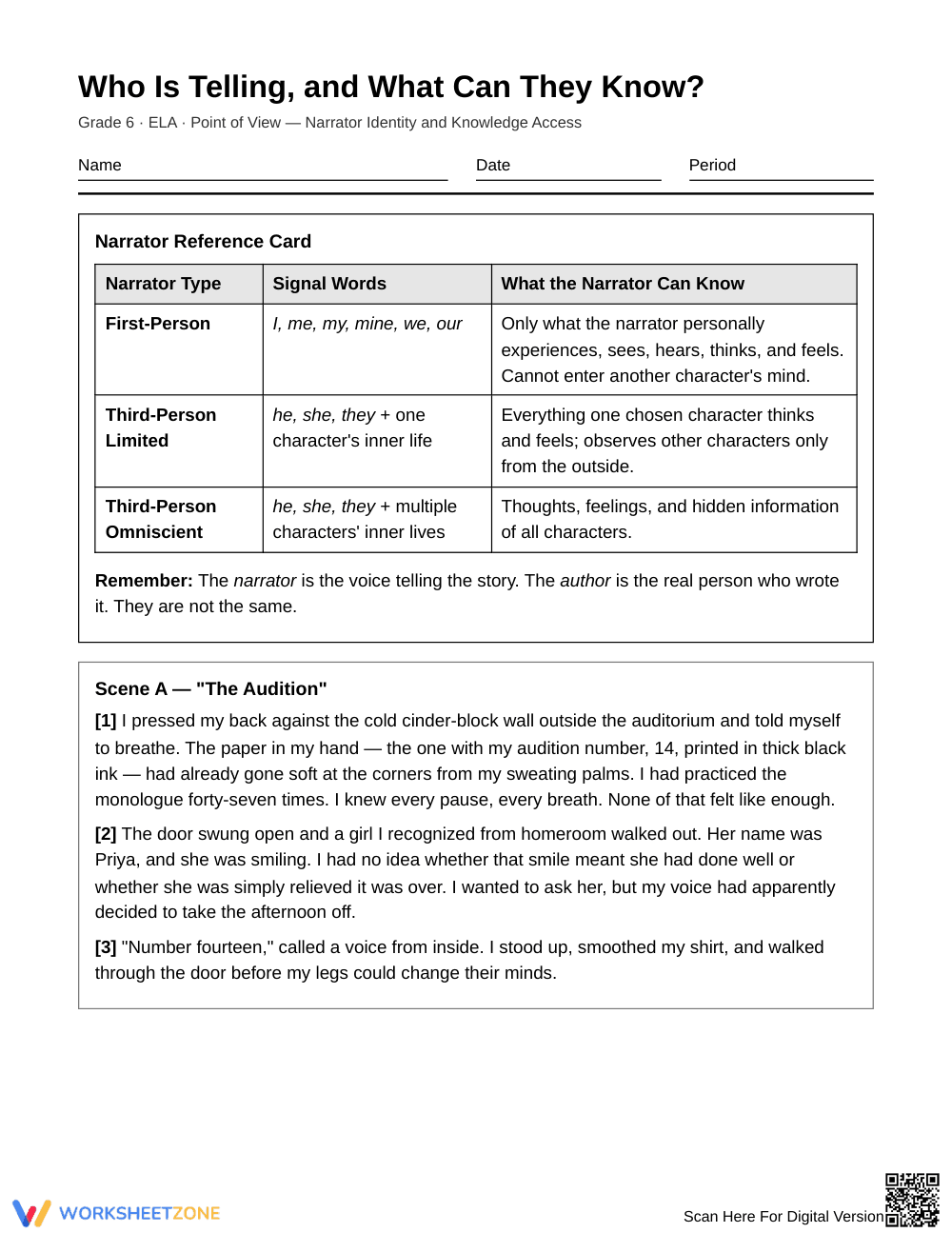
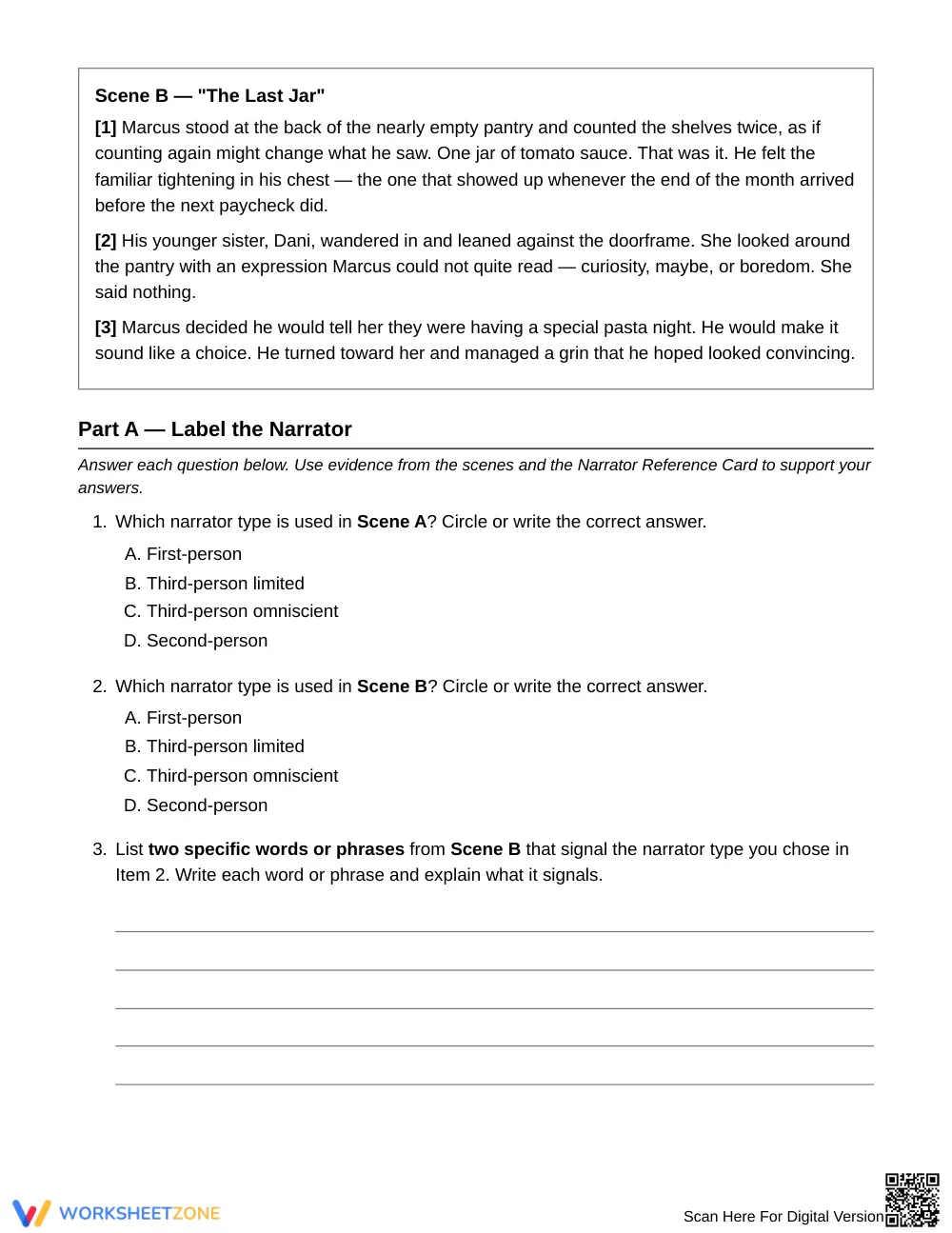
This 5-page printable resource features two original narrative scenes, ten targeted analytical questions, and a four-page answer key with model explanations. A Narrator Reference Card details first-person, third-person limited, and third-person omniscient viewpoints before students complete identification items, knowledge-access checks, and written evaluations.
Skill Progression
The worksheet follows a three-stage gradual-release structure:
- Guided practice (Tasks 1–3): Students use the reference card to classify narrative types in both scenes, identifying signal pronouns and textual cues.
- Supported practice (Tasks 4–8): Learners evaluate five scenarios, marking whether the narrator can access specific thoughts and explaining their logic.
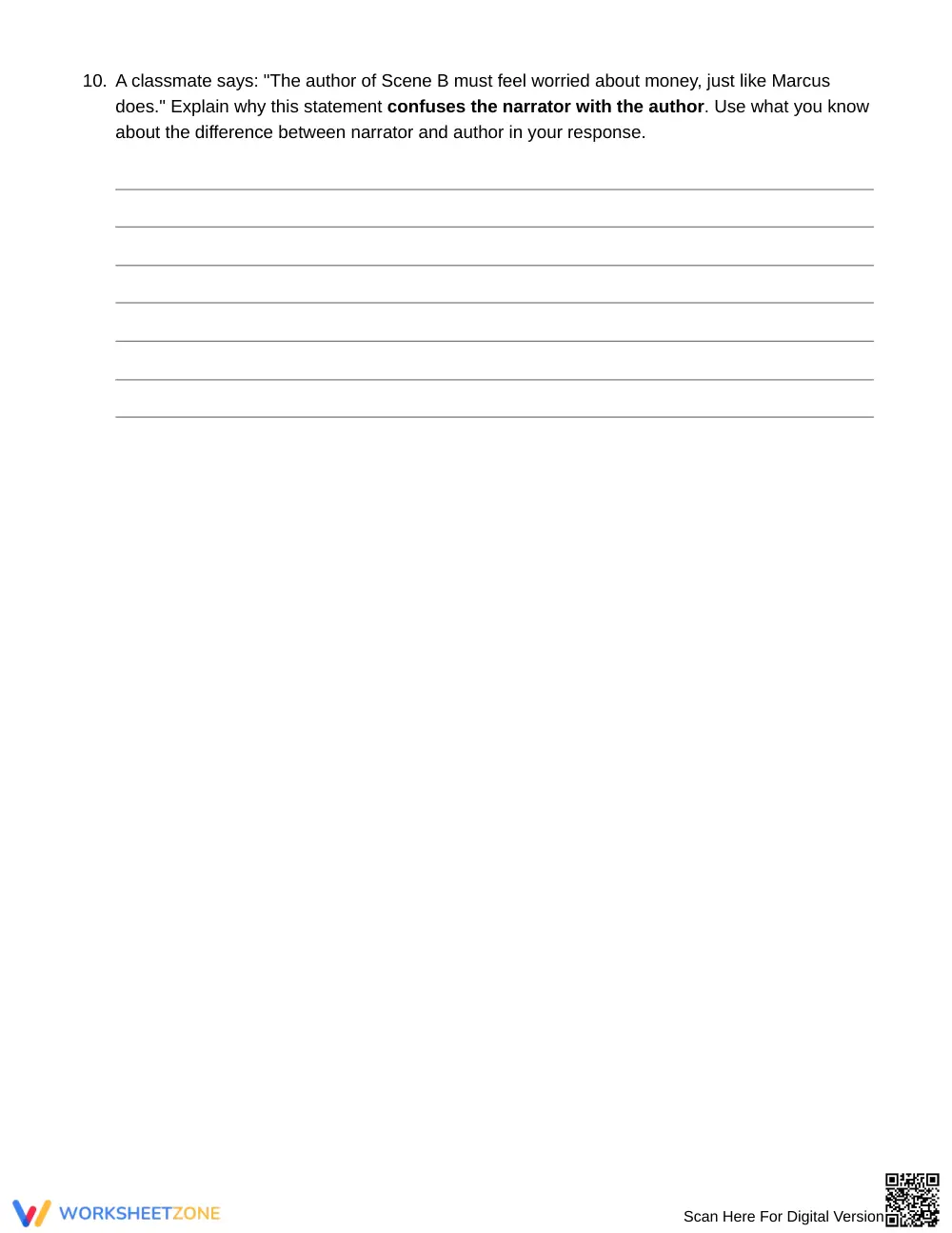
- Independent practice (Tasks 9–10): Students write extended responses analyzing narrative limits and untangling author perspective from narrator voice.
This intentional sequence moves students systematically from supported identification to independent textual critique.
Standards Alignment
This worksheet aligns directly with RL.6.6: Explain how an author develops the point of view of the narrator or speaker in a text. It also reinforces supporting standard RL.6.1 through evidence-based responses. Both standard codes can be copied directly into lesson plans, IEP goals, or district curriculum mapping tools.
How to Use It
Use this resource during the practice segment of a point of view unit or as a formative assessment check. While students work, verify that they consult the reference card rather than assuming all third-person narrators possess omniscient knowledge. Student completion requires 25 to 35 minutes.
Who It's For
Designed for Grade 6 ELA classrooms, this worksheet supports general instruction, intervention groups, and multilingual learners through clear signal-word charts and scaffolded prompts. It pairs effectively with anchor charts on internal monologue or short narrative passages.
According to Fisher & Frey (2014), structured literacy frameworks that balance explicit instructional references with gradual-release problem sets produce substantial measurable gains in middle school reading comprehension. This Grade 6 ELA worksheet reinforces standard RL.6.6 by guiding learners through the plain-English skill of explaining how authors develop narrator point of view and knowledge access. By contrasting first-person narration with third-person limited narration, students encounter concrete examples of bounded narrative perspective, examining what storytellers can and cannot know within a text. The sequence of ten structured tasks moves students from foundational classification to evidence-based written justification, directly addressing common developmental confusions between author intent and narrator perspective. Classroom research demonstrates that isolating narrative knowledge constraints enhances critical reading analysis and textual synthesis across informational and literary genres, equipping students with rigorous interpretive strategies required for secondary academic readiness.


