
































Complete Mutation Effects Worksheet | Grade 10 Biology

Paste this activity's link or code into your existing LMS (Google Classroom, Canvas, Teams, Schoology, Moodle, etc.).
Students can open and work on the activity right away, with no student login required.
You'll still be able to track student progress and results from your teacher account.
Mastering molecular genetics requires connecting DNA alterations to phenotypic protein outcomes. This Grade 10 Biology worksheet guides students through transcribing DNA, translating codons, and defending predictions about point mutations. Learners analyze laboratory data, trace missense, nonsense, frameshift, and silent mutations, and evaluate competing scientific claims using mechanistic reasoning.
At a Glance
- Grade: 10 · Subject: Biology
- Standard: Construct explanations and defend claims showing how DNA sequence changes alter protein structure
- Skill Focus: Transcription, translation, and defending mutation-effect predictions
- Format: 5 pages · 8 problems · Answer key included · PDF
- Best For: High school molecular genetics skill mastery
- Time: 45–60 minutes
What's Inside
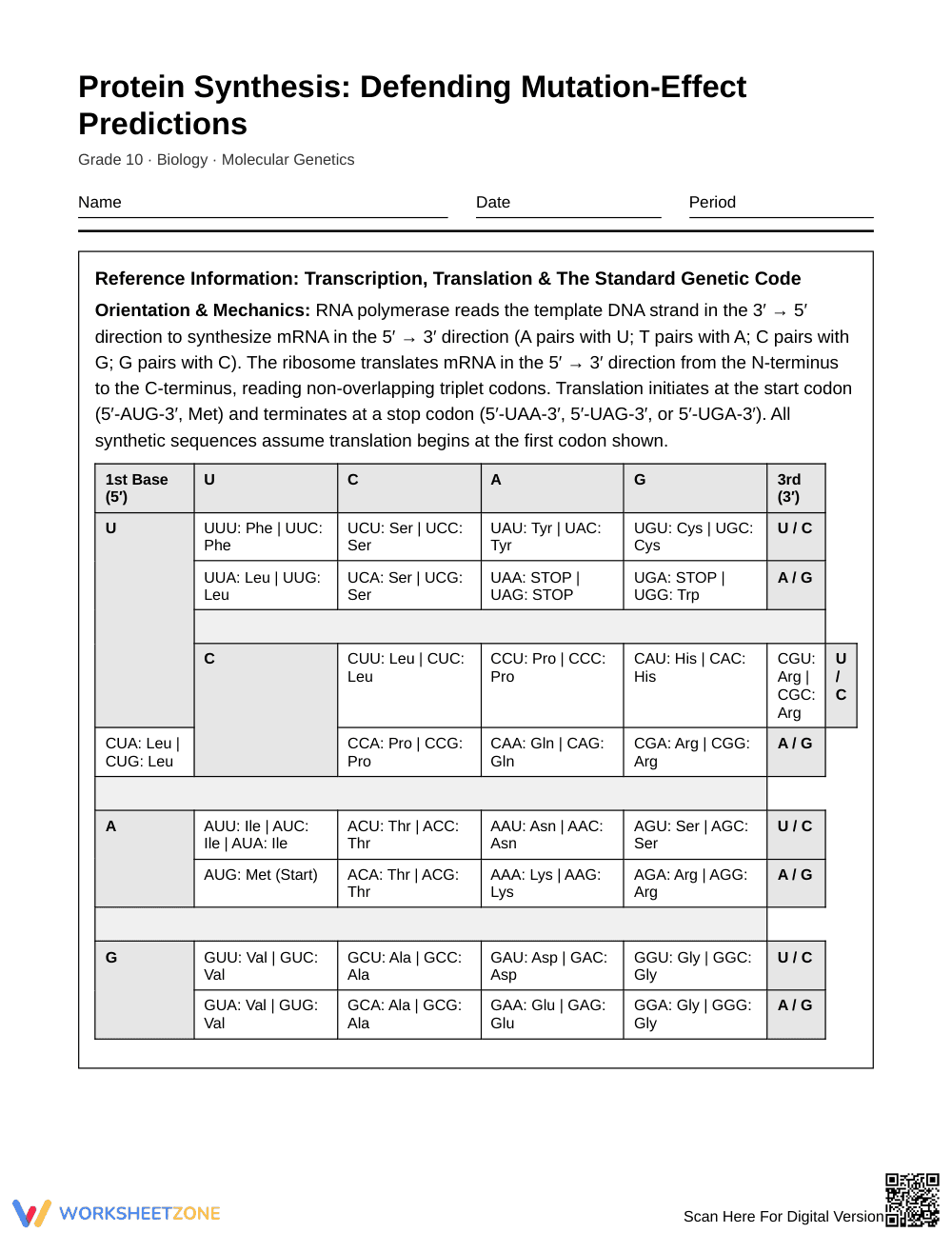
This 5-page worksheet provides 8 multi-part analytical problems accompanied by a complete 4-page answer key. Students utilize an embedded genetic code codon chart and transcription mechanics summary to evaluate molecular data, transcribe sequences, and write rigorous mechanistic explanations.
Skill Progression
- Guided Practice (Part A, Tasks 1–2): Students analyze gene sequences and laboratory data tables showing mRNA lengths and protein masses to identify evidence distinguishing nonsense from missense mutations.
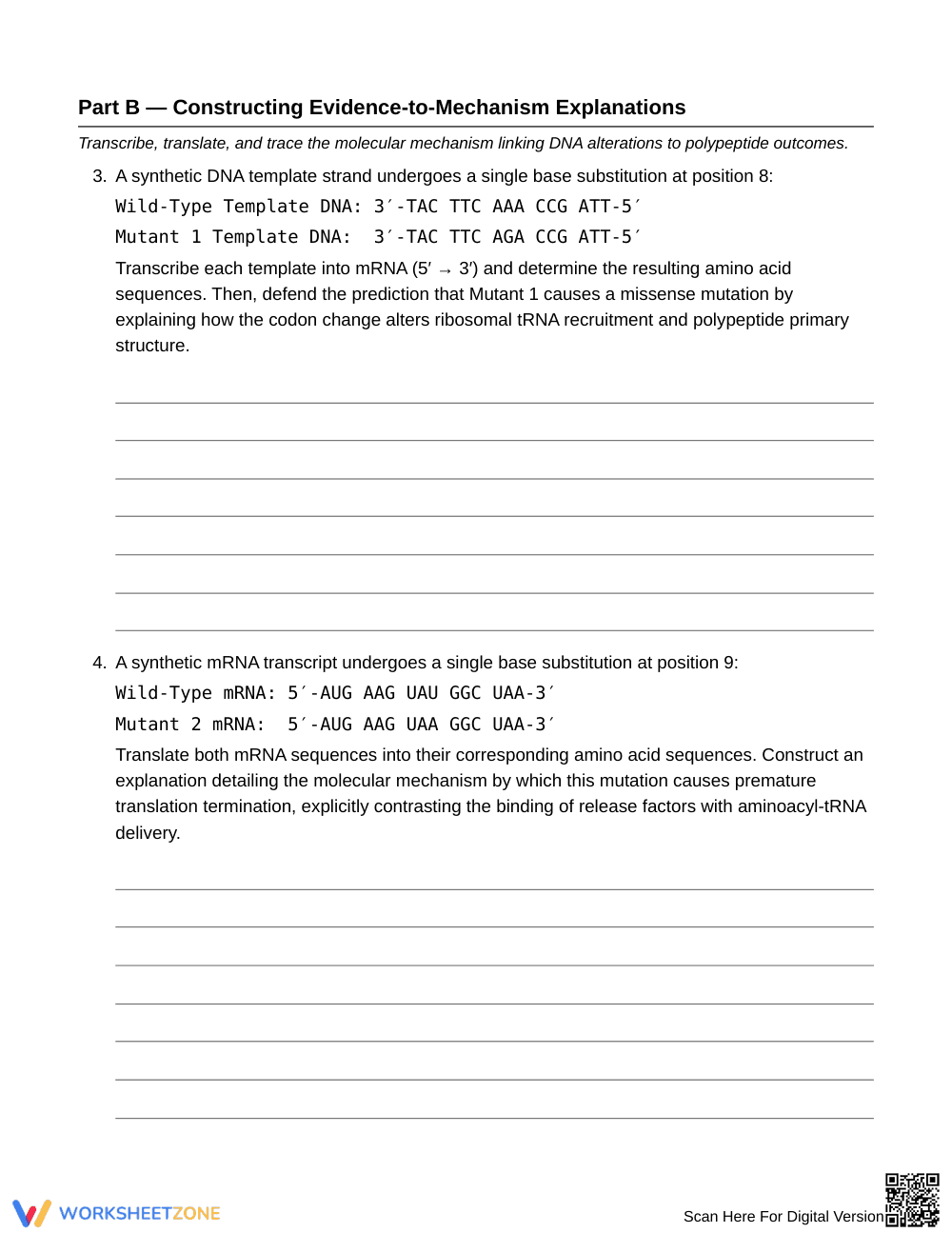
- Supported Practice (Part B, Tasks 3–6): Learners transcribe DNA templates, translate codons, and construct written mechanistic explanations for missense, nonsense, frameshift, and silent mutations.
- Independent Practice (Part C, Tasks 7–8): Students evaluate competing scientific claims regarding triplet reading frames, in-frame deletions, and base substitutions to refute misconceptions.
This gradual-release progression moves students systematically from guided evidence identification to independent scientific defense.
Standards Alignment
This resource aligns with high school biology expectations for protein synthesis and gene expression. Students demonstrate how changes in DNA sequences alter resulting polypeptide chains and defend predictions using codon tables. Both standard codes can be copied directly into lesson plans, IEP goals, or district curriculum mapping tools.
How to Use It
Administer this worksheet after direct instruction on protein synthesis mechanics to reinforce codon translation. Use Part A for paired partner analysis before students complete the mechanistic explanations in Part B independently. For formative assessment, check Task 4 to verify that learners understand why premature stop codons recruit release factors rather than aminoacyl-tRNA. Completion takes approximately 45 to 60 minutes.
Who It's For
This worksheet serves Grade 10 biology and honors genetics students mastering molecular mechanisms. The embedded codon table and directional labels support developing learners, while multi-step claim defenses provide rigorous extension. Pair this resource with a protein synthesis interactive model or transcription anchor chart.
According to Fisher & Frey (2014), structured instructional progressions that guide students from foundational evidence identification to evidence-based scientific defense significantly deepen conceptual mastery in molecular genetics. When secondary biology learners transcribe synthetic DNA sequences, translate codon triplets, and predict phenotypic consequences, they engage in authentic scientific reasoning rather than rote memorization. This Grade 10 Biology worksheet systematically reinforces how specific alterations in nucleotide sequences influence polypeptide length, ribosomal tRNA delivery, and overall amino acid assembly. By actively analyzing laboratory data and evaluating competing claims surrounding triplet reading frames and genetic code degeneracy, learners resolve persistent misconceptions regarding silent, missense, nonsense, and frameshift mutations. The accompanying genetic code reference chart and detailed 4-page answer key provide essential scaffolds, supporting rigorous independent problem-solving and mechanistic literacy across diverse science learning environments while empowering students to articulate molecular cause-and-effect relationships with precision.


