































Complete Informative Composition Worksheet | Grade 7 ELA

Paste this activity's link or code into your existing LMS (Google Classroom, Canvas, Teams, Schoology, Moodle, etc.).
Students can open and work on the activity right away, with no student login required.
You'll still be able to track student progress and results from your teacher account.
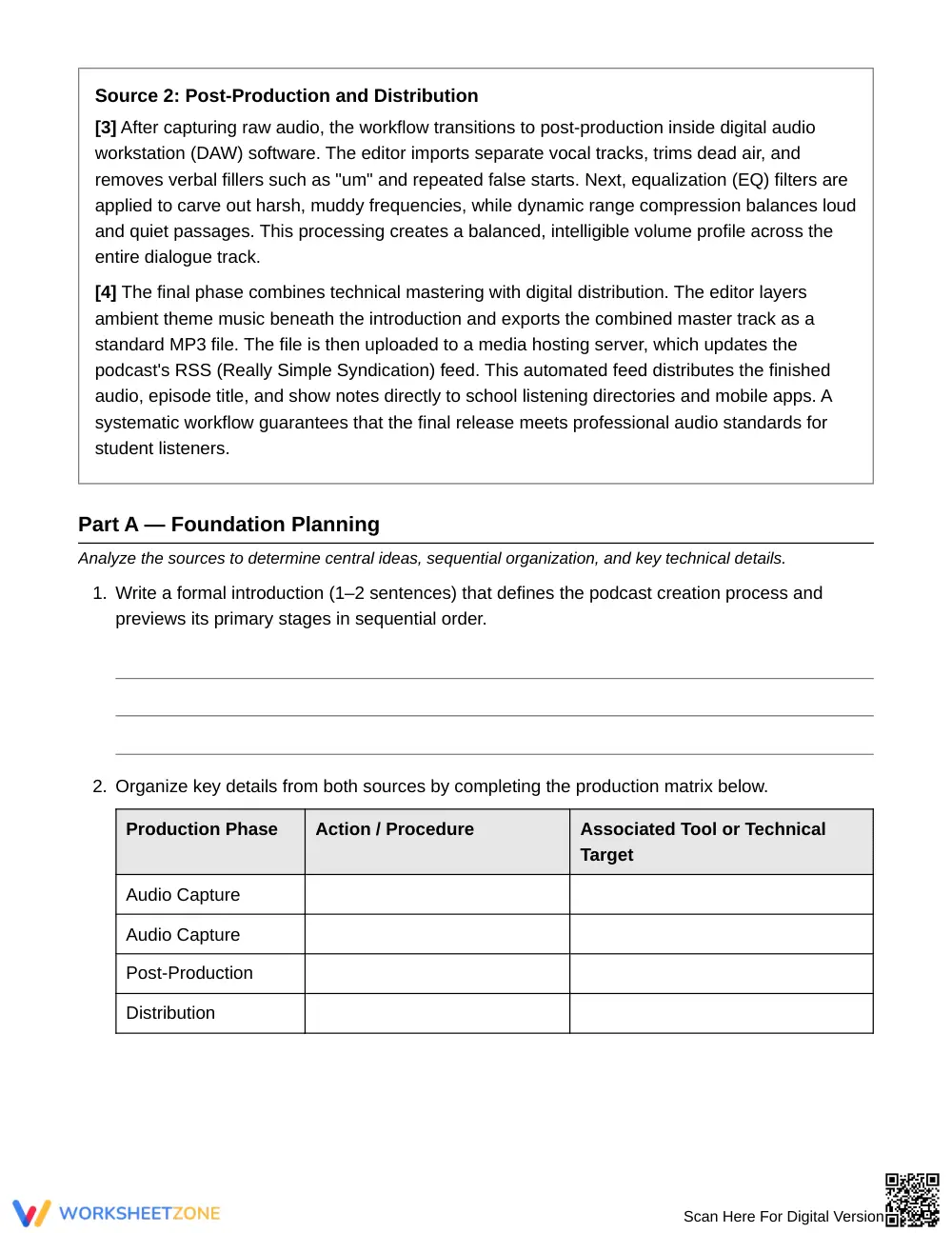
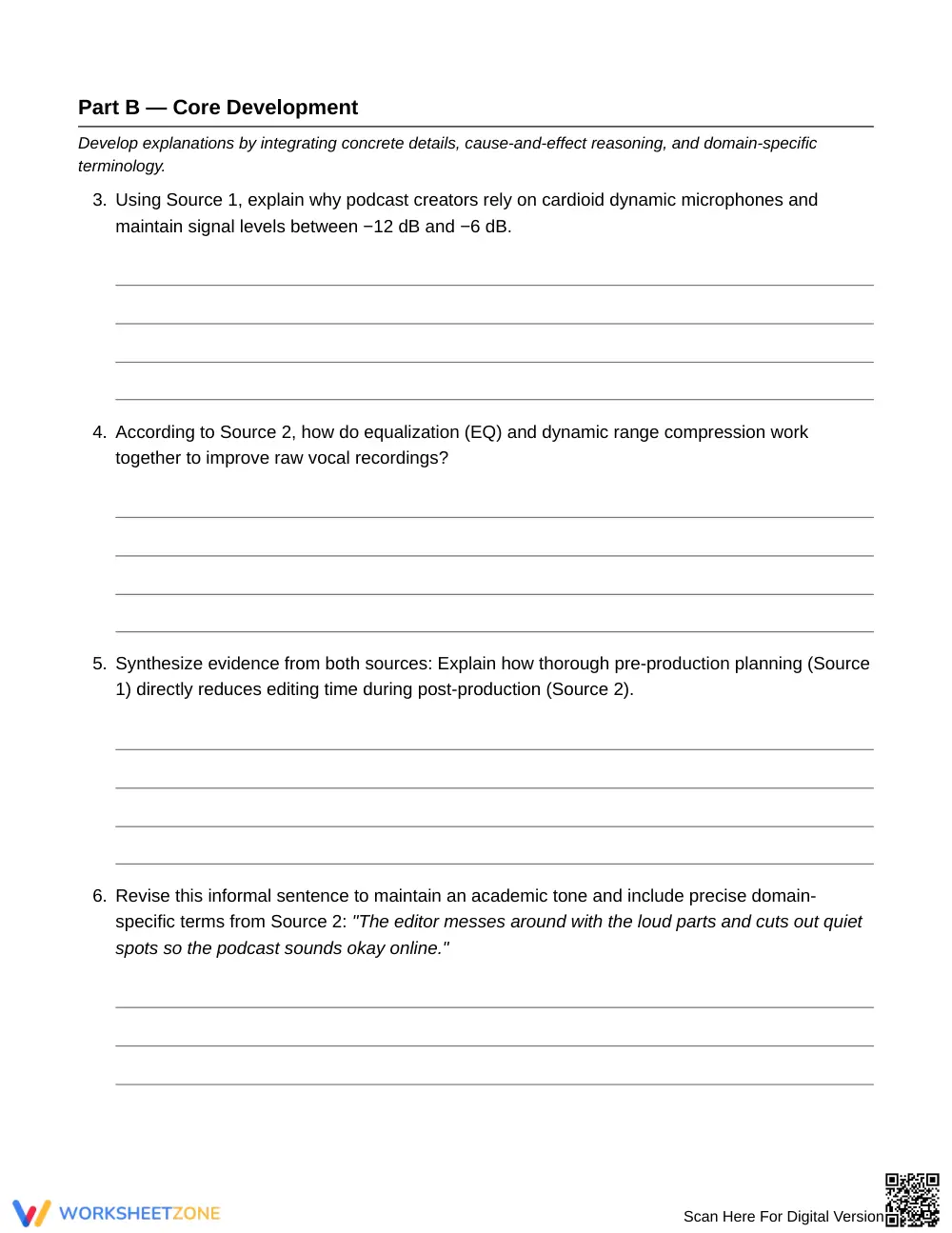
This Grade 7 informative composition worksheet guides students through examining technical informational texts, extracting concrete evidence, and drafting a structured explanatory briefing. Students evaluate two texts on school podcast production, organize workflow details into a matrix, answer synthesis questions, and craft an objective technical briefing using domain-specific vocabulary.
At a Glance
- Grade: 7 · Subject: ELA / Informative Writing
- Standard: Write informative texts to examine a topic and convey ideas through structured analysis
- Skill Focus: Informative Composition Check and Evidence Synthesis
- Format: 4 pages · 8 problems · Answer key included · PDF
- Best For: Informative writing mid-unit review or assessment
- Time: 45–60 minutes
What's Inside
This 4-page student packet features an informative writing reference anchor, two paired technical texts, and eight composition tasks. Students complete a workflow matrix, answer synthesis prompts, refine informal phrasing, and draft an extended technical briefing. A complete 4-page answer key provides sample model paragraphs and criteria for rapid assessment.
Skill Progression
- Guided practice (Tasks 1–2): Students review informative criteria, draft an introductory sentence previewing stages, and organize details into a workflow matrix.
- Supported practice (Tasks 3–6): Learners explain technical parameters, synthesize dual-source dependencies, and revise informal phrasing into academic domain-specific prose.
- Independent practice (Tasks 7–8): Students draft a multi-paragraph briefing and execute a targeted revision incorporating precise technical terms.
This progression applies a gradual-release model moving students from foundational analysis to independent expository drafting.
Standards Alignment
This composition check aligns to Grade 7 informative writing expectations requiring students to organize ideas with clear previews and develop topics using domain-specific vocabulary. A supporting standard emphasizes establishing and maintaining a formal style. Both standard codes can be copied directly into lesson plans, IEP goals, or district curriculum mapping tools.
How to Use It
Administer this worksheet as a mid-unit check before students write independent essays, or deploy it after direct instruction on informative text structures. As students complete Part B, check whether they explain the functional relationship between pre-production planning and audio editing rather than merely repeating raw facts. Typical completion time is 45 to 60 minutes.
Who It's For
This resource serves Grade 7 ELA classes building formal composition skills. The reference guide supports developing writers, while the briefing prompt offers rigor for advanced students. Pair this activity with an anchor chart detailing transition words for sequential organization.
According to Fisher & Frey (2014), structured writing tasks that integrate scaffolded reading comprehension with explicit compositional progression significantly accelerate adolescent literacy and informational synthesis. This Grade 7 informative composition check provides purposeful practice in synthesizing informational texts, organizing technical evidence into sequential frameworks, and executing objective multi-paragraph explanations. By engaging with complex real-world topics such as podcast engineering, students learn how to structure foundational introductions, categorize technical parameters, and employ domain-specific terminology accurately. The deliberate instructional scaffold from matrix classification to sustained expository composition reinforces evidence-based analytical discourse while cultivating student autonomy during drafting and iterative revision. Educational research demonstrates that combining rigorous analytical reading with authentic informational drafting equips middle school writers to organize multi-source evidence coherently and articulate complex procedural ideas with formal clarity across varied academic disciplines. This structured approach ensures measurable growth in student writing proficiency.


