































Complete Inclusion Word Search | Grades 6–7 Behavior

Paste this activity's link or code into your existing LMS (Google Classroom, Canvas, Teams, Schoology, Moodle, etc.).
Students can open and work on the activity right away, with no student login required.
You'll still be able to track student progress and results from your teacher account.
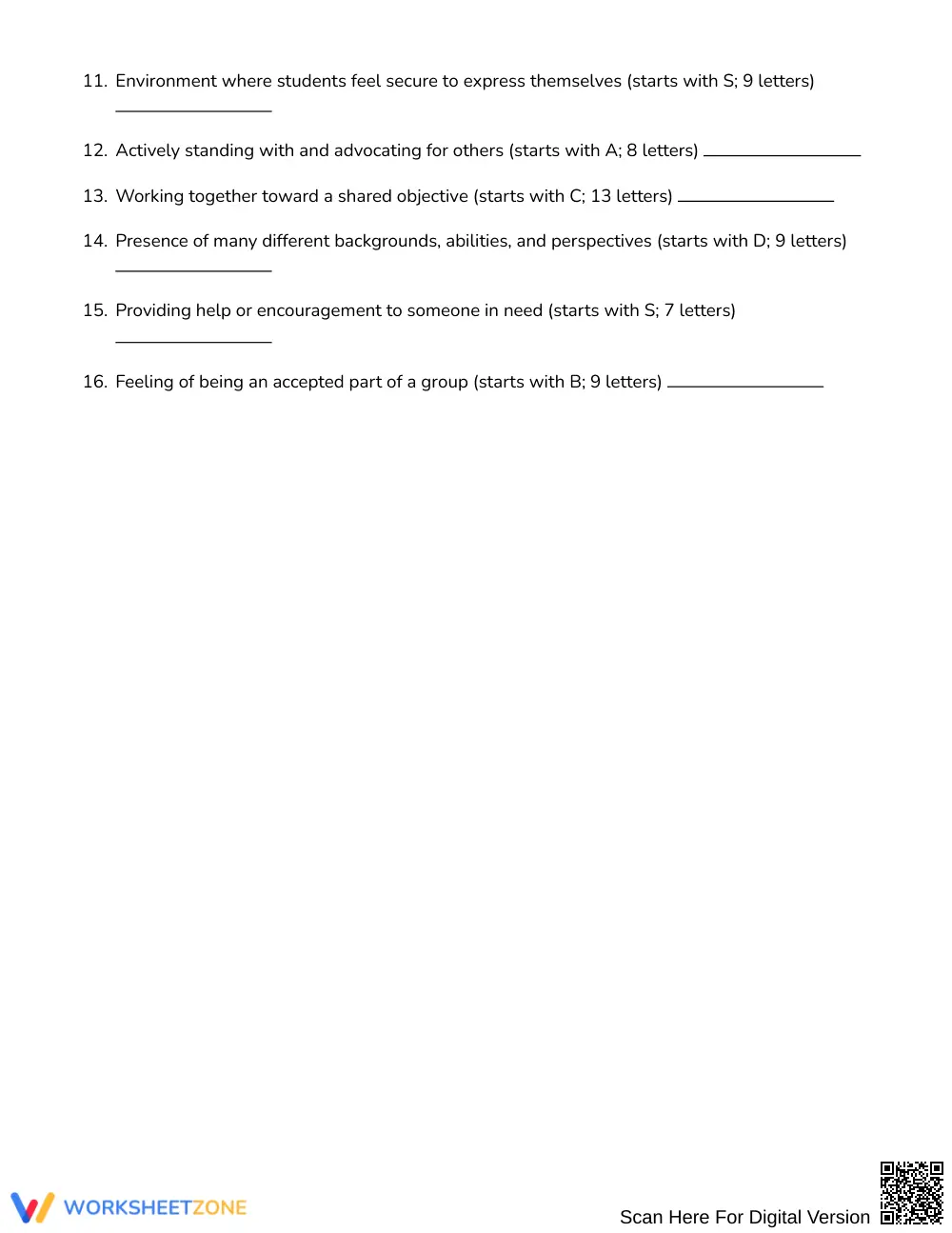
This school belonging and inclusion word search strengthens social-emotional understanding for Grades 6–7 students through purposeful vocabulary identification. Students analyze contextual definitions to locate 16 essential community-building terms across a letter grid, reinforcing interpersonal awareness, empathy, and collaborative values during middle school advisory or homeroom periods.
At a Glance
- Grade: Grades 6–7 · Subject: Behavior Worksheets
- Standard: Not standards-assessed — vocabulary enrichment
- Skill Focus: School belonging and inclusion
- Format: 3 pages · 16 words · Answer key included · PDF
- Best For: Advisory, homeroom, or counseling discussions
- Time: 20–30 minutes
What's Inside
This three-page printable packet features an 18-by-18 letter puzzle alongside sixteen descriptive clues that replace a conventional word bank. Rather than simply scanning for pre-listed letter strings, learners interpret definitions for concepts like allyship and equity before searching the grid. A complete three-page answer key provides clear solution paths for immediate verification.
How the Word Search Works
The activity challenges students with an 18-by-18 grid where 16 target words run in all eight possible directions: north, northeast, east, southeast, south, southwest, west, and northwest. Because no word bank is provided, students must actively read each definition clue to determine the target word before locating it. This no-bank structure deepens semantic processing and vocabulary retention during independent or paired puzzle solving.
Standards Alignment
This resource serves as targeted vocabulary enrichment and is not aligned to a specific academic standard. It focuses on social-emotional competence, peer dynamics, and inclusive classroom culture within middle school behavior or counseling curricula. Educators can integrate these vocabulary terms into broader character development units or schoolwide positive behavioral interventions and supports.
How to Use It
Use this word search during advisory periods or as a reflective opening activity before launching a unit on community culture. Teachers can introduce the puzzle after direct instruction on school climate, asking students to highlight terms they have observed in action. During the 20 to 30 minutes of work time, observe which definitions require clarification to identify concepts needing whole-class discussion, such as the distinction between equity and equality.
Who It's For
This resource is designed for students in Grades 6–7 developing self-awareness and positive peer relationships. For students needing support, educators can provide the first letter of each word alongside the clues, while advanced learners can write personal reflections for three discovered words. Pair this activity with a school climate survey or guided discussion on community agreements.
Vocabulary enrichment activities that require active retrieval and semantic association support both social-emotional learning and linguistic acquisition in middle school. According to Fisher & Frey (2014), intentional word exposure embedded within meaningful contextual frameworks enhances student comprehension and reinforces academic language across diverse classroom settings. When learners in Grades 6–7 engage with concepts of school belonging and inclusion through definition-driven puzzle solving, they encounter essential interpersonal terms such as allyship, diversity, and empathy within structured tasks. While this supplemental resource is not standards-assessed, integrating prosocial vocabulary into regular instructional routines establishes shared terminology that supports restorative culture and collaborative peer behavior. Research demonstrates that explicit engagement with social-emotional concepts provides young adolescents with the communication tools necessary to express perspectives, resolve interpersonal conflicts, and foster welcoming educational environments where all members feel valued, respected, and fully capable of meaningful community participation.


