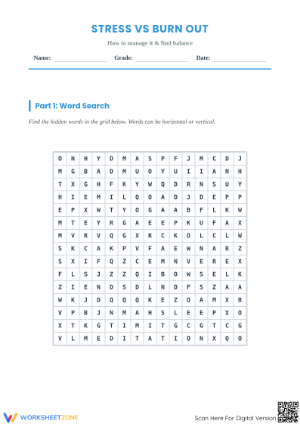
Mental Health Word Search Puzzles To Calm The Mind
Helping your child talk about feelings around the kitchen table can feel like the hardest homework of the week. Many parents quietly worry about saying the wrong thing or pushing too hard, especially when a child seems anxious or withdrawn. A gentle mental health word search gives both of you a calm starting point, turning a heavy subject into a shared activity that opens the door to honest, low-pressure conversation.
Each printable in this collection introduces familiar emotional vocabulary in a friendly, puzzle-based format your child can grow into. As they circle words like calm, kindness, gratitude, and resilience, they steadily build the language they need to describe what is happening inside. This kind of structured worksheet practice protects confidence, because every found word feels like a small, real win that belongs to them.
The visual layout matters more than parents often expect. Soft grids, clear letters, and short word lists let young learners focus without feeling overwhelmed, which is exactly why this mental health word search format works so well after school or before bedtime. You can pair the printable with colored pencils, quiet music, or a warm drink, and suddenly a self-care moment feels less like a lesson and more like genuine play together. For deeper ideas, explore our guide on mindfulness activities for kids.
These puzzles also offer a quiet window into what your child is learning at school about emotions, friendships, and healthy coping. When a teacher introduces social-emotional themes in the classroom, a matching worksheet at home helps the lesson take root through repetition. Students, teachers, and parents can revisit the same vocabulary across settings, which is why so many lesson plan creators value steady, printable resources that bridge home and classroom routines.
Sit beside your child, share the page, and let curiosity lead the way through this mental health word search collection. Worksheetzone is here to support every family searching for calmer, kinder moments around learning, one gentle puzzle at a time. Browse more options in our emotions worksheet library when you are ready for the next step.
Frequently Asked Questions
Question 1: What ages are these mental health word search puzzles best for?
These printable puzzles are designed with flexibility in mind, working well for children roughly ages seven through fourteen, though older students and adults often enjoy them too. Younger learners benefit from shorter word lists and simpler grids, while tweens and teens can handle longer, more reflective vocabulary. Parents and teachers can choose the level that matches each child, making the activity feel achievable and supportive rather than stressful or rushed.
Question 2: How do these worksheets actually support emotional well-being?
By introducing words like calm, gratitude, resilience, and mindfulness in a relaxed puzzle format, the worksheets quietly build emotional vocabulary children can use in real conversations. Naming feelings is a proven first step toward managing them, and word search activities make that practice feel safe and playful. Teachers often pair the worksheet with short reflection prompts, while parents use them at home to spark gentle, meaningful talks about everyday emotions.
Question 3: Can teachers use this mental health word search in the classroom?
Absolutely, and many educators do exactly that. The printable format slides easily into morning meetings, advisory blocks, counseling sessions, and indoor recess routines. Teachers appreciate that the worksheet supports any social-emotional lesson plan without requiring extra prep, screens, or supplies. Students can complete puzzles independently, in pairs, or as a calm-down station, giving classroom managers a flexible, low-noise tool that still nurtures genuine learning and connection.
Question 4: How can parents make these puzzles part of a calming routine?
Try anchoring the worksheet to a quiet moment your family already shares, such as after dinner, before bed, or during a slow Sunday morning. Print one page, sit together, and take turns finding words while chatting about which ones feel familiar. Keeping the tone light and curious matters far more than finishing quickly. Over time, these small rituals turn a simple printable into a trusted self-care habit your child welcomes.