































Complete False Balance Worksheet | Grade 12 English IV

Paste this activity's link or code into your existing LMS (Google Classroom, Canvas, Teams, Schoology, Moodle, etc.).
Students can open and work on the activity right away, with no student login required.
You'll still be able to track student progress and results from your teacher account.
This Grade 12 English IV worksheet trains seniors to evaluate empirical rigor, identify equivalence bias, and dismantle unearned authority appeals in informational texts. Using a municipal congestion pricing dossier, students diagnose analytical flaws and compose evidence-supported syntheses that reflect collegiate standards.
At a Glance
- Grade: 12 · Subject: English IV
- Standard: Evaluate argument validity, interrogate empirical warrants, and correct false equivalence in complex texts
- Skill Focus: Repairing False Balance and Authority Shortcuts in Policy Claims
- Format: 6 pages · 10 complex problems · 3-page answer key included · PDF document
- Best For: Advanced source credibility and analytical rhetoric units
- Time: 45–60 minutes instructional time
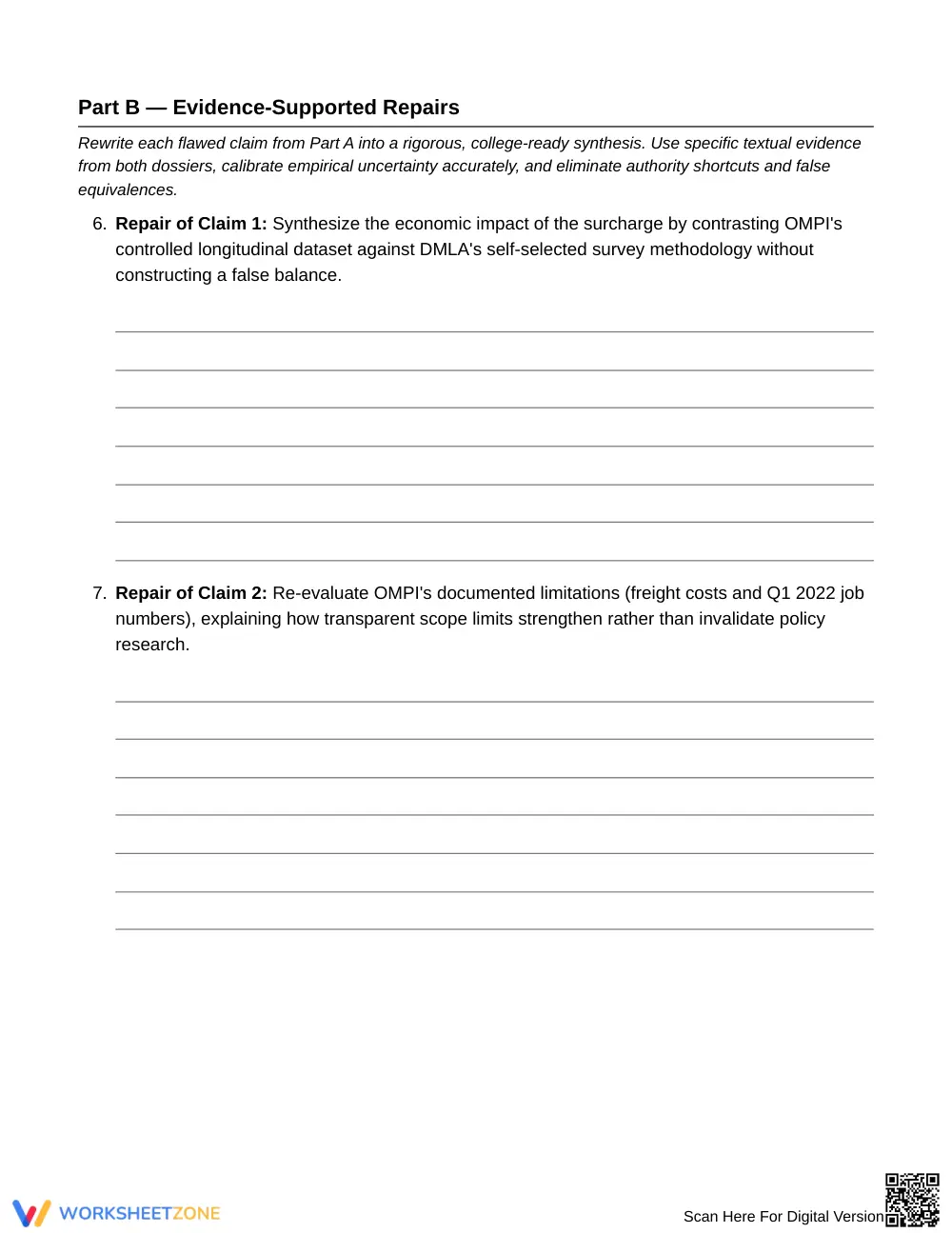
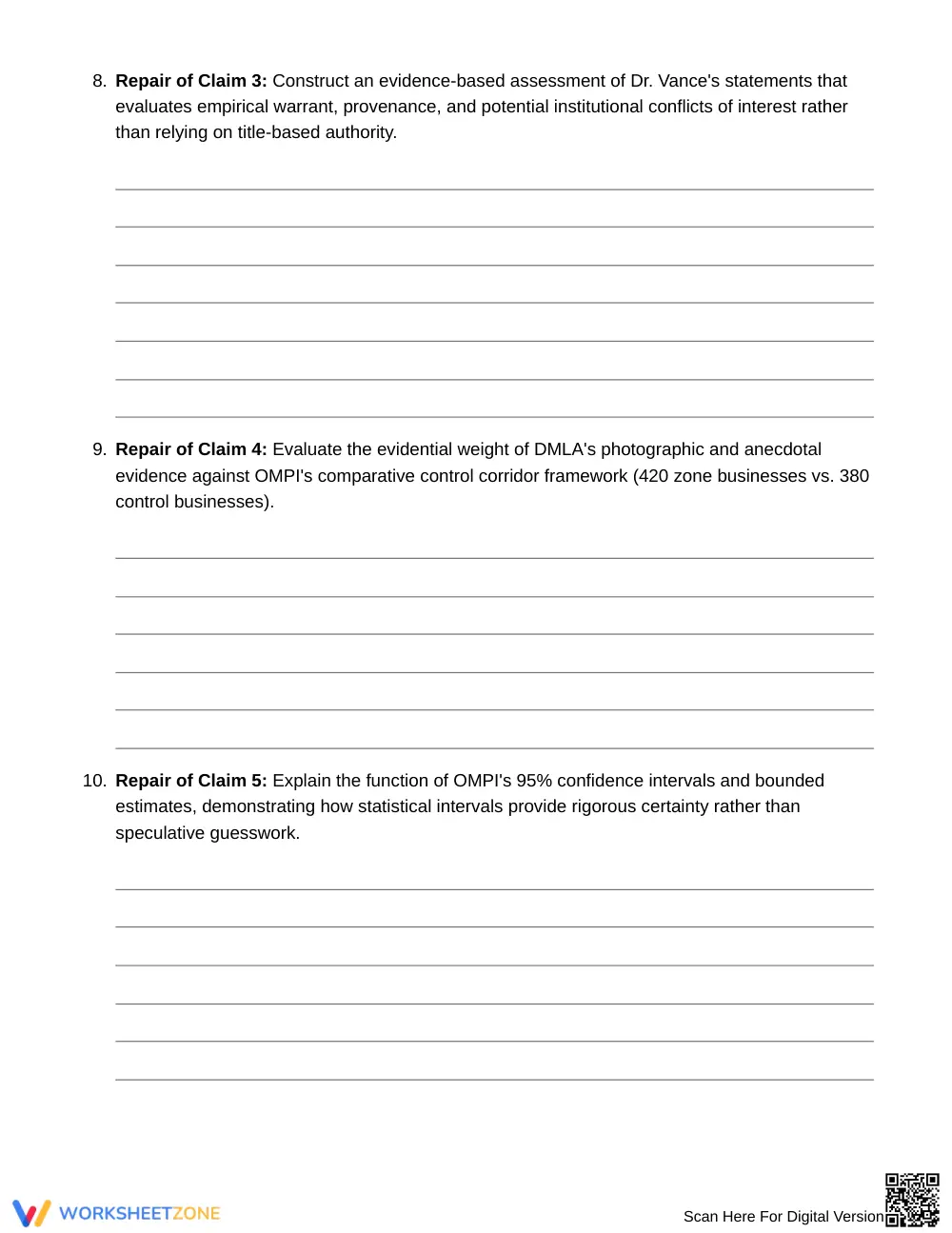
Across 6 pages, students examine core analytical definitions, evaluate a two-source evidence dossier on municipal congestion surcharges, and analyze an annotated model repair. Part A features 5 diagnosis tasks targeting logical fallacies, while Part B presents 5 evidence-based synthesis rewrites, supported by a 3-page answer key with exemplar responses.
Skill Progression
- Guided Practice: Students examine a model diagnosis and synthesis demonstrating how to counter title-based authority claims using empirical data.
- Supported Practice (Tasks 1–5): In Part A, learners evaluate 5 flawed claims, categorizing false balance and statistical misinterpretations.
- Independent Practice (Tasks 6–10): In Part B, students compose 5 rewritten syntheses integrating control-group findings and confidence intervals.
This sequence implements gradual release, transitioning students from analytical critique to independent evidence synthesis.
Standards Alignment
This resource aligns with Grade 12 English Language Arts standards for reading informational texts, requiring students to evaluate the premises, evidence sufficiency, and rhetoric of opposing texts. Both standard codes can be copied directly into lesson plans, IEP goals, or district curriculum mapping tools.
How to Use It
Assign this worksheet during a source credibility unit after introducing cognitive biases and rhetorical heuristics. Alternatively, use it before research paper drafting to reinforce evidentiary standards. As students work, check whether they recognize that statistical confidence intervals reflect precision rather than uncertainty. Completion typically takes 45 to 60 minutes.
Who It's For
This activity supports Grade 12 English IV students and AP English Language learners preparing for college-level source evaluation. Pair it with lessons on corporate lobbying literature and empirical study design to enrich classroom discussion.
Students developing college-level source literacy must learn to distinguish robust empirical research from manufactured equivalence bias. According to Fisher & Frey (2014), gradual-release instructional models that transition students from error identification to independent synthesis produce significant gains in analytical reading and argumentative writing. This Grade 12 source literacy worksheet provides targeted practice with identifying authority heuristics, interpreting confidence intervals, and repairing false balance across contrasting informational texts. By comparing a 420-business longitudinal study against an anecdotal survey of 34 participants, students interrogate how selective evidence distort policy debates. The 10 structured tasks require pupils to articulate why statistical margins reflect scientific transparency rather than methodological failure, reinforcing essential evaluative standards. Through deliberate practice, learners advance from passively accepting credentials to actively demanding verifiable empirical warrants in civic discourse.


