


























Views
Downloads

Complete Evolution Mechanisms Worksheet | Grade 10 Biology
Paste this activity's link or code into your existing LMS (Google Classroom, Canvas, Teams, Schoology, Moodle, etc.).
Students can open and work on the activity right away, with no student login required.
You'll still be able to track student progress and results from your teacher account.
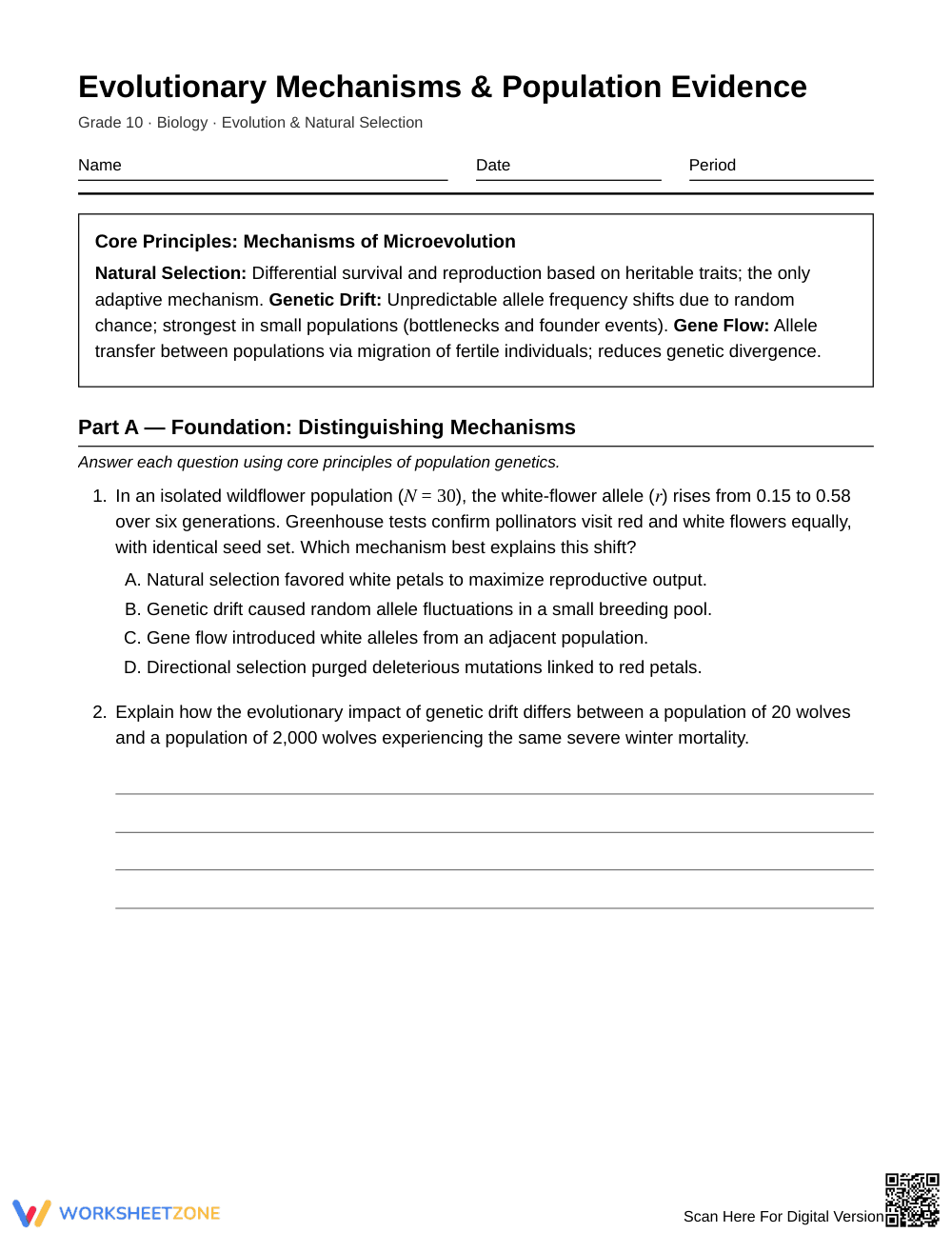
This Grade 10 biology worksheet provides rigorous, data-driven practice distinguishing microevolutionary mechanisms across real and synthetic population scenarios. Students analyze allele frequency tables, calculate phenotypic shifts, and differentiate natural selection, genetic drift, and gene flow across 12 targeted analytical problems designed for high school life science mastery.
At a Glance
- Grade: 10 · Subject: Biology
- Standard: High School Life Sciences — Analyze and interpret data to explain how microevolutionary mechanisms alter population genetics
- Skill Focus: Evolutionary Mechanisms & Population Genetics
- Format: 5 pages · 12 problems · Answer key included · PDF
- Best For: Microevolution unit practice and data analysis
- Time: 40–50 minutes
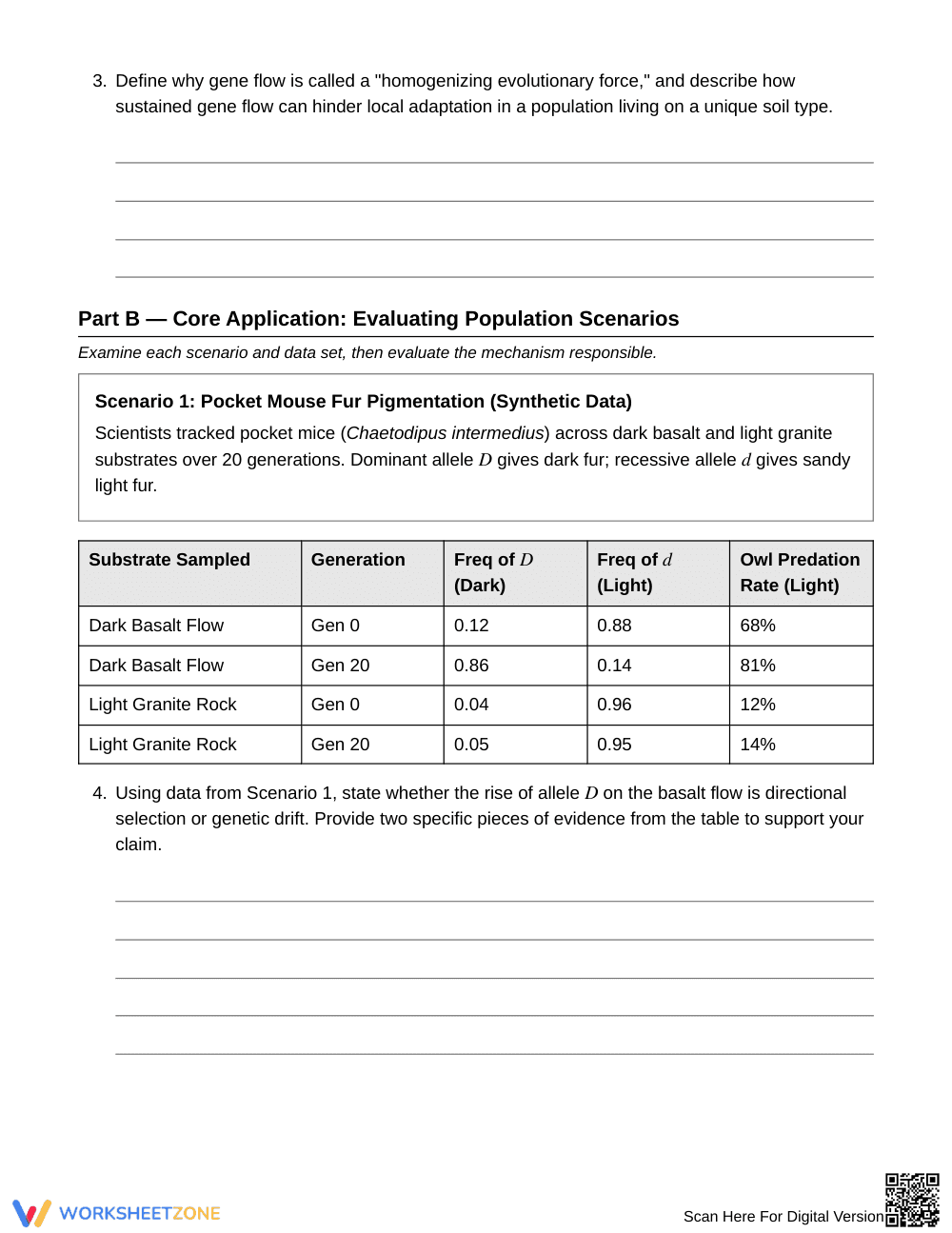
The 5-page packet features an introductory reference box covering core microevolutionary principles, followed by 12 multi-part items ranging from conceptual prompts to ecological scenario tables. A 3-page teacher answer key provides full data explanations and sample responses for streamlined grading.
Skill Progression
- Guided practice (Part A, Problems 1–3): Students review foundational definitions through a structured multiple-choice item and short-answer comparisons of population size effects and gene flow homogenization.
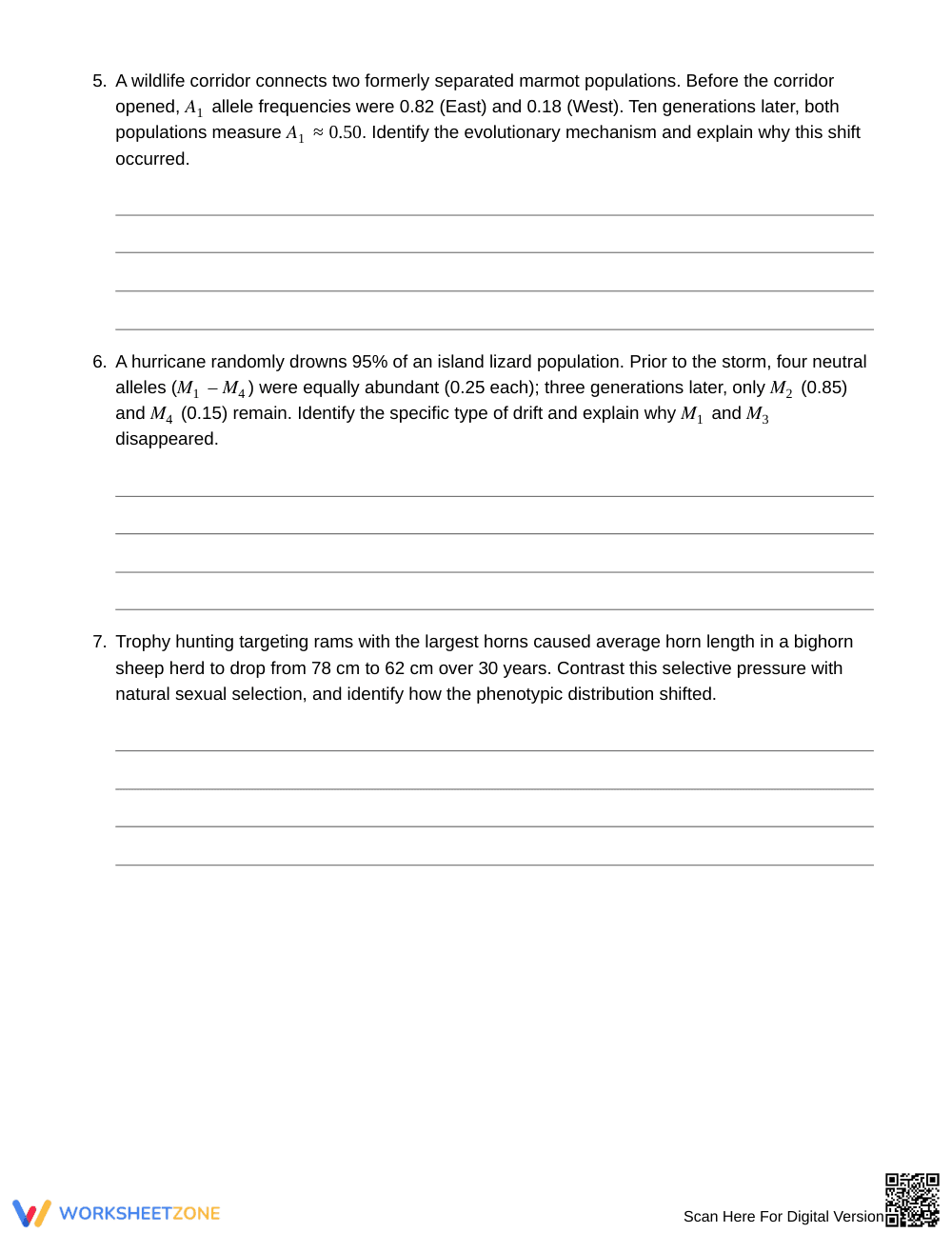
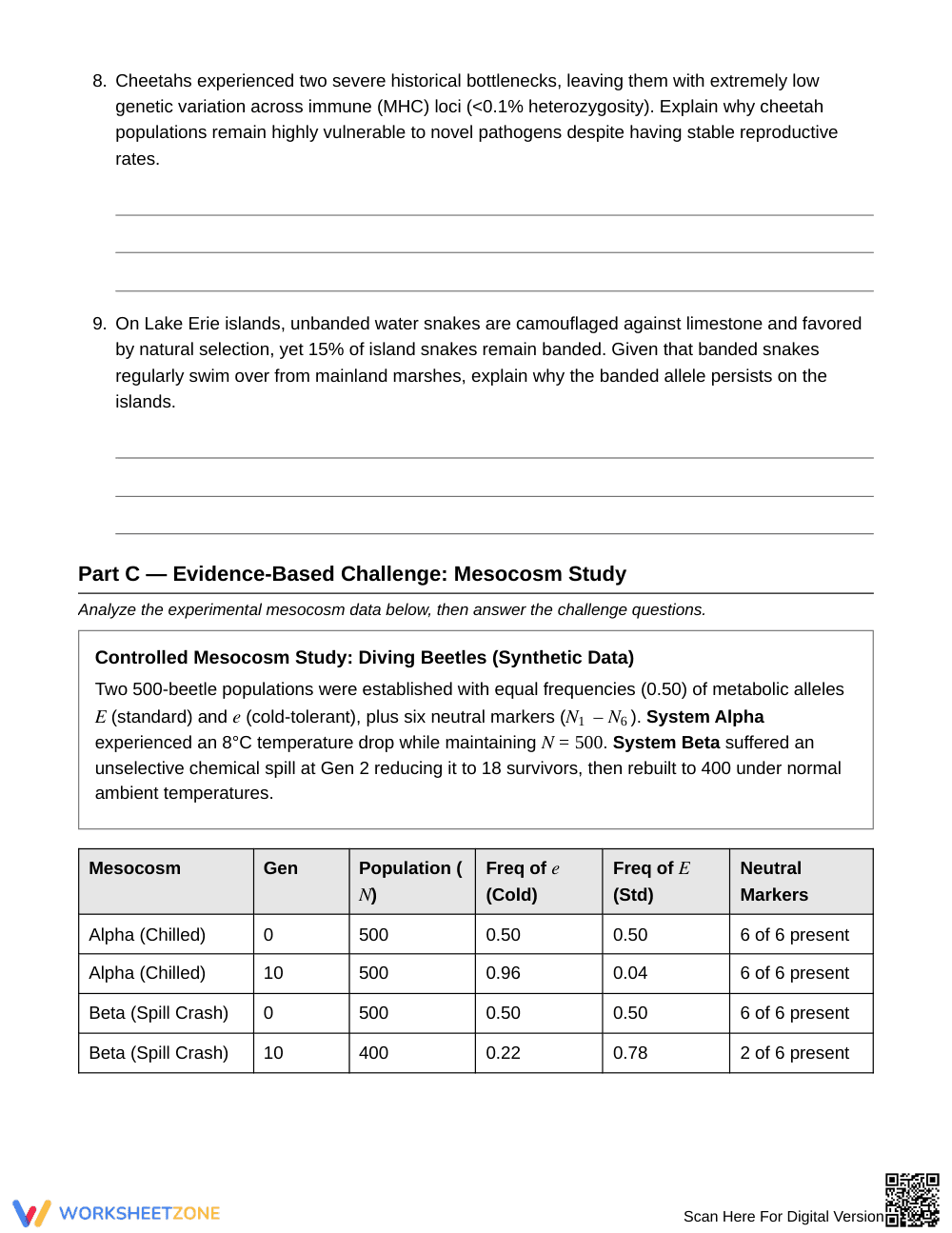
- Supported practice (Part B, Problems 4–9): Learners interpret synthetic ecological datasets, evaluating directional selection in pocket mice, bottleneck drift in island lizards, and migration balance in Lake Erie snakes.
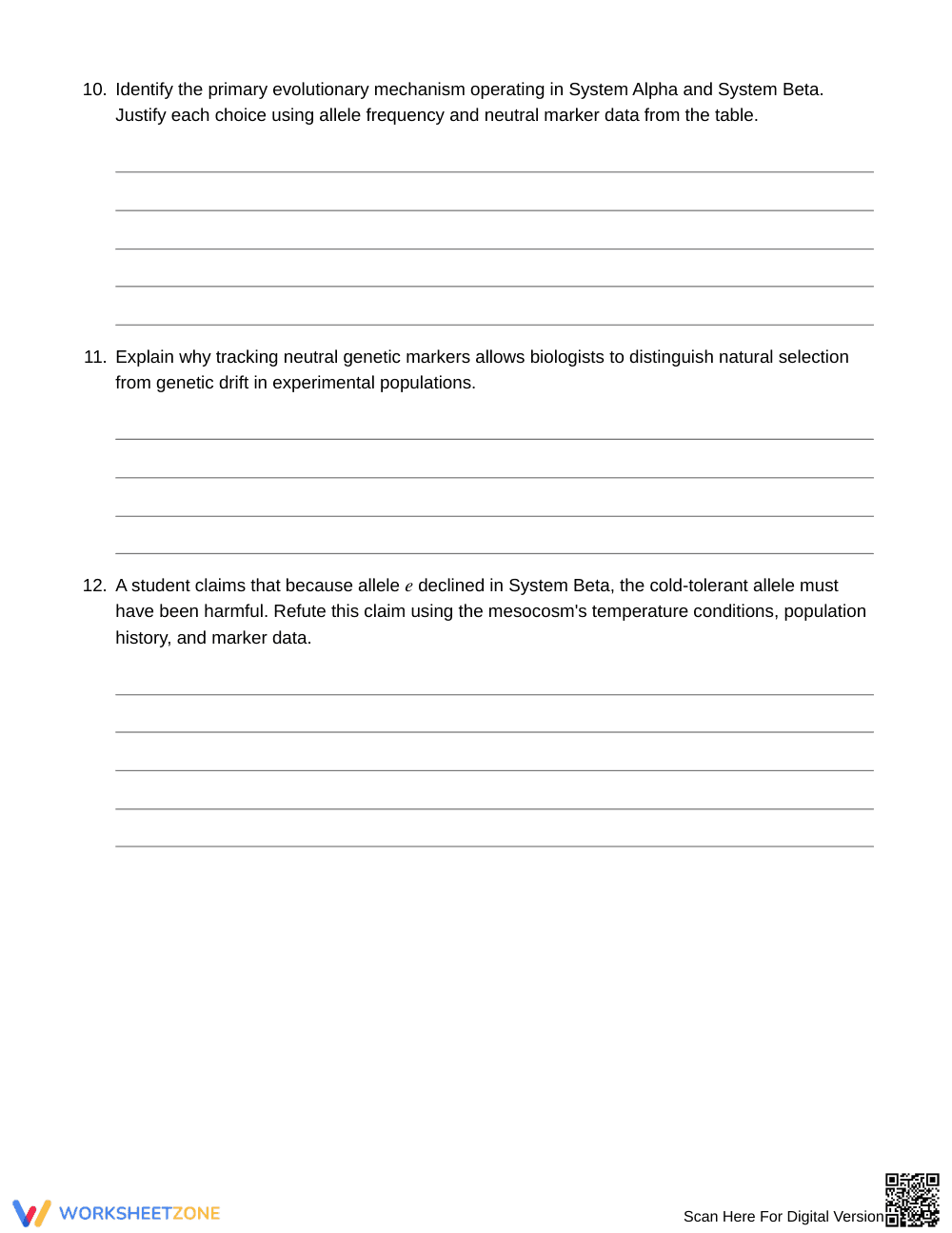
- Independent practice (Part C, Problems 10–12): Students independently analyze a dual-system diving beetle mesocosm study, evaluating cold-tolerance alleles against neutral genetic markers to refute common misconceptions.
This sequence follows an intentional gradual-release model that scaffolds students from foundational terminology into complex population genetics data evaluation.
Standards Alignment
This worksheet aligns with high school biology expectations for modeling how natural selection, genetic drift, and gene flow alter allele frequencies over time. Both standard codes and performance expectations can be copied directly into lesson plans, IEP goals, or district curriculum mapping tools.
How to Use It
Implement this worksheet after direct instruction on microevolution as collaborative classwork, or assign Part C as a summative assessment following a genetics lab. During work time, formatively check if students distinguish random drift from adaptive selection in Part B data tables. Completion takes 40–50 minutes.
Who It's For
Designed for Grade 10 Biology students, this activity supports varied learners through explicit scaffolded reference notes, while challenging advanced students with experimental data analysis. Pair this worksheet directly with a population genetics simulation or natural selection anchor chart.
According to Fisher & Frey (2014), gradual-release instructional design significantly strengthens student ability to translate raw biological data into robust scientific explanations. This Grade 10 biology resource embodies these research findings by guiding learners through 12 structured tasks focused on evolutionary mechanisms, including natural selection, genetic drift, and gene flow. By analyzing authentic population scenarios, comparing neutral genetic markers, and interpreting changing allele frequencies, students build genuine empirical mastery rather than rote memorization. The multi-tiered progression from guided foundational questions to an independent mesocosm challenge supports durable schema development in population genetics. Incorporating quantitative tables alongside conceptual prompts ensures that high school learners develop the analytical precision required for advanced science coursework and standard-aligned biological literacy.


