
































Complete Energy Flow Claims Worksheet | Grade 7 Science

Paste this activity's link or code into your existing LMS (Google Classroom, Canvas, Teams, Schoology, Moodle, etc.).
Students can open and work on the activity right away, with no student login required.
You'll still be able to track student progress and results from your teacher account.
This science worksheet equips middle school students to distinguish between unidirectional energy flow and matter cycling within freshwater ecosystems. By analyzing synthetic ecological census data and diagnosing common misconceptions, learners explain why energy dissipates as metabolic heat rather than recycling back into primary producers during decomposition.
At a Glance
- Grade: 7 · Subject: Science
- Standard: Analyze ecosystem models to demonstrate that matter cycles while energy flows unidirectionally
- Skill Focus: Correcting Energy-Recycle Misconceptions
- Format: 5 pages · 8 problems · Answer key included · PDF
- Best For: Mid-unit conceptual assessment and error correction
- Time: 40–50 minutes
What's Inside
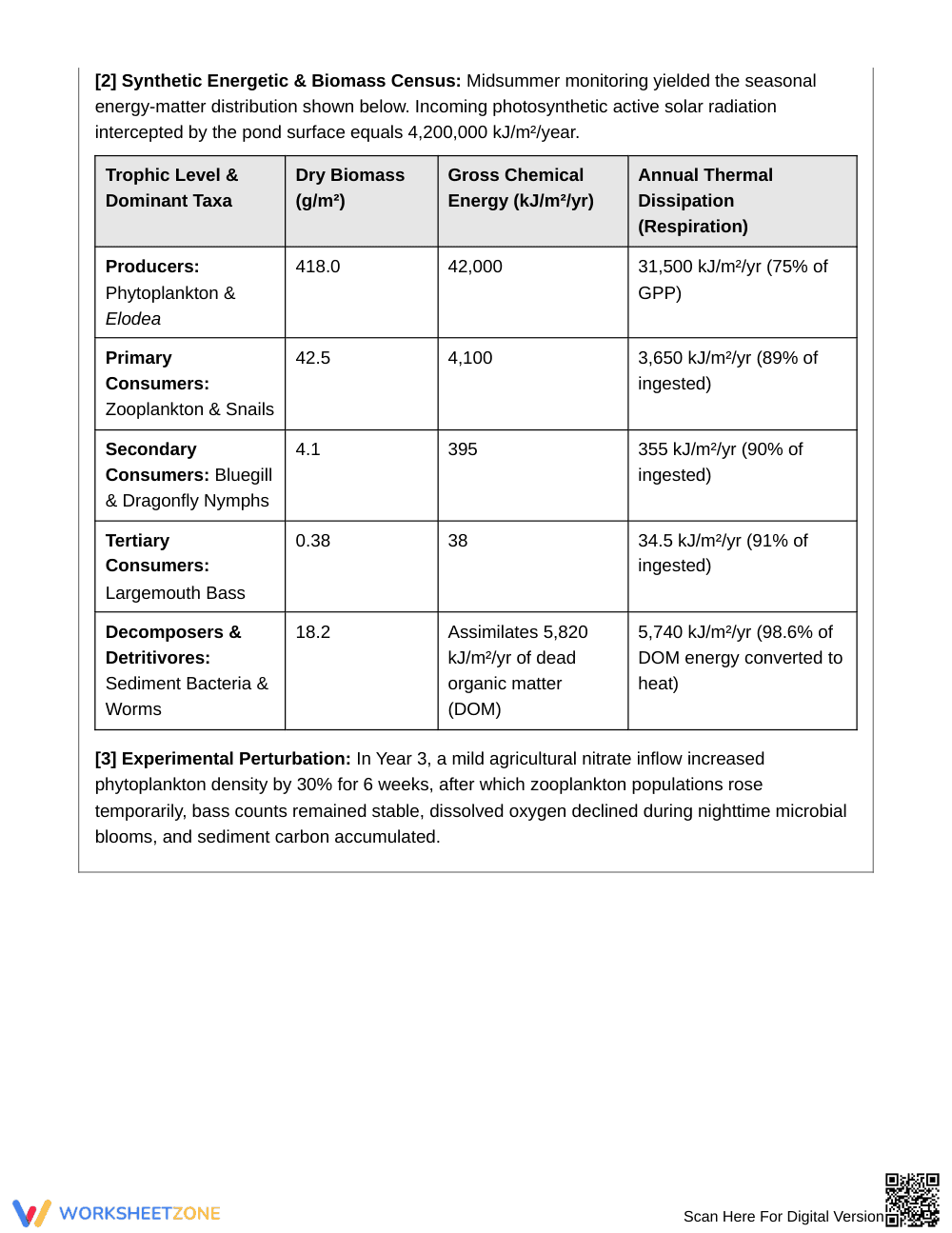
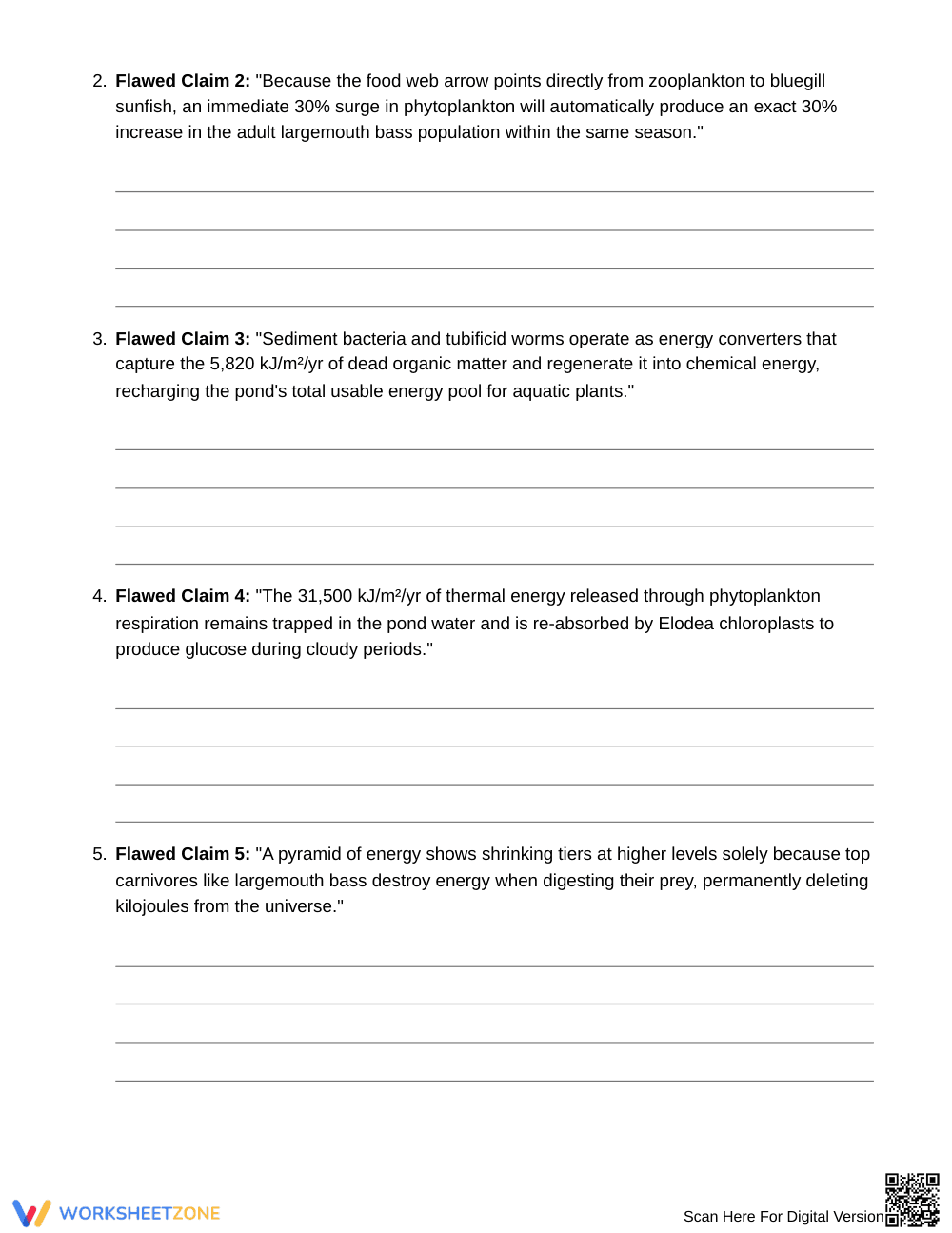
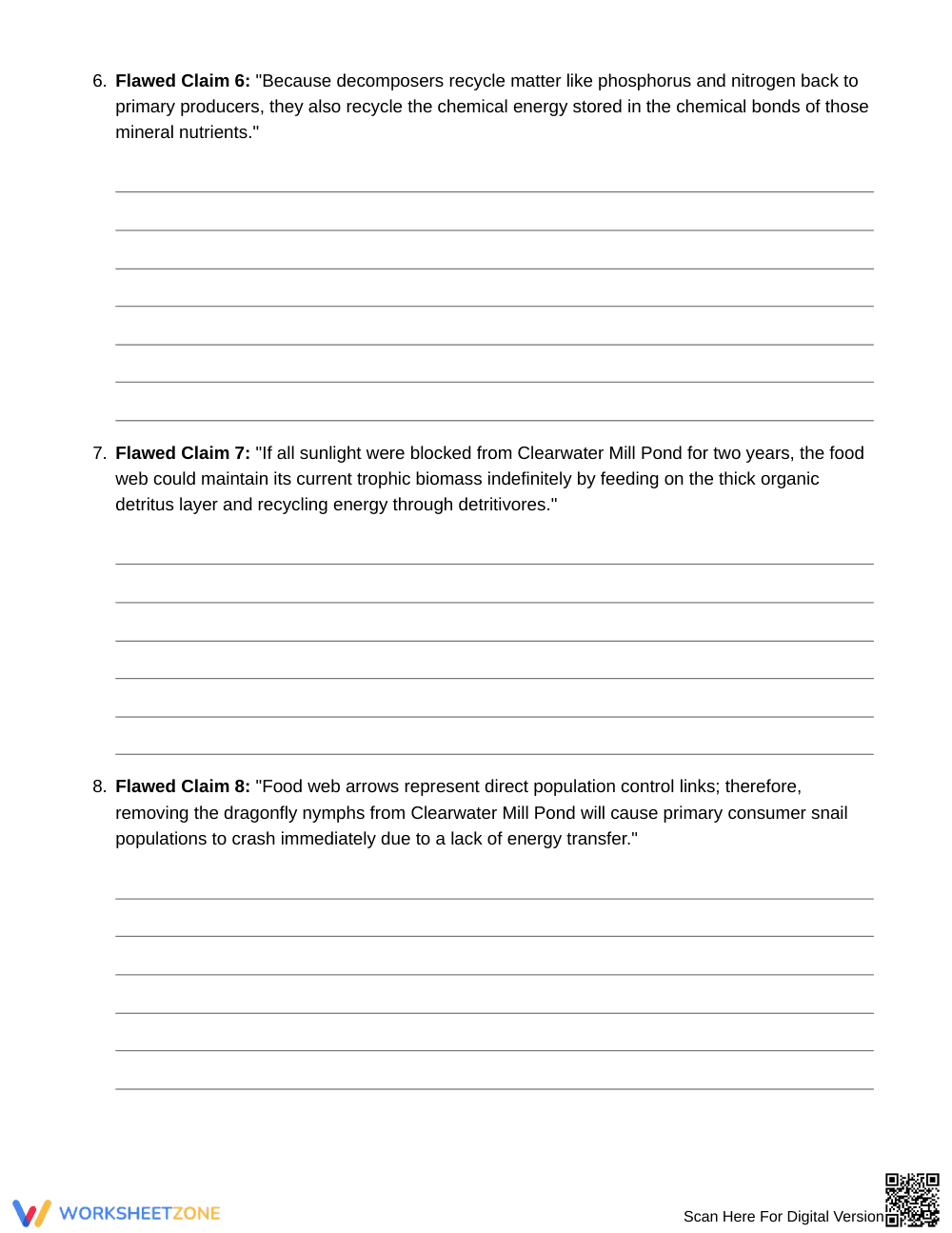
This 5-page printable resource provides a structured scientific text, a synthetic energy census dataset for Clearwater Mill Pond, and an annotated worked example demonstrating scientific error diagnosis. Across 8 rigorous diagnostic tasks, students read flawed ecological claims, isolate the conceptual flaw regarding energy or population dynamics, and draft evidence-based corrections using quantitative trophic values. A complete 3-page teacher answer key provides full model responses.
Skill Progression
- Guided Practice: Students review an explicit reference guide detailing the first and second laws of thermodynamics in biology, followed by a fully worked model repair analyzing a flawed claim about decomposing largemouth bass.
- Supported Practice: Tasks 1 through 4 guide learners to contrast closed-loop energy myths and trophic cascade oversimplifications against synthetic data showing thermal dissipation rates across producers and consumers.
- Independent Practice: Tasks 5 through 8 require students to independently evaluate complex misconceptions involving the conservation of energy, mineral nutrient uptake, and food-web link causality without prompting.
This structured progression reflects the gradual release of responsibility framework, moving students methodically from supported diagnostic modeling to self-directed scientific argumentation.
Standards Alignment
This resource directly supports middle school life science standards focusing on ecosystem dynamics and energy transfer. Students construct explanations demonstrating that while matter cycles continuously among living and nonliving components, energy constantly enters as sunlight and exits as non-reusable heat. Teachers can copy these core objectives directly into lesson plans, IEP goals, or district curriculum mapping tools.
How to Use It
Deploy this worksheet after direct instruction on food webs and trophic pyramids. In a 45-minute lesson, allocate 10 minutes for students to review the Clearwater Mill Pond baseline tables, 25 minutes for independent or partner completion of the diagnostic tasks, and 10 minutes for whole-class synthesis. During seatwork, circulate to check Task 6, ensuring students recognize that decomposers recycle mineral matter rather than bond energy.
Who It's For
This activity is designed for general education Grade 7 science classes, advanced Grade 6 life science units, or introductory biology intervention groups. Pair this worksheet with an interactive food web diagram or a physical card-sorting activity illustrating trophic energy loss.
Fisher & Frey (2014) highlight that structured error diagnosis and misconception repair substantially deepen conceptual retention in secondary science. Rather than merely memorizing vocabulary terms, students must actively reconcile conflicting claims against quantitative evidence. This Grade 7 science worksheet directly engages students in analyzing why biological energy flows in a one-way path through trophic tiers while chemical elements cycle indefinitely. By evaluating baseline energetic data, measuring thermal dissipation percentages, and replacing false closed-loop claims with accurate thermodynamic reasoning, learners build robust mental models of ecosystem function. The included 8 diagnostic scenarios provide an authentic evidentiary context for evaluating trophic interactions, ensuring that middle school students achieve lasting conceptual mastery over energy dissipation, matter conservation, and ecological dynamics across five instructional pages.


