




























Complete Complex Exceptions Worksheet | Grade 7 ELA
Paste this activity's link or code into your existing LMS (Google Classroom, Canvas, Teams, Schoology, Moodle, etc.).
Students can open and work on the activity right away, with no student login required.
You'll still be able to track student progress and results from your teacher account.
This 5-page informative writing worksheet teaches Grade 7 students how to explain complex technical exceptions with precision and objectivity. Working through real-world audio engineering scenarios, learners analyze conflicting constraints, evaluate procedural trade-offs, and draft qualified protocol addendums. Students master the informative writing skills needed to define baseline rules, exception triggers, and procedural solutions effectively.
At a Glance
- Grade: 7 · Subject: ELA
- Standard:
W.7.2.b— Develop informative topics with relevant facts, definitions, concrete details, and technical examples- Skill Focus: Explaining Complex Technical Exceptions
- Format: 5 pages · 8 problems · Answer key included · PDF
- Best For: Informative writing direct instruction and assessment
- Time: 45–60 minutes
The resource includes two technical source texts covering podcast studio standards and remote field reporting trade-offs. Students complete 8 structured analytical and drafting tasks spread across three distinct parts, supported by a production protocol comparison chart and a 4-page comprehensive answer key featuring model technical addendums and scoring criteria.
Skill Progression
- Guided practice (Tasks 1–2): Students analyze competing technical constraints between studio baseline standards and live field reporting realities.
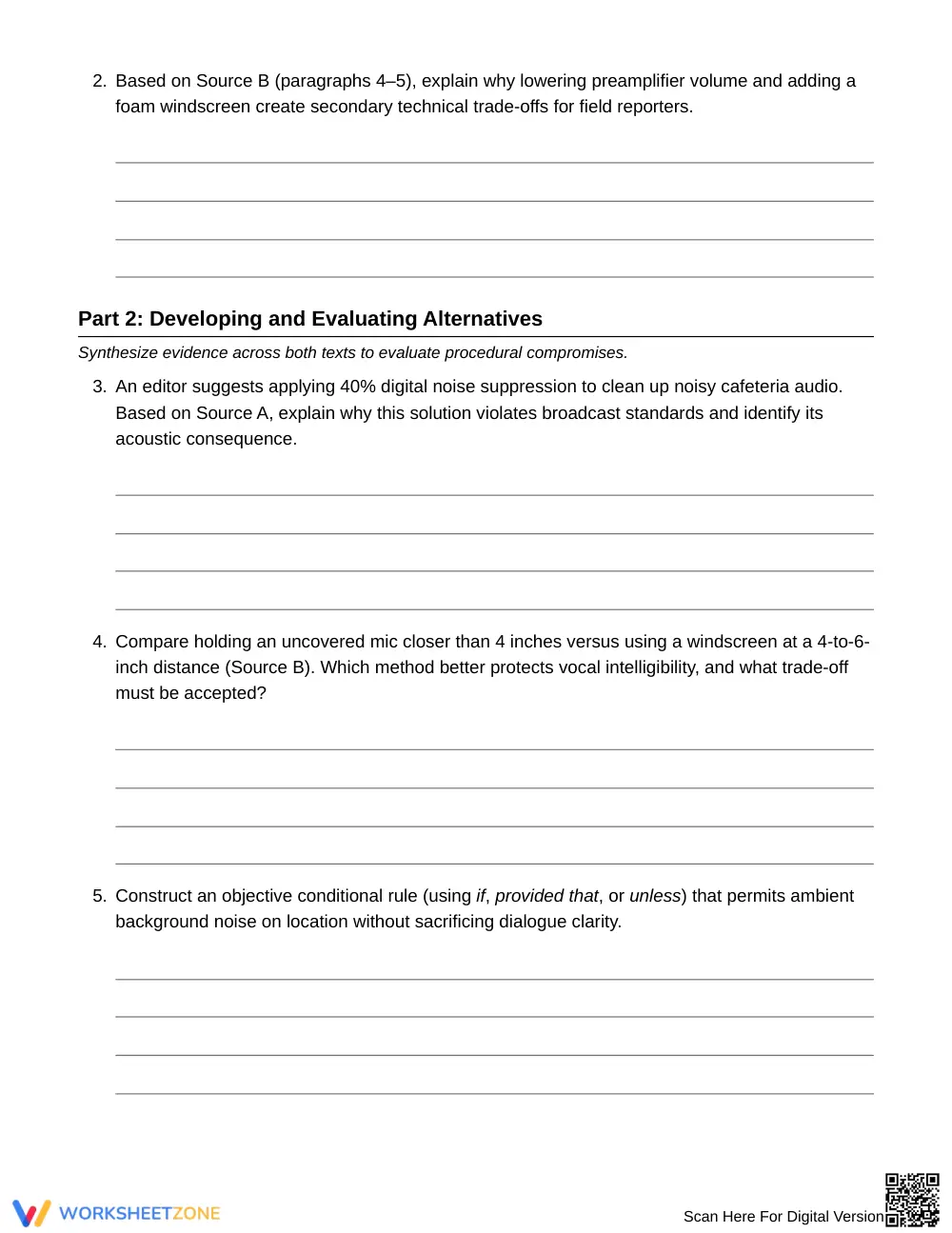
- Supported practice (Tasks 3–6): Learners evaluate hardware trade-offs, identify digital suppression risks, formulate conditional rules, and complete a synthesis comparison table.
- Independent practice (Tasks 7–8): Writers draft a 200–280 word technical handbook addendum using domain-specific parameters and defend their conditional qualifying language.
This structured gradual-release architecture moves students from analytical comprehension to rigorous technical composition.
Standards Alignment
This worksheet aligns directly with W.7.2.b: Develop the topic with relevant facts, definitions, concrete details, quotations, or other information and examples. It also supports W.7.2.c by requiring precise transitional words and conditional phrases to clarify complex relationships among technical constraints. Both standard codes can be copied directly into lesson plans, IEP goals, or district curriculum mapping tools.
How to Use It
Assign this resource during an informative writing unit after introducing technical definitions and conditional clauses. For an effective mid-unit application, have students complete Parts 1 and 2 in peer pairs before drafting Part 3 independently. During work time, formatively check Task 5 to ensure students understand how conditional words like "unless" and "provided that" restrict exceptions. Expected completion time is 45 to 60 minutes.
Who It's For
This worksheet is designed for general education Grade 7 ELA classes, advanced Grade 6 writers, and middle school journalism electives. Scaffold the analytical tables for developing writers with highlighted text excerpts. Pair this activity directly with a mentor text lesson on technical handbooks or procedural writing.
Middle school informative writing standards, including W.7.2.b, require students to develop complex topics by synthesizing technical facts, domain-specific definitions, and concrete details. Explaining exceptions within rule-based systems presents a specific cognitive challenge for Grade 7 writers, who must reconcile conflicting constraints rather than applying simple categorical rules. According to research by Fisher & Frey (2014) on disciplinary literacy and gradual release of responsibility, structured scaffolding—progressing from text-dependent source analysis to guided parameter synthesis and independent technical composition—substantially improves students' ability to write precise, qualified explanations. By examining real-world trade-offs in audio engineering, this 8-task worksheet provides middle school learners with meaningful domain-specific contexts to practice objective qualification, conditional clause construction, and multi-source evidence integration. The comprehensive 4-page answer key equips educators with clear benchmark responses to evaluate student mastery of rigorous informational writing standards.


