



























Complete Blood Flow Worksheet | Grades 6-10 Science
Paste this activity's link or code into your existing LMS (Google Classroom, Canvas, Teams, Schoology, Moodle, etc.).
Students can open and work on the activity right away, with no student login required.
You'll still be able to track student progress and results from your teacher account.
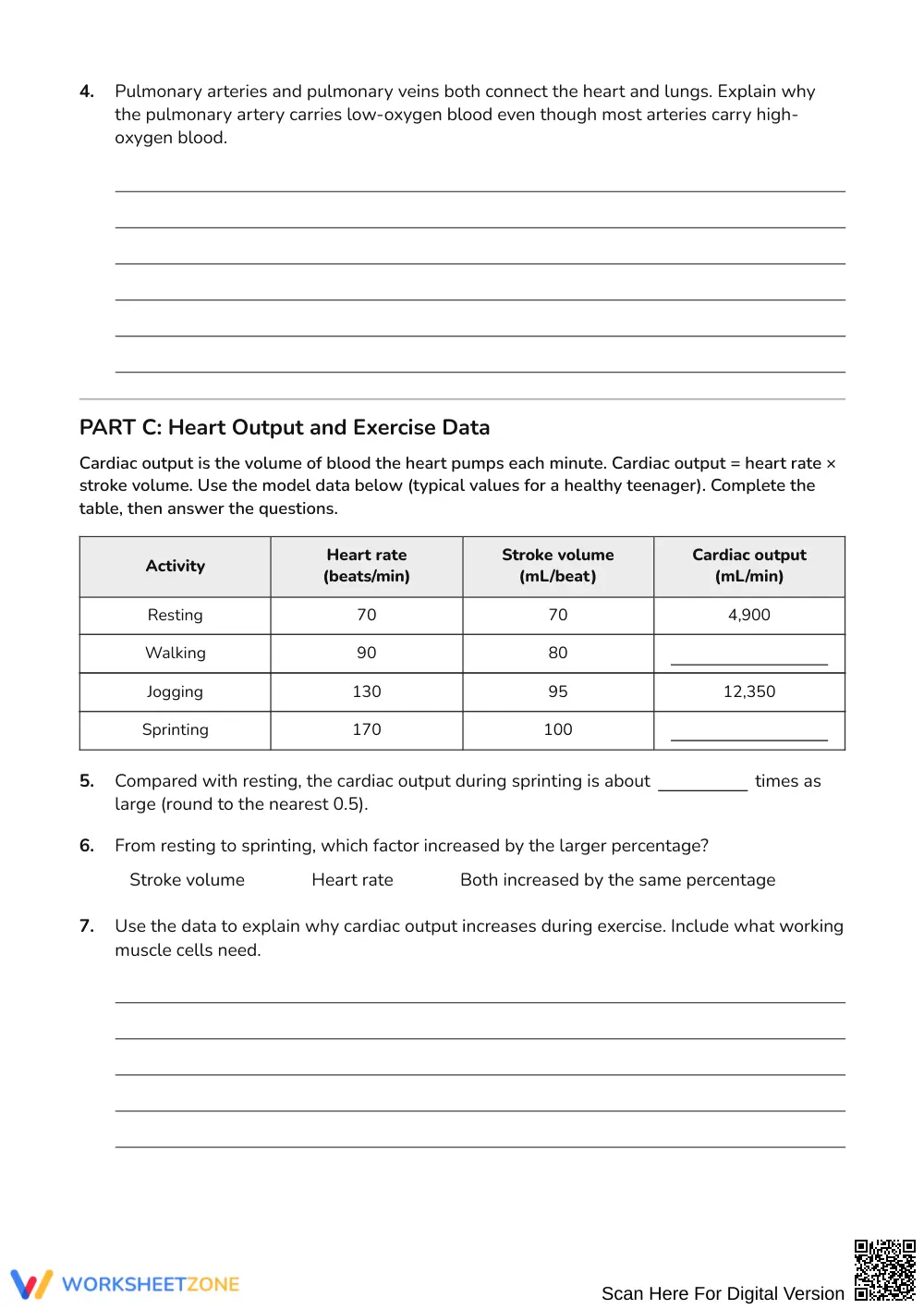
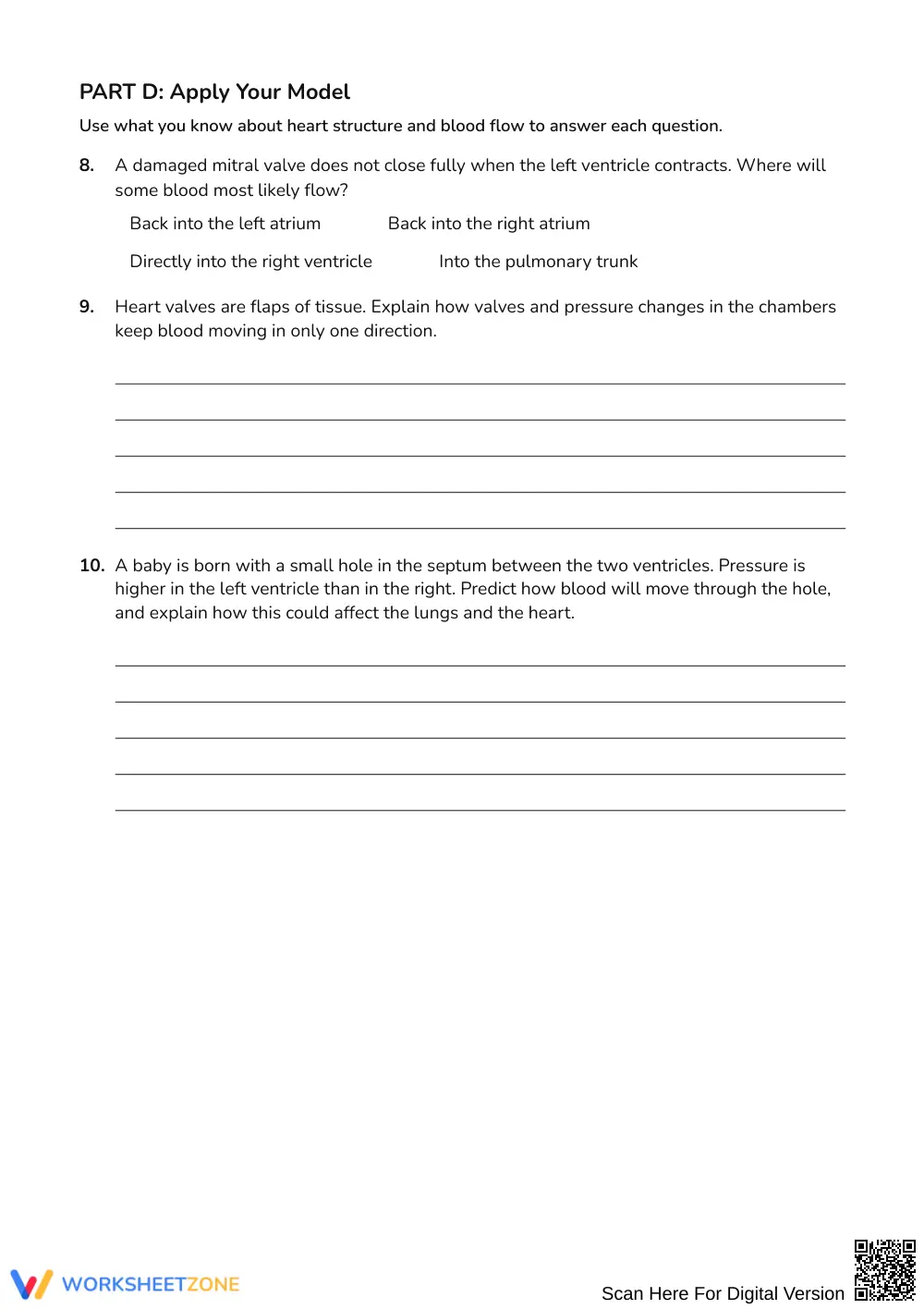
This comprehensive 4-page science assessment evaluates student understanding of cardiovascular dynamics, cardiac anatomy, and systemic circulation across 28 targeted tasks. Students identify heart structures, trace pulmonary pathways, calculate exercise cardiac output, and analyze clinical valve anomalies. The resource provides actionable diagnostic data on student mastery of internal transport systems.
At a Glance
- Grade: Grades 6–10 · Subject: Science
- Standard: Life Science — Model circulatory structures, trace blood pathways, and calculate cardiac output
- Skill Focus: Blood Flow & Cardiovascular Dynamics
- Format: 4 pages · 28 problems · Answer key included · PDF
- Best For: Cumulative assessment and unit review
- Time: 45–60 minutes
What's Inside
This 4-page assessment delivers 28 scaffolded tasks supported by a complete 4-page answer key featuring model written explanations. Structural features include an anatomical heart diagram, a 9-step sequential flow table, a cardiac output formula calculation table, and clinical pathology scenarios addressing valve failure and septal defects.
Skill Progression
- Guided practice (Part A, 9 items): Students label 7 anatomical structures on a diagram and explain ventricular wall thickness.
- Supported practice (Parts B & C, 14 items): Learners complete a 9-step flow chart and calculate cardiac output from structured exercise tables.
- Independent practice (Part D, 5 items): Students analyze valve failure and septal defects without structural cues.
This sequence implements a gradual-release model, moving students systematically from identification to clinical synthesis.
Standards Alignment
This resource aligns with middle and high school life science standards requiring students to develop models illustrating the hierarchical organization of interacting body systems. It also integrates quantitative expectations for calculating physiological rates during physical exertion. These curriculum alignment objectives can be copied directly into lesson plans, IEP goals, or district curriculum mapping tools.
How to Use It
Administer as an end-of-unit summative assessment immediately after direct instruction, allowing 45 to 60 minutes for completion. Alternatively, use Parts A and B as a mid-unit checkpoint during direct instruction, reserving Parts C and D for application practice. During work time, check whether students identify pulmonary vessels by flow direction rather than oxygen level to correct misconceptions before grading.
Who It's For
This worksheet serves Grades 6–10 science and biology classrooms studying human body systems. Scaffold support for English learners by providing a labeled circulatory anchor chart alongside Part A. Advanced learners can complete Part C calculations independently without formula prompts. Pair this assessment with a heart dissection lab or cardiovascular simulation lesson.
This 4-page life science assessment provides rigorous practice in modeling blood flow, tracing pulmonary and systemic pathways, and analyzing cardiac output data across 28 meticulously scaffolded items. According to research by Fisher & Frey (2014) on effective gradual release of responsibility, integrating structured diagram labeling, multi-variable data interpretation, and unprompted clinical application fosters deeper conceptual retention than isolated factual recall. By requiring students to connect anatomical structures with physical pressure mechanics and cellular metabolic demands, this resource measures both foundational anatomical literacy and higher-order analytical reasoning. The comprehensive structure enables educators to diagnose specific conceptual breakdowns—such as distinguishing vessel direction from oxygen saturation levels—while accurately evaluating student academic readiness for advanced physiological coursework. Furthermore, the included 4-page answer key provides complete explanatory models and quantitative benchmarks that support precise, evidence-based evaluation across diverse middle and secondary science classrooms.


