


























Views
Downloads



Complete ATP Bond Energy Worksheet | Grade 10 Biology
Paste this activity's link or code into your existing LMS (Google Classroom, Canvas, Teams, Schoology, Moodle, etc.).
Students can open and work on the activity right away, with no student login required.
You'll still be able to track student progress and results from your teacher account.
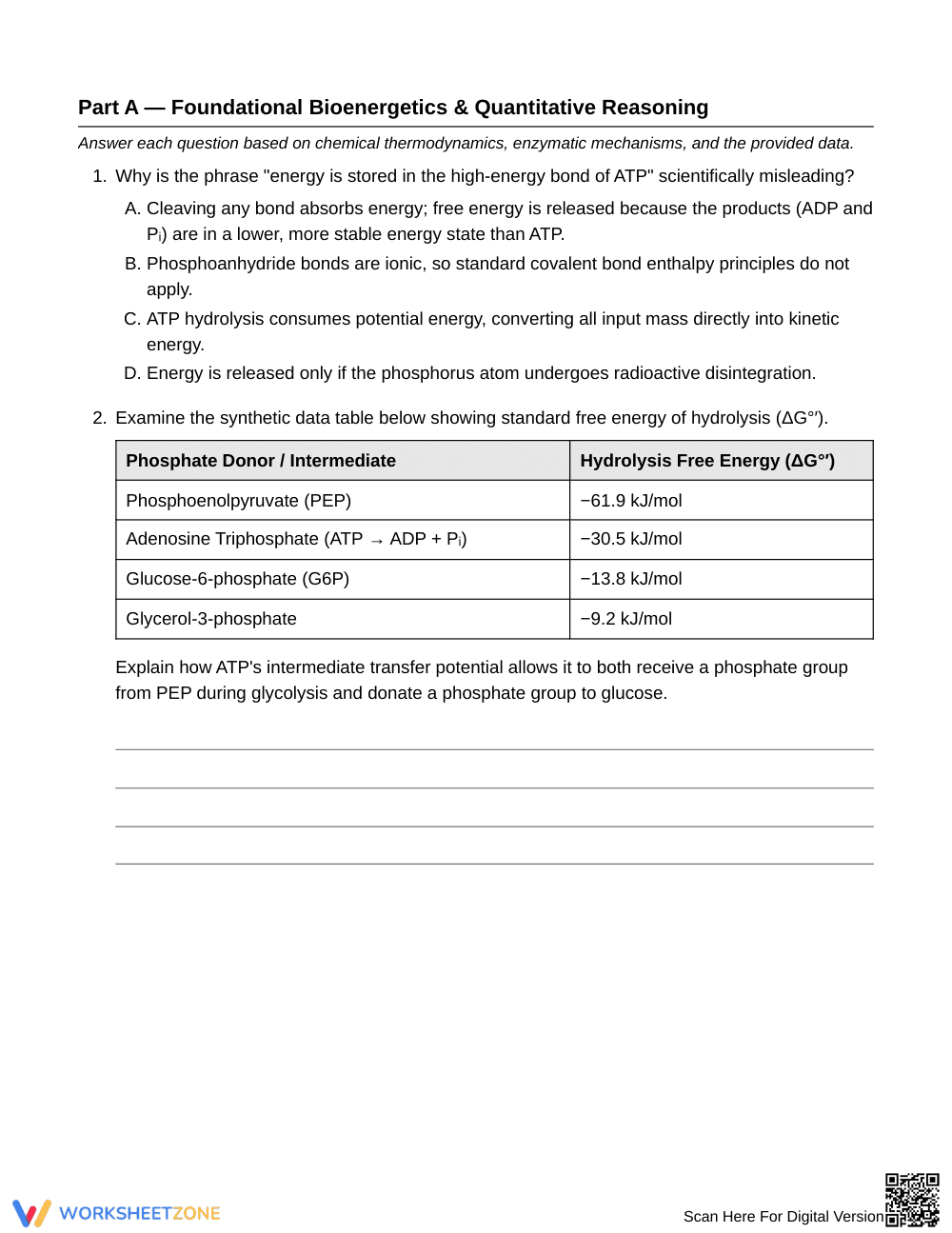
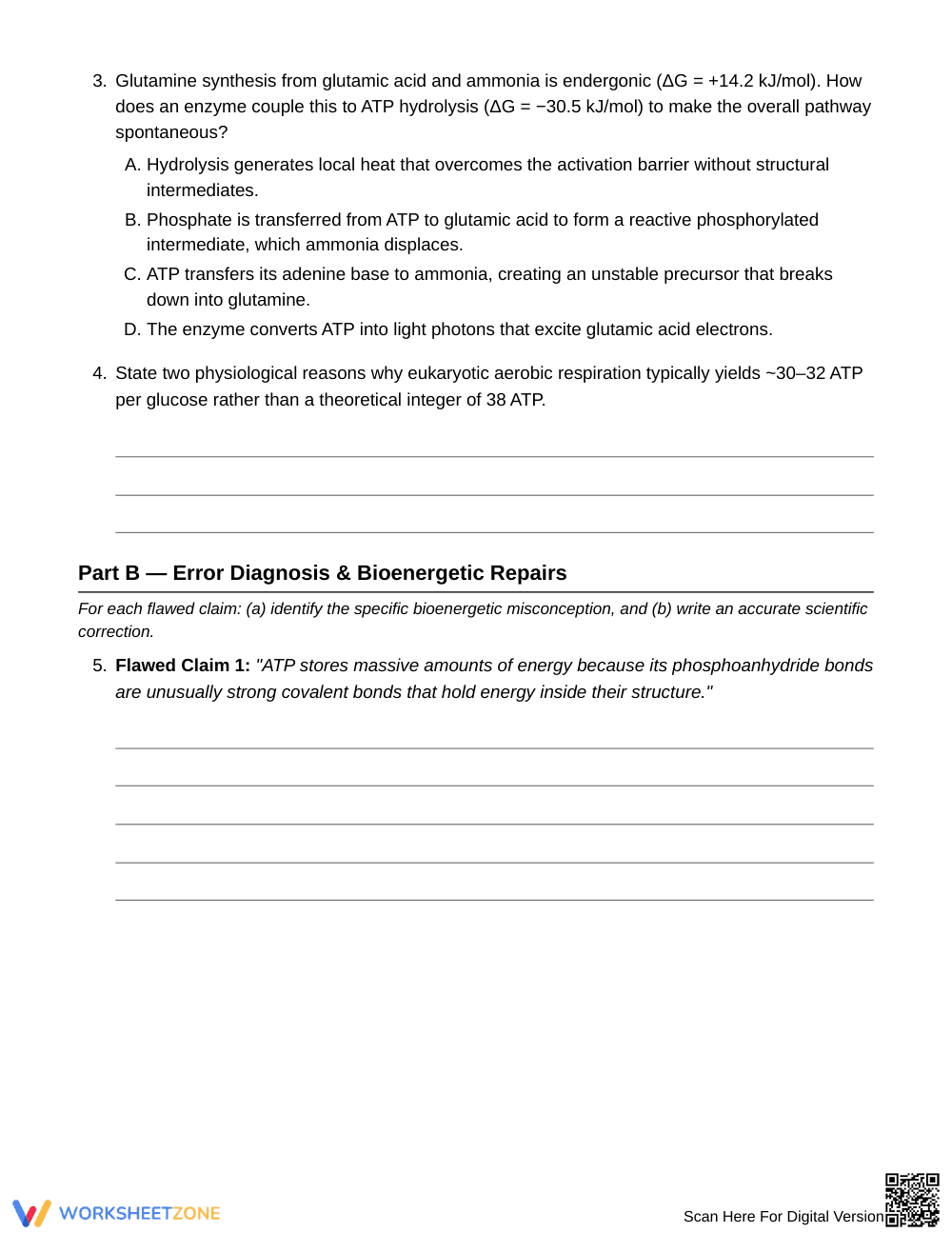
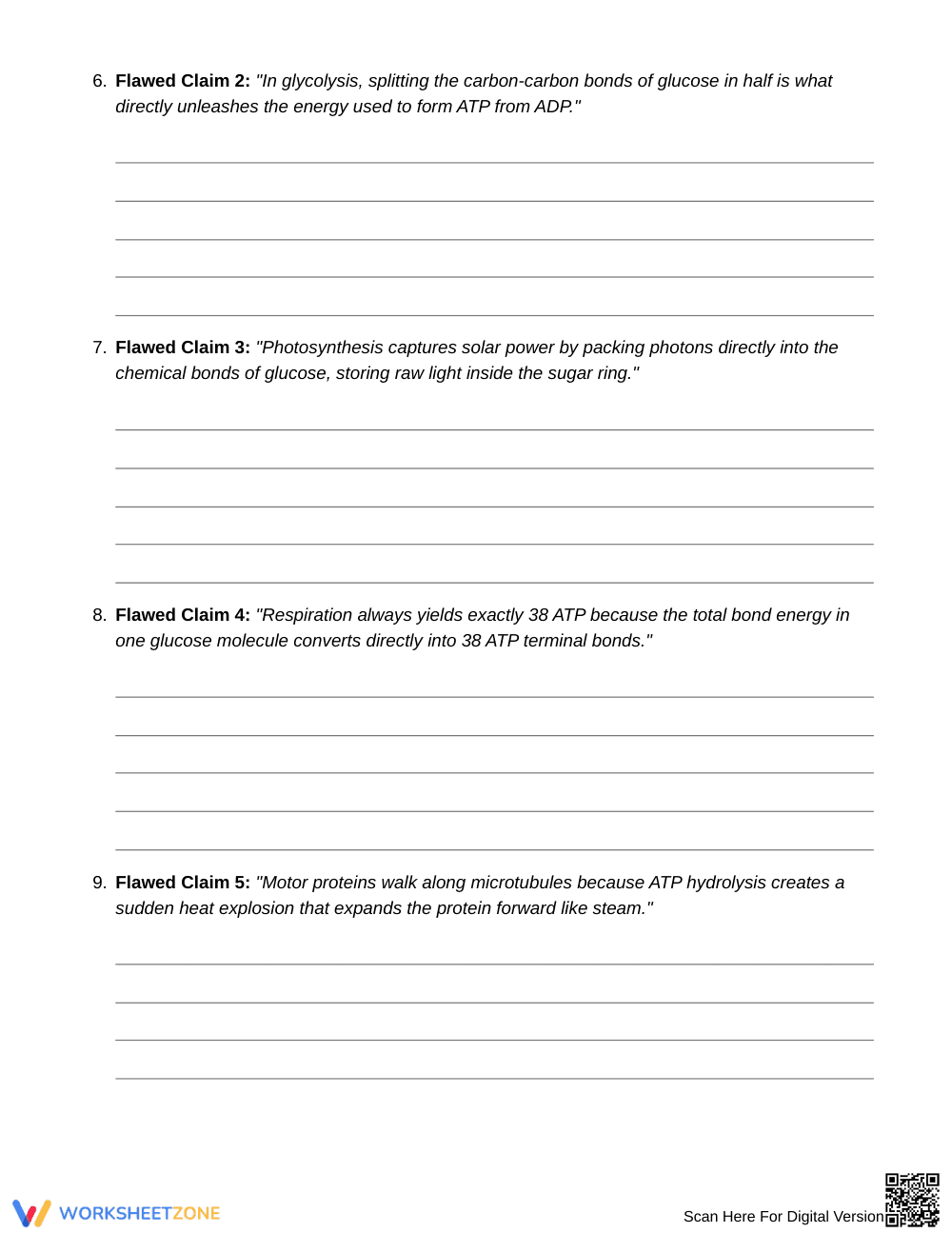
This Grade 10 biology worksheet enables students to eliminate persistent bioenergetic misconceptions and explain cellular energy transfers accurately. Through 12 targeted diagnostic tasks, learners evaluate flawed claims regarding ATP and chemical bonds, applying core thermodynamic principles of bond enthalpy, product resonance stabilization, and enzymatic energy coupling.
At a Glance
- Grade: 10 · Subject: Biology
- Standard: High School Life Science — Model energy transformations and bond breaking in cellular respiration
- Skill Focus: Correct Energy-Stored-Only-in-Bonds Claims
- Format: 5 pages · 12 problems · Answer key included · PDF
- Best For: Bioenergetics and cellular respiration practice
- Time: 40–50 minutes
What's Inside
This 5-page resource features 12 analytical tasks that build conceptual precision. It begins with a core principles reference box and a modeled diagnostic repair exemplar. Students analyze standard free energy data, evaluate reaction coupling mechanisms, and correct eight flawed statements using a complete 3-page explanatory answer key.
Skill Progression
- Guided Practice: A reference box and worked example show how to identify thermodynamic errors and construct scientific repairs.
- Supported Practice (Part A, 4 tasks): Students evaluate free energy values across phosphate donors and analyze intermediate coupling mechanisms.
- Independent Practice (Part B, 8 tasks): Learners diagnose eight misconceptions and write accurate corrections detailing bond enthalpy and product stability.
This progression follows an intentional gradual-release model moving from structured rule review to independent diagnostic analysis.
Standards Alignment
Aligned to secondary life science standards for cellular energy, this worksheet requires students to construct scientific explanations for how cells transform matter and conserve energy. Supporting physical science concepts of bond enthalpy and thermodynamics reinforce biochemical reasoning. Both standard codes can be copied directly into lesson plans, IEP goals, or district curriculum mapping tools.
How to Use It
Assign this worksheet following direct instruction on ATP hydrolysis. For formative assessment, check Part A responses during guided practice before students tackle the error-repair tasks in Part B. It also serves as an effective collaborative review before summative exams. Expected completion time is 40 to 50 minutes.
Who It's For
Designed for Grade 10 biology and introductory AP Biology students, this resource includes accessible reference summaries for emerging learners and challenging data interpretation for advanced students. Pair this worksheet with an ATP cycle visual diagram or respiration pathway chart.
In secondary life science instruction, correcting entrenched misconceptions about energy storage is essential for understanding cellular metabolism. Students frequently hold the flawed belief that covalent bonds act as physical containers holding trapped energy that shatters upon cleavage. According to research on conceptual change and scaffolded learning by Fisher & Frey (2014), structured error-analysis routines accelerate student mastery by prompting learners to evaluate flawed reasoning directly against scientific models. This 12-task Grade 10 worksheet targets the core bioenergetic skill of correcting energy-stored-only-in-bonds claims. By moving from a foundational review of bond enthalpy and resonance stabilization to rigorous diagnostic repairs, the resource equips students to explain how ATP hydrolysis couples free energy release through phosphorylated intermediates and product stability. Teachers can integrate this 5-page curriculum-aligned resource into high school biology units on cellular energy to verify durable understanding and prepare learners for advanced biochemical reasoning.


