

































Complete Allusion Repair Worksheet | Grade 9 English I

Paste this activity's link or code into your existing LMS (Google Classroom, Canvas, Teams, Schoology, Moodle, etc.).
Students can open and work on the activity right away, with no student login required.
You'll still be able to track student progress and results from your teacher account.
This Grade 9 English worksheet trains students to distinguish genuine literary allusions from internal motifs and repair unsupported analytical claims. High school readers evaluate five flawed student claims from an original short story, then construct evidence-based revisions analyzing authorial diction, tone shifts, and thematic development.
At a Glance
- Grade: 9 · Subject: English I
- Standard:
RL.9-10.4— Determine figurative meanings, analyze motif development, and evaluate cumulative tone in literature- Skill Focus: Repairing Unsupported Allusion Claims
- Format: 6 pages · 10 problems · 4-page answer key included · PDF
- Best For: Close reading analysis and claim repair practice
- Time: 45–60 minutes
What's Inside
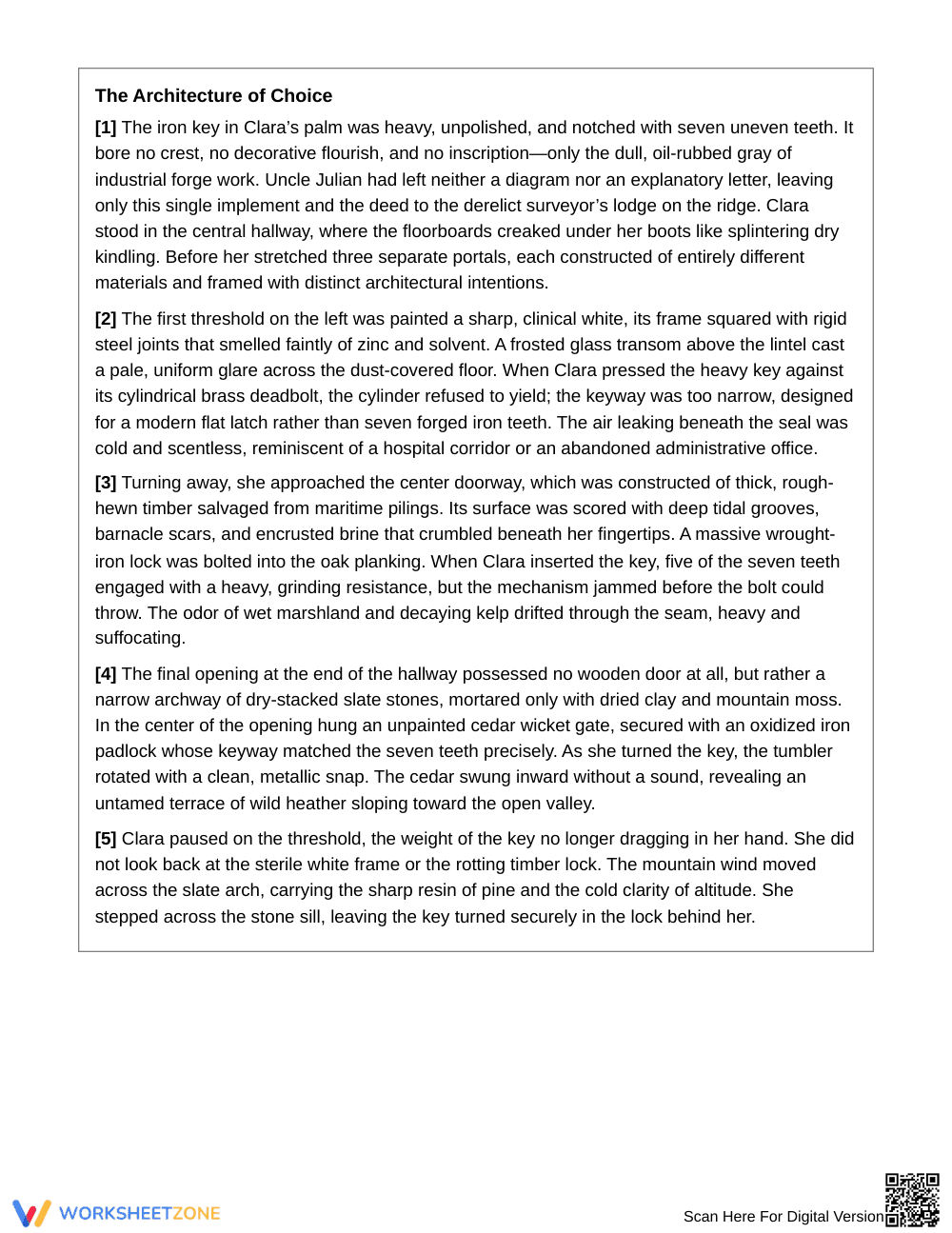
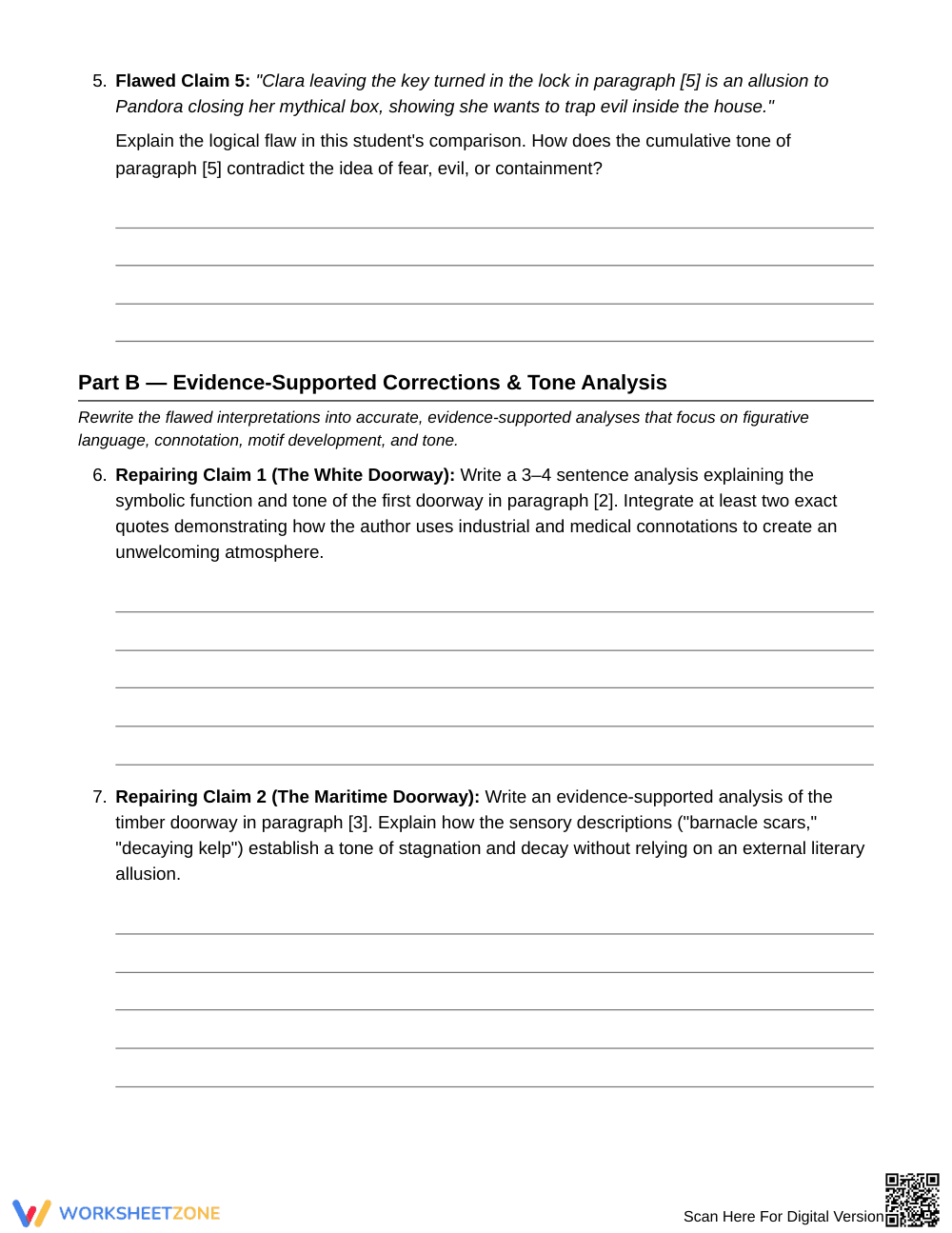
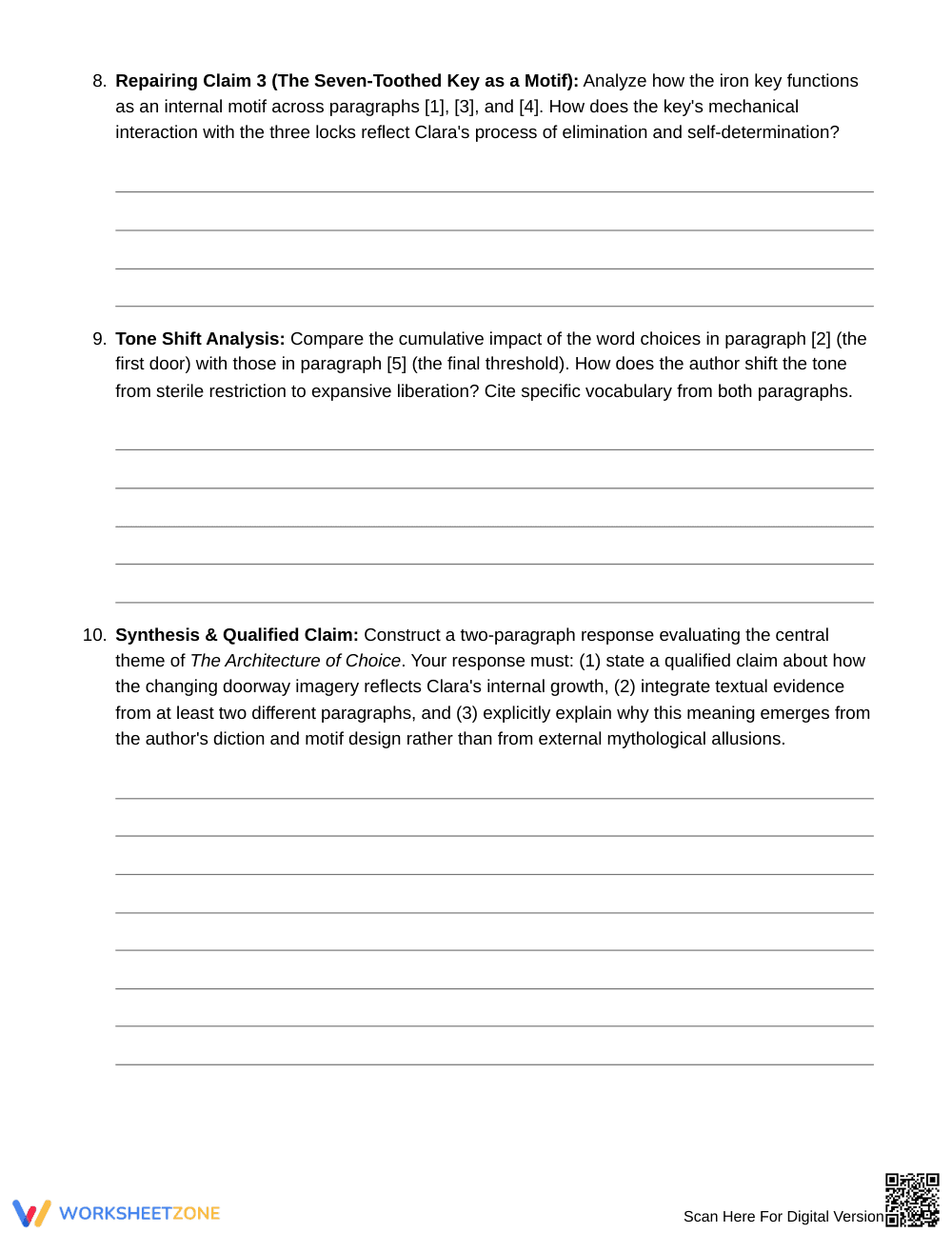
This 6-page worksheet features an allusion concept guide, the original short story "The Architecture of Choice," and an annotated model repair. Students complete 10 prompts across two parts: diagnosing five overreaching claims and writing five evidence-based analyses, including tone comparisons and a synthesis response. A 4-page answer key provides complete model rationales.
Skill Progression
- Guided practice: A worked model examines an erroneous Saint Peter allusion, demonstrating how to isolate flawed assumptions and cite physical story details.
- Supported practice: In Part A (problems 1–5), students evaluate five flawed student claims, identifying why generic imagery does not justify external literary allusions.
- Independent practice: In Part B (problems 6–10), students write original revisions, analyze tone progression, and synthesize central themes using direct textual evidence.
This gradual-release structure moves students from teacher-modeled evaluation to fully independent textual argumentation.
Standards Alignment
This worksheet aligns to CCSS.ELA-LITERACY.`RL.9-10.4`, determining the meaning of words and phrases as used in text, including figurative and connotative meanings, and analyzing word choice impact on tone. It also supports CCSS.ELA-LITERACY.`RL.9-10.1` by requiring explicit evidence for all interpretive claims. Both standard codes can be copied directly into lesson plans, IEP goals, or district curriculum mapping tools.
How to Use It
Use this worksheet after direct instruction on literary devices for guided group work or individual practice. As a formative assessment check, monitor Part A to see whether students distinguish between shared physical descriptions and authorial intent. The full 10-problem sequence requires 45 to 60 minutes of focused analytical writing time.
Who It's For
This resource serves Grade 9 English I learners mastering textual evidence and analytical claim boundaries. The side-by-side diagnosis format supports developing writers by exposing common analytical fallacies before they draft. Pair this printable with a mini-lesson on literary motifs or an anchor chart on tone words.
Mastering standard RL.9-10.4 requires high school students to analyze how figurative language, motifs, and authorial word choices cumulatively establish literary meaning. Research from Fisher & Frey (2014) on close reading and disciplinary literacy emphasizes that secondary learners often struggle when moving from literal plot comprehension to nuanced thematic interpretation, frequently producing overreaching claims without verifiable textual markers. This 6-page worksheet targets that specific diagnostic gap by teaching students how to repair unsupported allusion claims through systematic evidence gathering. Rather than allowing students to mistake recurring motifs for external mythological references, the 10-problem instructional sequence scaffolds critical thinking through explicit non-examples, direct refutation, and evidence-grounded written repairs. By contrasting superficial assumptions with authentic authorial diction, the material equips Grade 9 English students to evaluate textual evidence objectively, articulate precise connotative shifts, and compose defensible literary arguments aligned with standards.


