Understanding Allusions in the Secondary ELA Classroom
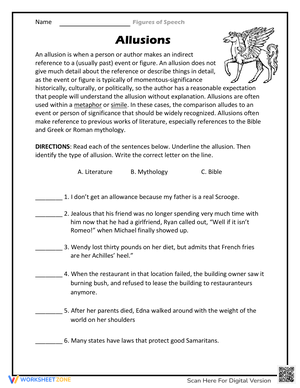
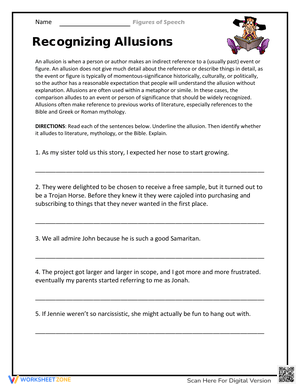
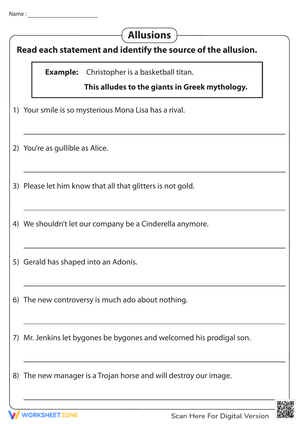
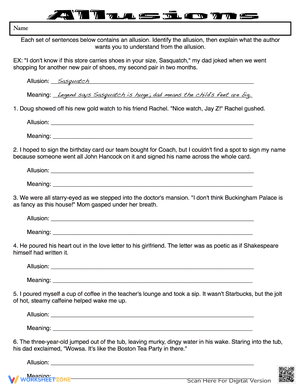
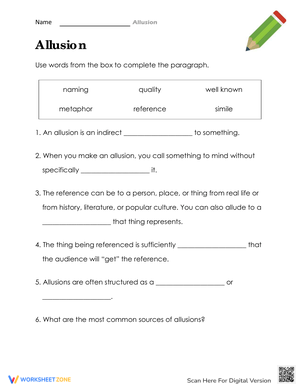
An allusion is a brief and indirect reference to a person, place, thing, or idea of historical, cultural, literary, or political significance. It does not describe in detail the person or thing to which it refers; instead, it is a passing comment that the writer expects the reader to spot and understand. In middle and high school English Language Arts (ELA) classrooms, teaching allusions is essential for moving students from basic comprehension to deep literary analysis. When students encounter an allusion worksheets, they are not just looking for hidden words; they are learning to decode the cultural shorthand that authors use to communicate complex ideas efficiently. According to Literary Devices: Allusion, these references allow writers to simplify complex ideas and emotions by comparing the current situation to a well-known historical or mythological event. This connection helps the reader understand characters or the plot on a more profound level without the need for lengthy descriptions that might slow down the narrative pace. Instruction must go beyond mere identification, as effective allusion practice involves helping students build a mental library of common references to recognize these patterns across different genres of literature, enhancing their analytical skills.
Identifying Sources of Historical and Cultural Allusions
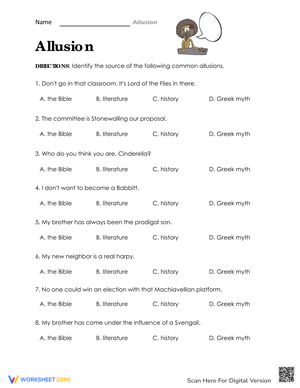
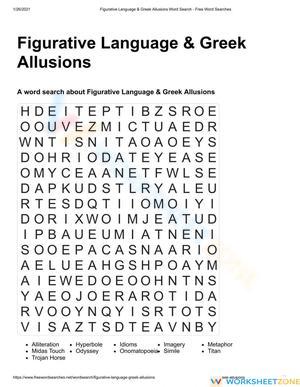
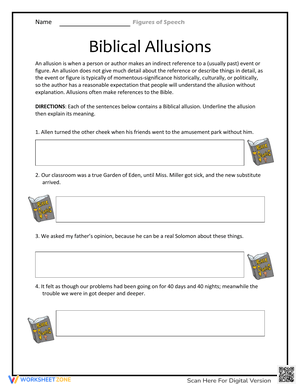
The power of an allusion lies in its source, with several major categories appearing with high frequency in the Western literary canon. The most common sources include Greek and Roman mythology, the Bible, Shakespearean plays, and significant historical events. For instance, a reference to a "garden" or a "serpent" often alludes to the Garden of Eden, bringing themes of innocence and temptation. Similarly, a character who is described as having the "Midas touch" refers to the mythological King Midas, suggesting that everything they do turns to success, but perhaps with hidden consequences. Understanding these categories is the first step in teaching students how to use an allusion worksheets effectively. By categorizing their practice, students can begin to see the common threads that run through centuries of literature. Mythological allusions are particularly prevalent in poetry, where they evoke specific character traits that would otherwise require extensive explanation, thus supporting the development of cultural literacy and shared knowledge across different literary landscapes.
Why Authors Use Indirect References
Authors choose to use allusions rather than direct descriptions for several strategic reasons. According to the guide on Understanding Allusions in Literature from MasterClass, an allusion allows writers to simplify complex ideas by referencing familiar concepts. This technique helps authors create layered meanings, provided students have the prerequisite cultural literacy to recognize these brief, indirect references to people, places, or historical events within a narrative. MasterClass highlights that literary, mythological, and historical allusions are the most frequent ways writers build these connections to deepen their storytelling and engage the reader's existing knowledge base. By utilizing these references, authors can bridge the gap between their work and the broader human experience, encouraging active participation from the reader in decoding thematic elements. This intentional use of shared knowledge allows for a more compact form of storytelling that speaks to the audience across generations.
Teacher Tips for Implementing Allusion Practice
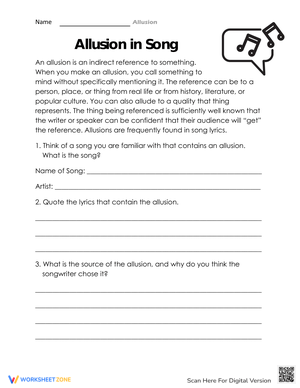
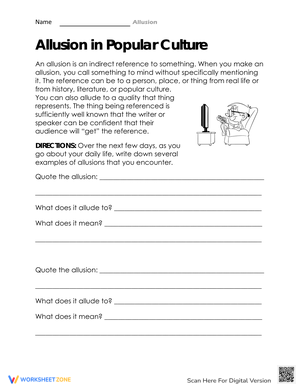
When planning a unit on literary devices, integrate allusion practice into your regular reading lessons rather than treating it as a standalone topic. When you encounter a reference in a novel, stop and discuss it to see what it adds to the scene and how it changes the perception of the character. Second, use a variety of texts to show that allusions are everywhere, appearing in song lyrics, advertising, and even modern media. Showing students how a contemporary creator might allude to a historical figure can make the concept feel much more relevant. Finally, encourage collaboration by having students work together to brainstorm possible meanings and share their background knowledge. You can use an allusion worksheets as a base for these group discussions, providing a structured way for students to record their findings and present them to the class. This not only reinforces their learning but also helps develop their communication skills, which are vital for success in all areas of their education and future careers, creating a more dynamic learning environment.
Analyzing Allusions for Deeper Textual Meaning
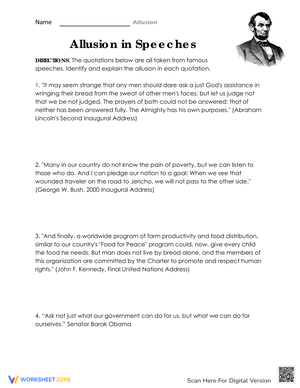
The ultimate goal of teaching allusions is to help students understand how these references contribute to the overall theme and message of a work. It is not enough to simply label a reference; students must be able to explain why it matters. For instance, if a character is described as a "Benedict Arnold," identifying him as a traitor is the first step, followed by explaining how this label affects the reader's trust. This level of analysis requires students to think critically about the author's intent and the emotional resonance of the allusion. Using an allusion worksheets that includes open-ended questions can help prompt this deeper thinking. Additionally, this type of analysis helps students understand the concept of intertextuality—the way that texts talk to each other across time. When a modern author alludes to a Shakespearean play, they are participating in a long tradition of storytelling, making the world of books feel much more alive and connected to the students' own experiences.
Allusion worksheets: Scaffolding Literary Analysis
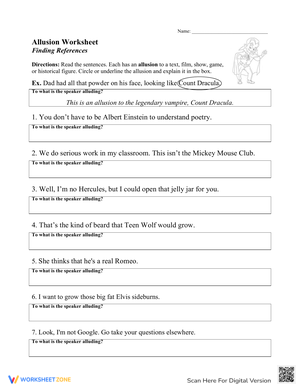
For many students, the leap from recognizing an allusion to analyzing its impact can be difficult. This is where a well-designed allusion worksheets becomes an invaluable tool. Scaffolding is the process of providing temporary support that is gradually removed as the student gains mastery. In the context of allusions, this might mean starting with worksheets that provide the definition and source, and then asking the student to explain its meaning. As the student progresses, the worksheets can provide less information, eventually requiring them to identify and research the allusion independently. This step-by-step approach prevents frustration and helps students build confidence in their abilities while allowing teachers to differentiate instruction for various learners, ensuring that each student is challenged at their own level of readiness.
Research indicates that students who explicitly study the core sources of allusions—specifically Greek mythology and Shakespeare—show a significant increase in reading comprehension scores when encountering complex 19th and 20th-century literature. Focusing instruction on these high-frequency references builds the schema necessary for independent literary analysis in higher-grade levels. By utilizing an allusion worksheets as a primary instructional tool, teachers can systematically address these knowledge gaps, ensuring that students possess the 50 to 100 common cultural touchstones that appear most frequently in academic texts. This targeted approach transforms the ELA classroom into a space where all students can access the deeper meanings of the texts they read, regardless of their personal background knowledge or previous exposure to classical studies and history, promoting a more equitable learning experience for all.
Frequently Asked Questions
1. What is the difference between an allusion and a direct reference?
An allusion is an indirect and brief mention that expects the reader to have prior knowledge of the source, such as saying "He's a real Romeo." A direct reference explicitly names the source and often provides more detail, like quoting Shakespeare directly. Allusions are meant to be subtle and efficient, while direct references are clear and informative. Understanding this distinction is key to recognizing the author's intent and the level of engagement they expect from their audience during the reading and analysis process.
2. How can I teach students to identify allusions if they lack background knowledge?
The best approach is to build that knowledge proactively through mini-lessons or fact sheets on common sources of allusions. You can also encourage students to use an allusion worksheets that requires them to research unfamiliar names and phrases. This process of discovery helps them build their own mental library over time. Additionally, using visual aids can provide a memorable anchor for these references, making them easier to recognize in future texts encountered in the classroom or during independent study, helping to bridge the cultural knowledge gap effectively.
3. Why do authors use allusions instead of just describing things directly?
Authors use allusions for efficiency, to create a sense of community with the reader, and to add layers of meaning to their work. By referencing a well-known story, they can evoke complex emotions and associations in just a few words. This creates an immediate impact and rewards the reader for their knowledge. It also makes the text more complex and interesting, as it connects the current work to a broader cultural and literary tradition. In essence, allusions are a form of intellectual shorthand that makes communication more powerful.
4. At what grade level should I start teaching allusions?
The concept can be introduced as early as upper elementary school with simple references to fairy tales or popular movies. However, more formal instruction usually begins in middle school and continues through high school. As students mature, the allusions they encounter become more complex and require a deeper understanding of history, mythology, and classic literature. Using a scaffolded allusion worksheets allows you to tailor the difficulty level to the needs of your students, ensuring the material remains accessible while providing appropriate academic challenge.












 Interactive Worksheet Maker
 Quiz Maker
 Word Search Maker
 Crossword Puzzle Maker
 Word Scramble Generator
 Sentence Scramble Generator
 Handwriting Worksheet Generator
 Name Tracing Generator
 Fill In The Blank Generator