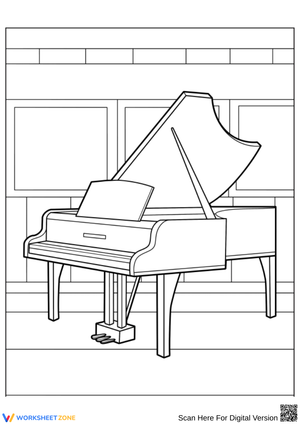
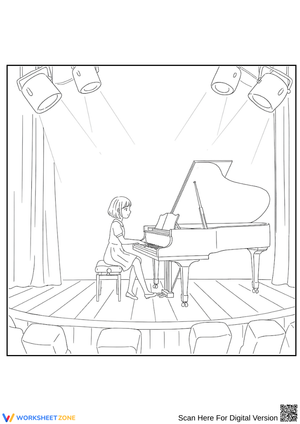
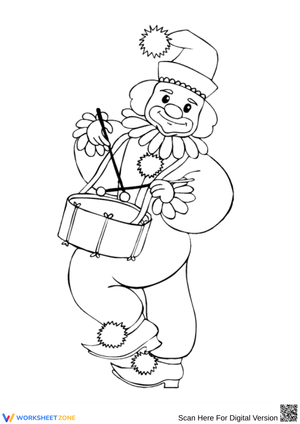
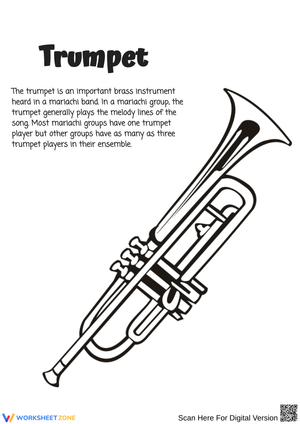
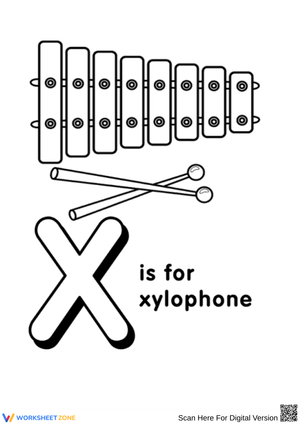
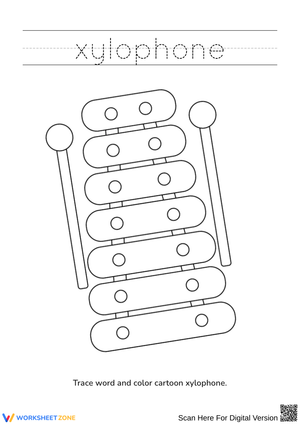
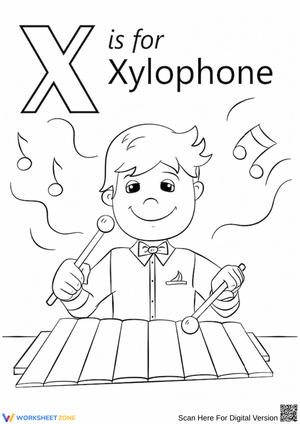
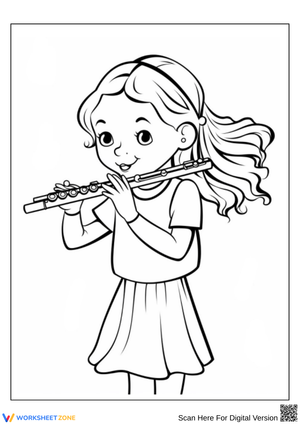
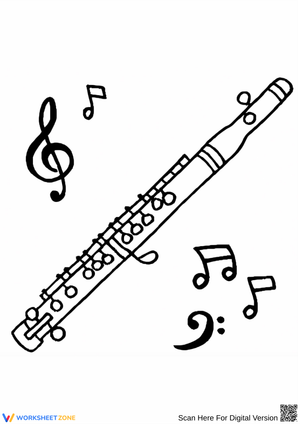
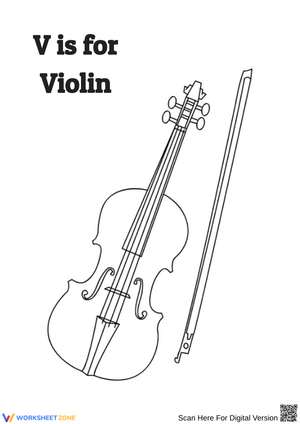
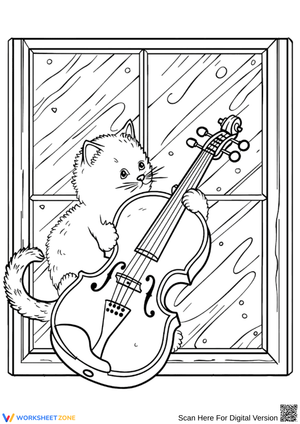
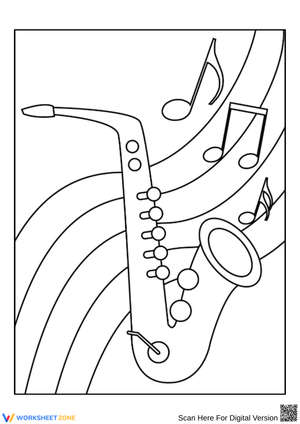
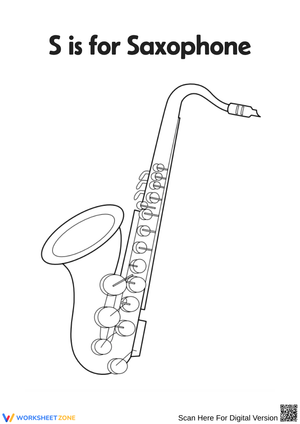
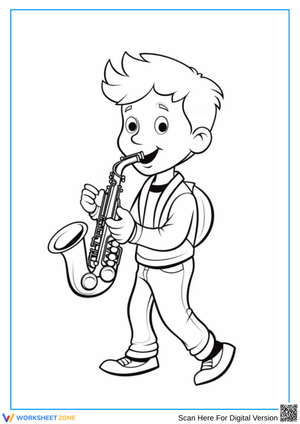
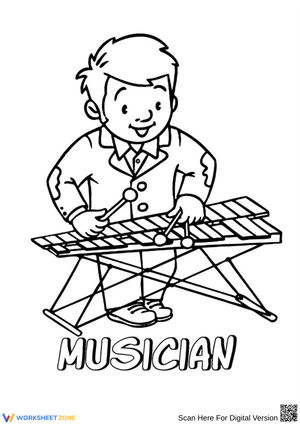
Each page in this set of music instruments coloring pages uses thick, clean line art so shapes stay easy to fill in. Guitars show curved bodies with six clear string lines, pianos display neat rows of black and white keys, and violins have narrow necks with f-hole details. Drum sets include round heads and cymbal circles, while trumpets and saxophones show curved tubing and valve buttons. The bold strokes hold up well on a home printer and give young colorers plenty of room to stay inside the lines.
Four Instrument Families In One Set
The collection covers strings, percussion, brass, and woodwinds, so kids meet a variety of shapes instead of coloring the same instrument twice. Guitars and violins represent strings, drums and maracas cover percussion, trumpets and trombones stand in for brass, and flutes and saxophones round out woodwinds. Mixing families this way makes the printables useful for a quick lesson on how sound is made, or simply a fun way to spend an afternoon with crayons and markers.
Picking The Right Page For Each Age
Toddlers and preschoolers do best with the simpler designs, like a single large guitar or drum with minimal inner detail. Elementary-age kids can try pages with keys, strings, and drumheads to color piece by piece. Teens and adults may prefer the more detailed sheets, where brass valves, wood grain on a violin, and layered cymbals give room for shading and blending. Picking a page that matches skill level keeps the activity enjoyable instead of frustrating.
Frequently Asked Questions
1. What age group fits music instrument coloring pages best?
The set works across a wide age span because it mixes simple and detailed designs. Toddlers and preschoolers can handle the large, bold-outline instruments, while elementary kids enjoy filling in string and key details. Teens and adults often pick the more intricate sheets for shading practice. This range makes the pages a flexible option for a classroom, a birthday party, or quiet time at home.
2. What is the best way to print these pages at home?
These printables are formatted as black-and-white line art on standard 8.5x11 letter pages, so they print cleanly on any home or school printer without needing special paper. Use the default print settings and plain white paper for the crispest lines. If a page looks light, choose a higher print quality setting so fine details like drum straps or violin strings stay visible.
3. Why is the piano technically a percussion instrument?
It seems odd, but the piano is grouped with percussion instruments because tiny hammers inside strike the strings every time a key is pressed. That hammer-and-strike action is the same basic method drums and xylophones use to make sound, even though a piano also has strings like a violin or guitar. It is a fun detail to share while coloring the keyboard page.












 Interactive Worksheet Maker
 Quiz Maker
 Word Search Maker
 Crossword Puzzle Maker
 Word Scramble Generator
 Sentence Scramble Generator
 Handwriting Worksheet Generator
 Name Tracing Generator
 Fill In The Blank Generator