Trumpet Coloring Pages: Free Printable Brass Instrument Sheets
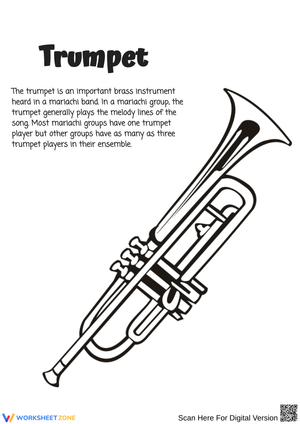
Every trumpet coloring page centers on the same brass shape: a looping tube, three round piston valves on top, a narrow mouthpiece, and a wide flared bell. The curves make this instrument fun to color, since the bell opens like a cone and the tubing bends in tight loops before straightening out again. Bold black outlines separate each part clearly, so kids can tell the valves from the tubing and the bell from the mouthpiece before picking up a crayon.
Which Skill Level Fits This Design
Toddlers and preschoolers do best with simple outlines that use thick lines and few small details, since wide spaces are easy to fill without going outside the lines. Grade-schoolers can handle designs that add musical notes floating near the bell or a checkered background pattern. Teens and adults often prefer sheets with shaded valve caps, engraved-looking bell rims, and finger positions marked on the buttons, turning a plain trumpet coloring page into a detailed brass-instrument study for older colorists.
Tips for Coloring a Brass Trumpet Sheet
A metallic gold or bronze marker gives the tube and bell a realistic brass shine, while gray or silver works for a chrome-style look. Shade the inside curve of the bell darker than the outer edge to add depth, and leave a small white highlight near the mouthpiece to suggest light reflecting off metal. These sheets print cleanly on standard 8.5x11 inch paper in black and white line art, so crayons, colored pencils, and markers all work without bleeding through thin copy paper.
Frequently Asked Questions
1. What colors work best for a realistic brass trumpet look?
Gold, brass, and antique bronze markers or colored pencils mimic real trumpet metal best, especially when layered with a touch of brown for shadow lines. Adding a thin streak of white or pale yellow along the curves suggests light bouncing off polished metal. For a stylized look, kids can swap in silver, deep blue, or rainbow shades, since these designs work well as both realistic studies and creative art projects.
2. Can these trumpet pages fit music class activities?
Yes. Trumpet pages pair naturally with a music unit, band recital, or a broader set of instrument coloring sheets that include guitars, drums, and pianos. Teachers can hand them out during free time after a listening activity, or let students color while learning fun facts about brass instruments. Parents can use the same sheets at home before a school concert or as a quiet activity on a rainy afternoon.
3. What is a surprising fact about trumpet design history?
The trumpet is one of the oldest instrument shapes still played today, with early metal and bronze versions dating back thousands of years before the valve system was added in the 1800s. Those three piston valves, now a signature part of every coloring sheet, are what let players change pitch quickly. That history is part of why trumpets remain a fixture in school bands, jazz groups, and orchestras across the US.