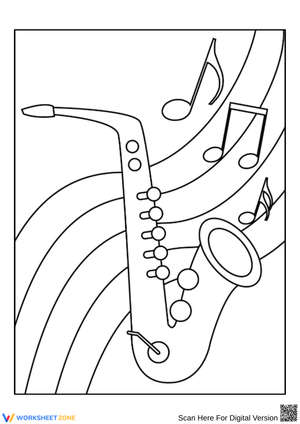
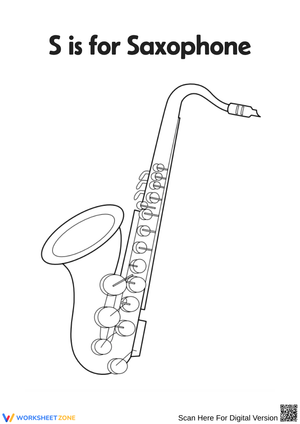
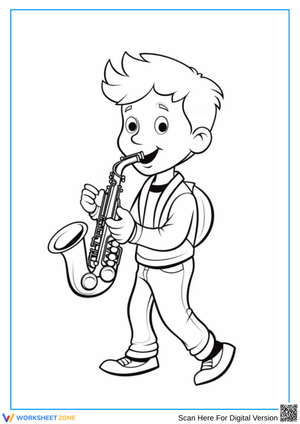
Every saxophone coloring page centers on the same recognizable shape: a curved brass body, a wide bell at the bottom, and a long row of circular keys running up the neck. Most sheets also draw in the single-reed mouthpiece and neck strap ring, since those small details give the instrument its identity. Some designs keep the outline simple with thick, bold lines, while others add shading guides around the bell and keys so colorers can practice blending metallic tones. A few pages set the saxophone inside a mini music scene, surrounded by floating notes or a stage backdrop.
What's in the Saxophone Coloring Collection
The collection ranges from plain outline saxophones great for quick coloring sessions to fuller jazz-band scenes with a saxophone player on stage. You'll find cartoon-style versions with rounded, friendly shapes for younger kids, plus more technical line drawings that map out every key and screw for older kids and teens who like detail work. Several sheets pair the instrument with music notes, treble clefs, or a small drum kit, making them useful for band recitals, music class projects, or a jazz-themed birthday party activity.
Coloring Tips and Printing Setup
To get a realistic brass look, layer gold, bronze, and light yellow, then add small strokes of white or silver along the keys to suggest shine. Darker brown or burnt-orange shading around the bell's curve adds depth without much effort. These sheets print cleanly on standard US letter paper and work well with crayons, markers, or colored pencils; card stock holds up best if the page will be gifted or displayed. Print at full size so smaller kids have enough room to stay inside the lines.
Frequently Asked Questions
1. What colors look most realistic for the saxophone body?
Gold, brass, and bronze shades are the closest match to a real saxophone's metal finish. Adding light yellow highlights where light would hit the curve, plus darker brown or copper tones in the shadowed areas near the bell, creates a shaded, dimensional look. Silver or gray works well for the keys and buttons, especially with a small white highlight for shine.
2. Where do people typically use saxophone coloring pages?
These sheets work well at home for quiet-time activities, in music classrooms as a low-pressure introduction to band instruments, and at jazz- or music-themed birthday parties as a table activity. Parents also use them as a simple keepsake project around a child's first band recital, since the finished page can be labeled with the date and instrument name.
3. Why does the saxophone mix woodwind and brass features?
Adolphe Sax, a Belgian instrument maker, patented the saxophone on June 28, 1846, designing it with a brass body but a single-reed mouthpiece borrowed from woodwind instruments like the clarinet. That combination is why the saxophone counts as a woodwind despite looking metallic, and it's part of why the shape feels so distinct compared to trumpets or trombones in coloring pages.












 Interactive Worksheet Maker
 Quiz Maker
 Word Search Maker
 Crossword Puzzle Maker
 Word Scramble Generator
 Sentence Scramble Generator
 Handwriting Worksheet Generator
 Name Tracing Generator
 Fill In The Blank Generator