




























Views
Downloads
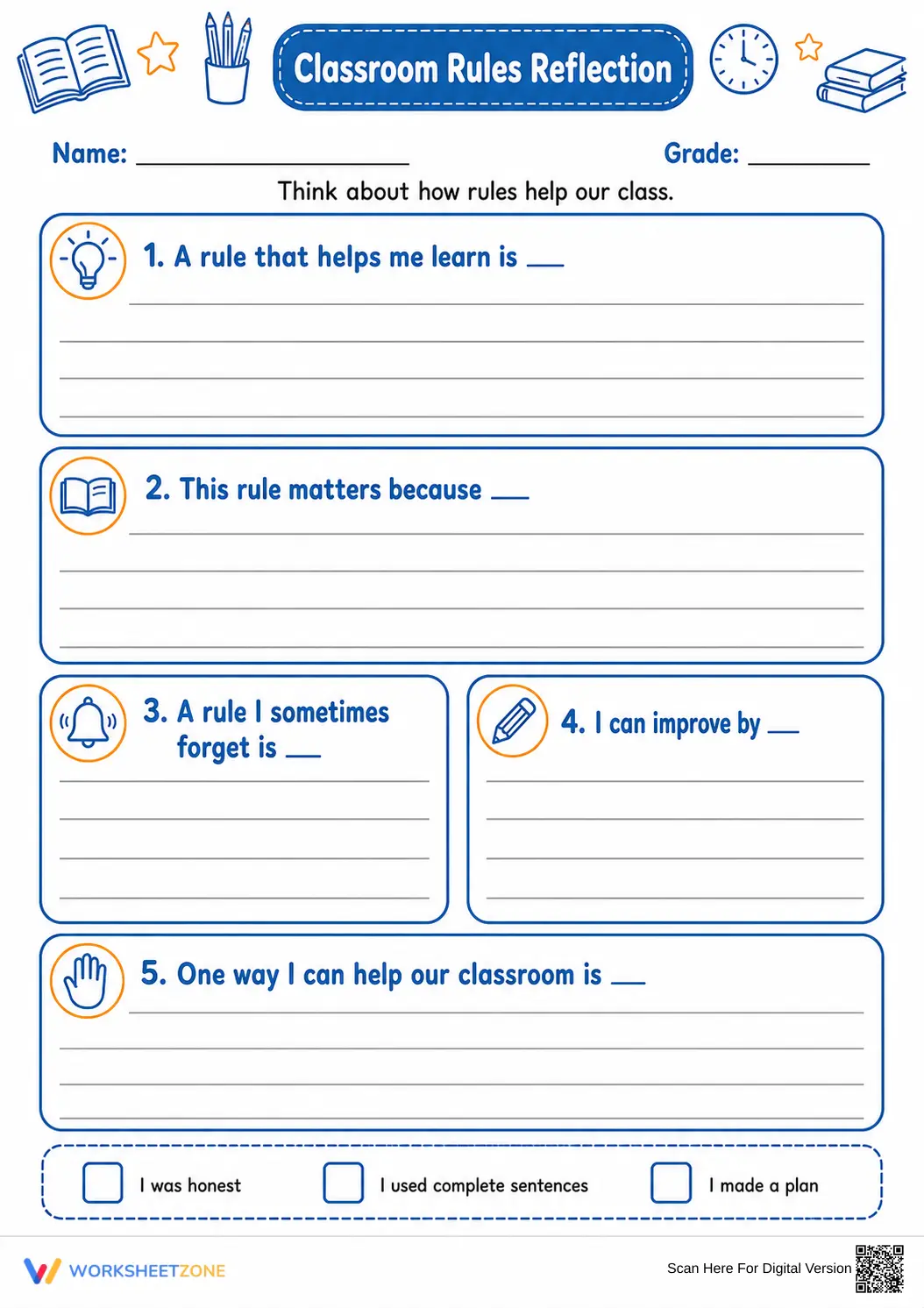

Classroom Rules Reflection | Essential Grade 4 Worksheet

Paste this activity's link or code into your existing LMS (Google Classroom, Canvas, Teams, Schoology, Moodle, etc.).
Students can open and work on the activity right away, with no student login required.
You'll still be able to track student progress and results from your teacher account.
This Grade 4 classroom rules reflection worksheet helps students internalize behavioral expectations through structured writing. By prompting students to analyze why rules exist and how they can improve, this resource transforms compliance into community-minded character development. It provides a safe space for honest self-assessment and goal setting during the back-to-school season or mid-year resets.
At a Glance
- Grade: 4 · Subject: Social Emotional Learning
- Standard:
CCSS.ELA-LITERACY.W.4.10— Write routinely for a range of discipline-specific tasks and purposes- Skill Focus: Behavioral reflection and goal setting
- Format: 1 page · 5 prompts · Self-reflection checklist · PDF
- Best For: Classroom management and morning meetings
- Time: 15–20 minutes
What's Inside
This single-page PDF features five distinct reflection panels with ruled lines for student responses. The layout includes visual icons to support engagement and a bottom checklist for self-monitoring. Students address specific prompts regarding helpful rules, the purpose of regulations, personal challenges, improvement strategies, and classroom contributions. The clean, blue-and-orange design ensures high legibility for all learners.
Zero-Prep Workflow
1. Print (1 minute): Select the single-page PDF and print enough copies for your entire roster. 2. Distribute (30 seconds): Hand out the worksheets during a morning meeting or after a specific behavioral incident. 3. Review (30 seconds): Briefly read the five prompts aloud to ensure students understand the reflective nature of the task. Total teacher preparation time is under two minutes, making this an ideal resource for unexpected schedule changes or substitute teacher plans.
Standards Alignment
The primary standard addressed is `CCSS.ELA-LITERACY.W.4.10`, which requires students to write routinely over shorter time frames for a range of discipline-specific tasks, purposes, and audiences. This worksheet specifically applies writing skills to the domain of social-emotional development and civics. Both standard codes can be copied directly into lesson plans, IEP goals, or district curriculum mapping tools.
How to Use It
Use this worksheet as a proactive tool during the first week of school to establish a culture of accountability. Alternatively, assign it as a restorative practice after a class-wide disruption to help students refocus on shared goals. During the activity, circulate and observe which prompts cause the most hesitation; this provides a formative assessment of class-wide behavioral hurdles. Completion typically takes 15 to 20 minutes.
Who It's For
This resource is designed for general education students in Grade 4, but the supportive icons and sentence starters make it accessible for English Language Learners and students with IEPs. It pairs naturally with a classroom anchor chart listing current rules or a direct instruction lesson on community responsibility.
Effective classroom management relies on students understanding the "why" behind expectations. According to Fisher & Frey (2014), structured reflection is a cornerstone of the gradual release of responsibility, moving students from teacher-led compliance to self-regulated behavior. This worksheet facilitates that transition by requiring students to articulate the purpose of rules and identify personal growth areas. By aligning with CCSS.ELA-LITERACY.W.4.10, the resource ensures that behavioral interventions support core literacy goals. Research from RAND AIRS 2024 suggests that integrating social-emotional reflection into the school day improves overall climate and academic focus. This 1-page tool provides the necessary scaffolding for students to engage in meaningful self-critique, ensuring that classroom rules are viewed as helpful supports rather than arbitrary restrictions.


