


























Views
Downloads
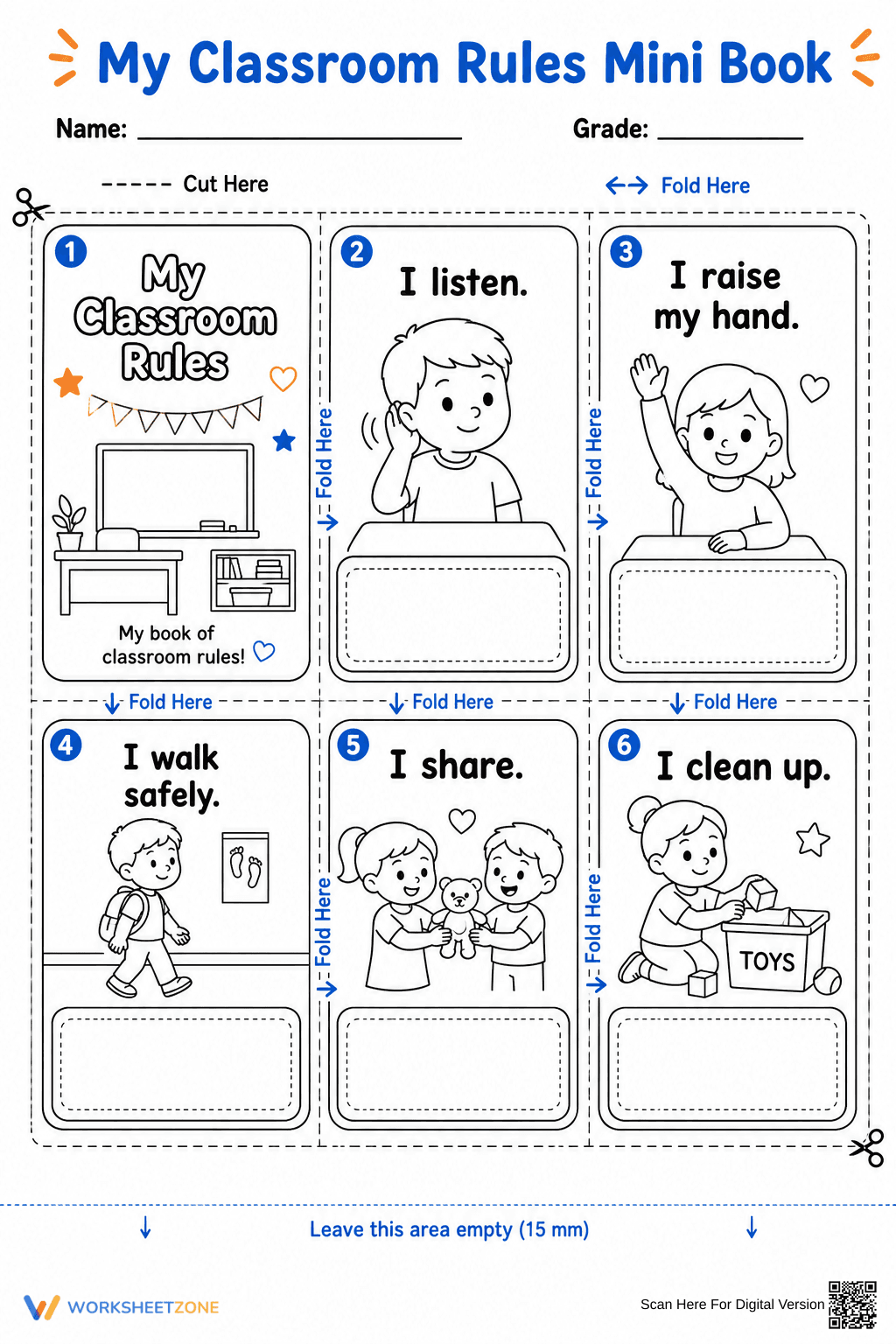

Classroom Rules Mini Book | Grade K-2 Essential
Paste this activity's link or code into your existing LMS (Google Classroom, Canvas, Teams, Schoology, Moodle, etc.).
Students can open and work on the activity right away, with no student login required.
You'll still be able to track student progress and results from your teacher account.
This Grade K-2 classroom rules mini book helps students internalize behavioral expectations through a hands-on creative project. By cutting, folding, and coloring their own rulebook, learners engage deeply with core social-emotional concepts like listening and sharing. It provides a tangible reference for students to keep in their desks for daily reinforcement of positive classroom culture.
At a Glance
- Grade: K-2 · Subject: Social Emotional Learning
- Standard:
CCSS.ELA-LITERACY.SL.K.1— Participate in collaborative conversations about classroom rules and peer interactions- Skill Focus: Classroom Expectations & Fine Motor Skills
- Format: 1 page · 6 panels · No answer key needed · PDF
- Best For: Back-to-school orientation and behavior management
- Time: 15–20 minutes
This single-page PDF features a 6-panel foldable layout designed for easy assembly. It includes a customizable cover page and five specific rule panels: listening, raising hands, walking safely, sharing, and cleaning up. Each panel contains a high-contrast illustration for coloring and a dedicated response area for students to draw or trace, ensuring high engagement for early learners.
Zero-Prep Workflow
- Print: Select the single-page PDF and print one copy per student (30 seconds).
- Distribute: Hand out the sheets along with scissors and crayons (1 minute).
- Review: Guide students through the cutting and folding lines while discussing each rule (15 minutes).
This activity requires zero teacher preparation and serves as an excellent first-week activity or emergency sub plan for early elementary classrooms.
Standards Alignment
The primary standard addressed is `CCSS.ELA-LITERACY.SL.K.1`, which focuses on participating in collaborative conversations about kindergarten topics and texts. This worksheet supports the standard by providing a visual and tactile framework for discussing behavioral norms. Both standard codes can be copied directly into lesson plans, IEP goals, or district curriculum mapping tools.
How to Use It
Use this mini book during the first week of school as a primary instructional tool for establishing classroom culture. After direct instruction on each rule, have students color the corresponding panel to reinforce the concept. It also serves as a formative assessment; observe how students interpret the "I share" or "I clean up" panels to identify those who may need additional social-emotional support.
Who It's For
This resource is designed for Kindergarten, 1st Grade, and 2nd Grade students, particularly those who benefit from tactile learning and visual cues. It is an ideal pairing for a "First Day of School" read-aloud or an anchor chart session. The simple language and clear icons make it accessible for English Language Learners and students with developmental delays.
According to research by Fisher & Frey (2014), the use of visual scaffolds and hands-on manipulatives significantly improves the retention of procedural knowledge in early elementary settings. This classroom rules mini book applies these principles by transforming abstract behavioral expectations into a concrete, student-owned resource. By engaging with the `CCSS.ELA-LITERACY.SL.K.1` standard through a multi-sensory approach—cutting, folding, and coloring—students are more likely to internalize the social-emotional skills required for a productive learning environment. The 6-panel structure provides a manageable cognitive load for 5- to 7-year-olds, ensuring that the core messages of safety, respect, and responsibility are clearly communicated. This evidence-based design supports classroom management strategies that prioritize student agency and clear communication of expectations, leading to better long-term behavioral outcomes and a more cohesive classroom community.


