


























Views
Downloads

Classroom Reset Checklist | Essential Teacher Printable
Paste this activity's link or code into your existing LMS (Google Classroom, Canvas, Teams, Schoology, Moodle, etc.).
Students can open and work on the activity right away, with no student login required.
You'll still be able to track student progress and results from your teacher account.
This Classroom Reset Checklist provides a structured end-of-day routine to ensure teachers and students leave the learning environment prepared for the following morning. By focusing on five key zones of the classroom, this tool helps reduce decision fatigue and morning stress. It transforms the chaotic end-of-day transition into a predictable, manageable series of small wins.
At a Glance
- Grade: K-12 · Subject: Classroom Management
- Standard:
MGMT.K12.ORG— Organize the physical environment to support student learning and teacher efficiency- Skill Focus: Organizational routines and environment maintenance
- Format: 1 page · 8 tasks · Reflection prompt included · PDF
- Best For: Daily end-of-day teacher or student routines
- Time: 5–10 minutes
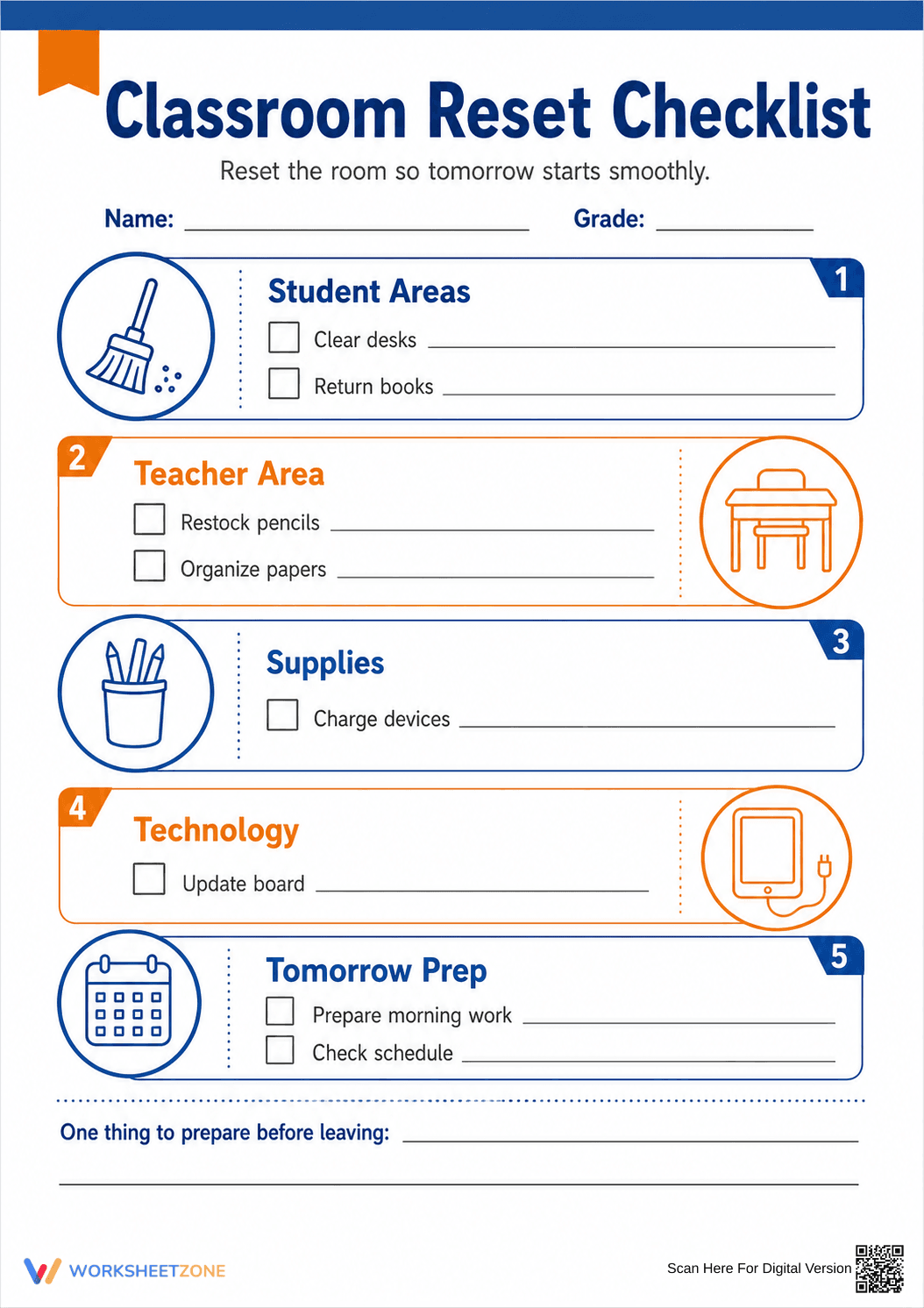
What's Inside: This single-page PDF features a clean, clipboard-inspired layout with five distinct sections: Student Areas, Teacher Area, Supplies, Technology, and Tomorrow Prep. Each section includes specific checkboxes for tasks like clearing desks, restocking pencils, and charging devices. The design uses high-contrast icons and dotted divider lines to maintain visual clarity, ending with a dedicated reflection line for the most critical task of the next day.
Zero-Prep Workflow: This resource is designed for immediate implementation with a total prep time of under 2 minutes. First, print the checklist and place it in a visible location, such as a clipboard near the door or on the primary whiteboard. Second, distribute the tasks to student leaders or follow the list personally during the final 10 minutes of the school day. Third, review the completed list and fill in the final reflection prompt to clear your mental load before leaving the building.
Standards Alignment: While this resource is a professional tool, it aligns with MGMT.K12.ORG, focusing on the creation of a functional learning environment. Effective classroom management requires the systematic organization of physical space and materials to maximize instructional time. This standard code can be copied directly into lesson plans, IEP goals, or district curriculum mapping tools to document professional organizational strategies.
How to Use It: Use this checklist as a personal closing ritual to ensure no technology is left uncharged and the morning work is ready for arrival. Alternatively, use it as a formative assessment of classroom culture by assigning different sections to student "Reset Captains." This builds student ownership of the space. Expected completion time is 5 to 10 minutes depending on the level of student involvement and the size of the classroom.
Who It's For: This printable is ideal for K-12 teachers seeking to streamline their afternoon exit. It is particularly helpful for new teachers establishing routines or veteran teachers looking to delegate tasks to student helpers. It pairs naturally with a daily morning agenda or a classroom jobs anchor chart to create a full cycle of environmental accountability.
According to research by Fisher & Frey (2014), the physical environment and the routines established within it are foundational to student success and teacher well-being. A structured "reset" routine reduces the cognitive load required to start the next instructional day, allowing teachers to focus on pedagogy rather than logistics. The MGMT.K12.ORG standard emphasizes that an organized classroom directly correlates with reduced behavioral disruptions and increased student engagement. By utilizing this 8-task checklist, educators implement a proven strategy for environmental maintenance that supports long-term professional sustainability. Analysis from the RAND AIRS 2024 report suggests that teachers who utilize structured organizational tools report higher levels of job satisfaction and lower rates of end-of-day exhaustion. This checklist serves as a practical application of these findings, providing a clear, actionable path toward a more efficient and welcoming classroom environment for both students and staff.


