


























Views
Downloads
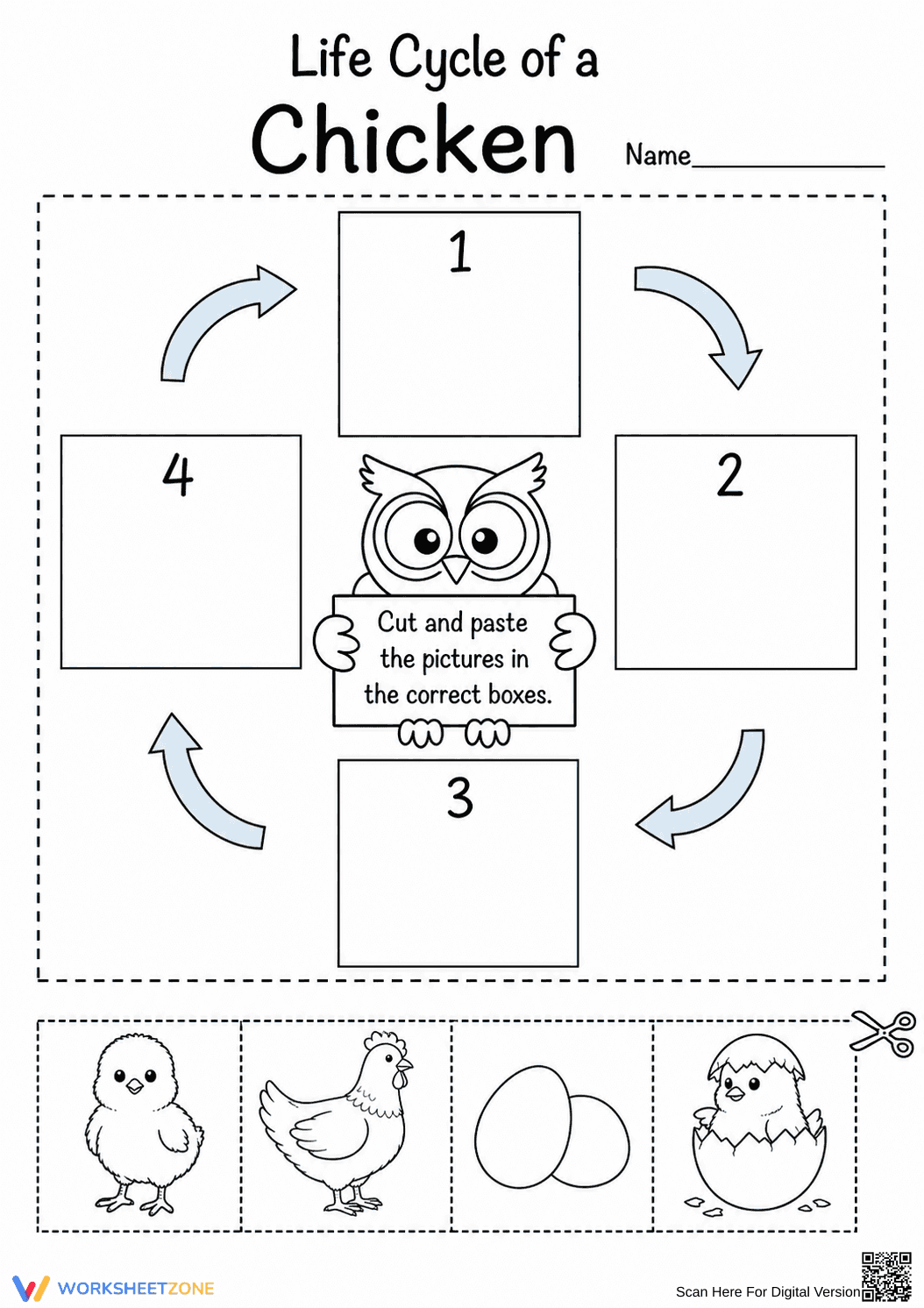

Grade 3 Chicken Life Cycle — Printable No-Prep Worksheet
Paste this activity's link or code into your existing LMS (Google Classroom, Canvas, Teams, Schoology, Moodle, etc.).
Students can open and work on the activity right away, with no student login required.
You'll still be able to track student progress and results from your teacher account.
This chicken life cycle worksheet helps students visualize and sequence the four primary stages of avian development. By engaging in a tactile cut-and-paste activity, learners demonstrate understanding of biological growth patterns. It provides a structured way to master life cycle concepts while building fine motor skills through hands-on interaction.
At a Glance
- Grade: 3 · Subject: Science
- Standard:
3-LS1-1— Develop models to describe that organisms have unique and diverse life cycles- Skill Focus: Chicken life cycle sequencing
- Format: 1 page · 4 problems · Answer key included · PDF
- Best For: Independent practice or science centers
- Time: 15–20 minutes
What's Inside
This single-page PDF features a circular flow diagram with four numbered boxes and four corresponding illustrations at the bottom. Students must identify the egg, hatching chick, young chick, and adult hen, then paste them in the correct chronological order. The layout includes clear cutting lines and a name header for easy classroom organization.
Zero-Prep Workflow
The activity is designed for immediate implementation with a three-step workflow. First, print the copies (10 seconds). Second, distribute the sheets with scissors and glue (1 minute). Third, review the completed cycles as a group (5 minutes). Total teacher preparation time is under 2 minutes, making it an ideal choice for substitute folders or last-minute lesson additions.
Standards Alignment
This resource aligns with `3-LS1-1`, which requires students to develop models to describe that organisms have unique and diverse life cycles but all have in common birth, growth, reproduction, and death. By sequencing the chicken's development, students create a physical model of these biological stages. This standard code can be copied directly into lesson plans, IEP goals, or district curriculum mapping tools.
How to Use It
Use this worksheet as a formative assessment after a direct instruction lesson on animal life cycles. It works effectively in a science center where students can work independently or in pairs. Teachers should observe students during the cutting phase to identify any misconceptions about which stage comes first, providing a quick check for understanding before the final gluing.
Who It's For
This activity is tailored for Grade 3 students but is also appropriate for Grade 2 learners exploring basic biology. It supports visual learners and those who benefit from kinesthetic activities. Pair this worksheet with a non-fiction text about farm animals or a classroom incubator project to provide a comprehensive learning experience.
The use of sequencing models in early science education is a proven method for helping students internalize biological processes. According to Fisher & Frey (2014), structured tasks like this chicken life cycle worksheet allow students to move from observation to independent mastery. By focusing on the 3-LS1-1 standard, this resource ensures students are actively building a conceptual model of how organisms grow. Research from the NAEP indicates that hands-on modeling improves retention of life science concepts compared to passive reading. This 1-page PDF provides the necessary scaffolding for Grade 3 learners to identify the four distinct stages of a chicken's life, reinforcing universal biological themes of birth, growth, and reproduction. It serves as a reliable tool for both general education and specialized instruction.


