


























Views
Downloads

Printable Kindergarten Reading Worksheet: Cheeky Chipmunk
Paste this activity's link or code into your existing LMS (Google Classroom, Canvas, Teams, Schoology, Moodle, etc.).
Students can open and work on the activity right away, with no student login required.
You'll still be able to track student progress and results from your teacher account.
Comprehensive Kindergarten Reading Support
This Kindergarten ELA worksheet guides students through a short, engaging narrative about a cheeky chipmunk to build foundational reading comprehension skills. Students recall specific details about the chipmunk's physical traits and actions to demonstrate understanding of the text. By focusing on evidence-based retrieval, the activity prepares learners for more complex literary analysis in future grades.
At a Glance
- Grade: Kindergarten · Subject: English Language Arts (ELA)
- Standard:
CCSS.ELA-LITERACY.RL.K.1— Ask and answer questions about key details in a text with prompting and support- Skill Focus: Recalling key story details and making simple inferences
- Format: 5 pages · 7 problems · Answer key included · PDF
- Best For: Literacy centers and independent reading practice
- Time: 15–20 minutes
What's Inside
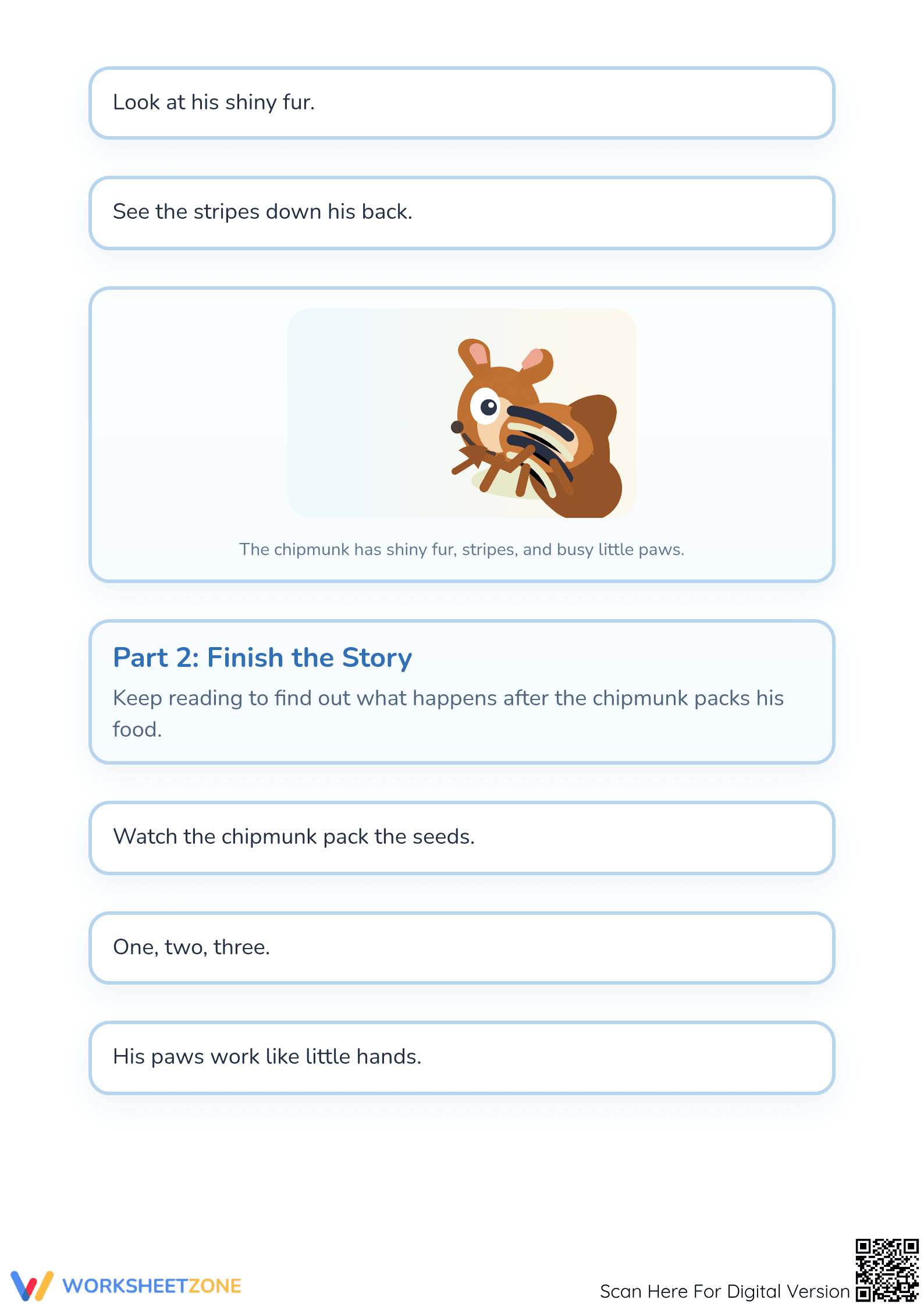
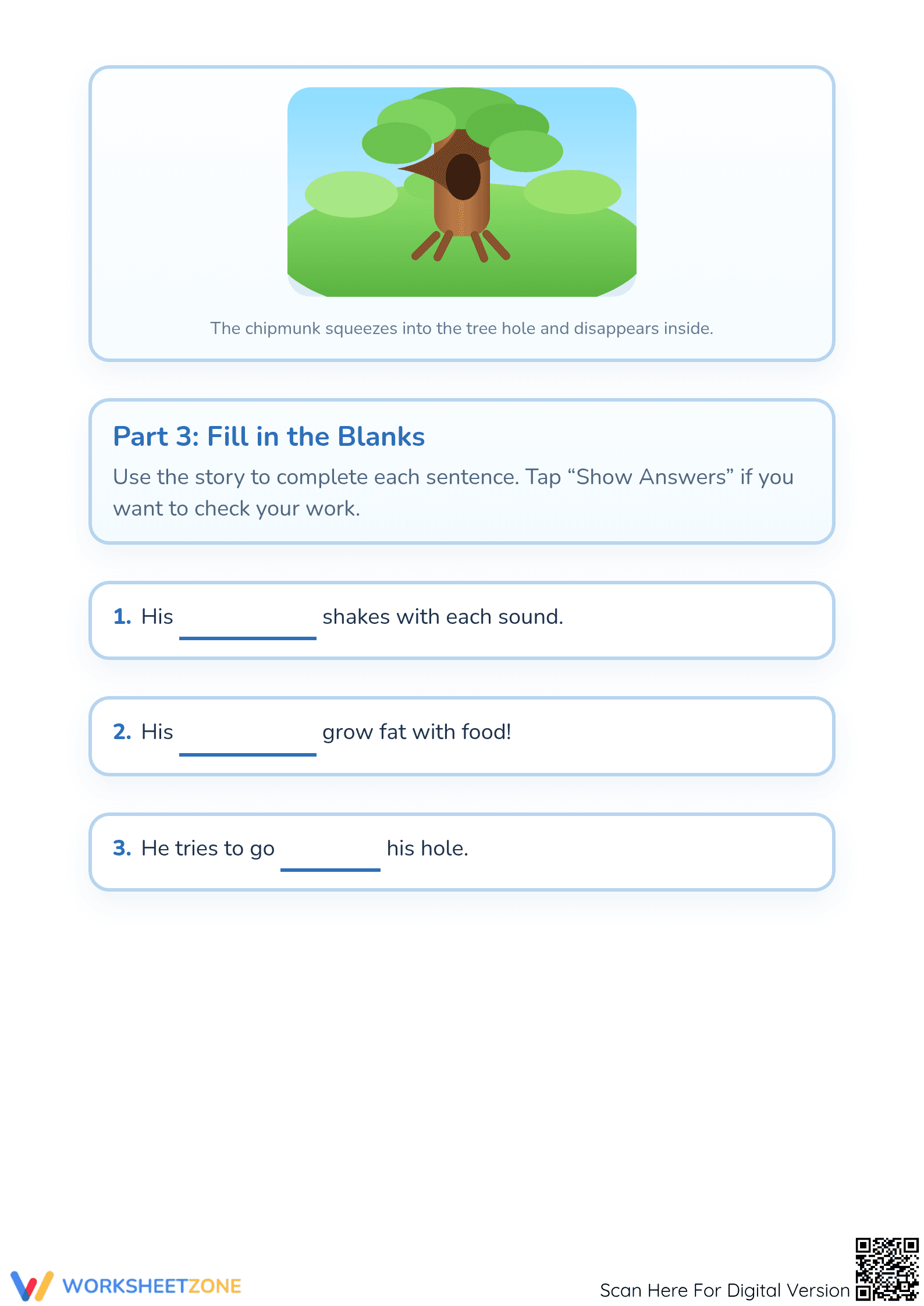
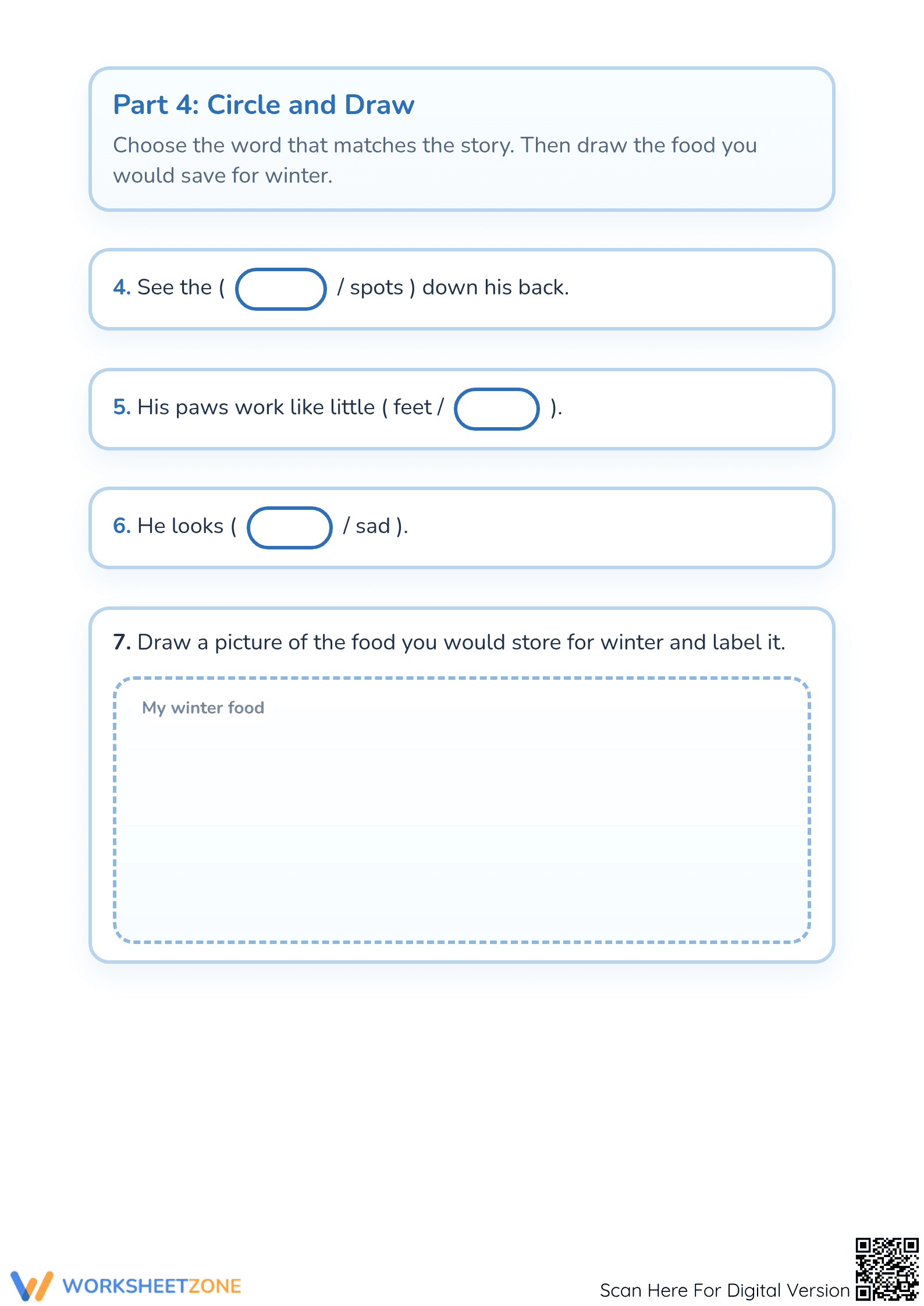
The Cheeky Chipmunk collection consists of a multi-page illustrated story designed for early readers. It features simple sentence structures and repetitive onomatopoeia to aid phonetic awareness. Following the narrative, students encounter three fill-in-the-blank sentences and three multiple-choice questions requiring them to circle the correct word. The final page includes a creative drawing prompt where students visualize and label the chipmunk's food storage for the winter.
Zero-Prep Workflow
Teachers can implement this resource in three easy steps. First, print the five-page PDF (less than 1 minute). Next, distribute the packets to students for independent work or guided reading groups (under 1 minute). Finally, review student responses using the provided comprehensive answer key for immediate feedback (under 2 minutes). The total teacher preparation time remains under two minutes, making it ideal for busy classroom schedules or as a reliable sub-plan for kindergarten literacy blocks.
Standards Alignment
The primary focus of this worksheet is CCSS.ELA-LITERACY.RL.K.1. This standard requires Kindergarten students to ask and answer questions about key details in a text with prompting and support. Additionally, it supports literacy development by engaging students with appropriate complexity in literature for their grade level. Both standard codes can be copied directly into lesson plans, IEP goals, or district curriculum mapping tools for administrative compliance.
How to Use It
Use this worksheet as a formative assessment during a unit on animals or descriptive language. After reading the story aloud as a class, assign the questions to gauge individual comprehension of character actions and traits. Alternatively, place it in a literacy center for independent practice. Teachers should observe if students refer back to the text to find answers, which is a critical early reading strategy. The expected completion time for most students is 15 to 20 minutes.
Who It's For
This resource is tailored for Kindergarten students developing initial reading stamina and detail-retrieval skills. It is particularly effective for English Language Learners due to the visual cues and repetitive language patterns used throughout the story. Pair this worksheet with a short non-fiction passage about chipmunks or an anchor chart describing animal habitats to create a robust cross-curricular science and ELA lesson that meets multiple learning objectives.


