


























Views
Downloads
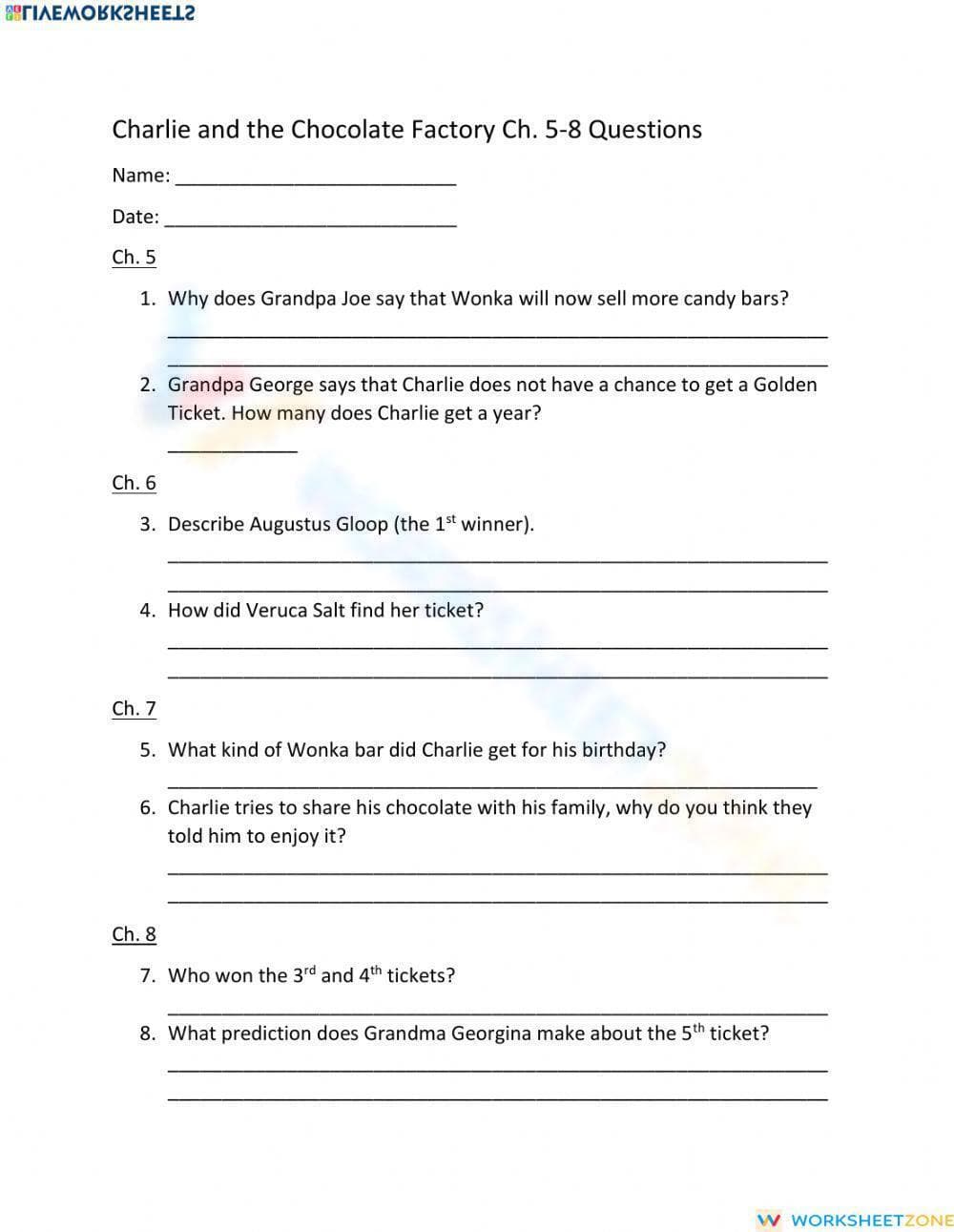

Essential Charlie & the Chocolate Factory: Ch. 5-8 Questions
Paste this activity's link or code into your existing LMS (Google Classroom, Canvas, Teams, Schoology, Moodle, etc.).
Students can open and work on the activity right away, with no student login required.
You'll still be able to track student progress and results from your teacher account.
This essential Grade 9 ELA worksheet provides students with a targeted reading comprehension assessment for Roald Dahl's classic novel, focusing on Chapters 5 through 8. By answering 8 structured questions, learners demonstrate their ability to recall key plot details, describe character traits, and make logical inferences based on textual evidence. This resource ensures students master the foundational skills required for deep literary analysis.
At a Glance
- Grade: 9 · Subject: English Language Arts
- Standard:
CCSS.ELA-LITERACY.RL.9-10.1— Cite strong and thorough textual evidence to support analysis of literary texts.- Skill Focus: Literary Comprehension
- Format: 1 page · 8 problems · Answer key included · PDF
- Best For: Immediate literary analysis and reading comprehension checks
- Time: 15–20 minutes
What's Inside: This single-page PDF contains 8 specific comprehension questions divided by chapter (Ch. 5-8). The tasks include descriptive prompts regarding characters like Augustus Gloop and Veruca Salt, as well as evidence-based inquiries into Grandpa Joe's predictions and Charlie's selfless family interactions. A full answer key is included to facilitate quick grading, and the layout features ample writing space for student responses without the need for additional teacher setup.
The Zero-Prep Workflow: Integrate this worksheet into your lesson plan with minimal preparation. Print the single-page document, distribute it after assigned chapters for a quick check, and use the included answer key for group or peer grading. This efficient resource is ideal for emergency sub plans or bell-ringer activities.
Standards Alignment: Primarily aligned to CCSS.ELA-LITERACY.RL.9-10.1, this resource requires students to cite strong textual evidence for explicit analysis and inferences. It also supports RL.9-10.3 by exploring complex character development. Standard codes can be copied for lesson plans, IEP goals, or curriculum mapping.
How to Use It: This worksheet is most effective when used immediately after students have finished reading Chapter 8. It serves as a perfect formative assessment to gauge whether students are following the plot progression and character introductions before moving deeper into the factory tour. For an instructional observation, watch for students who struggle to explain the family's reaction to Charlie's birthday chocolate, as this indicates a need for further discussion on character motivation and theme. Expected completion time is 15 to 20 minutes.
Who It's For: This activity is designed for Grade 9 students but remains highly effective for Grade 10-12 learners who require additional support with reading comprehension or for ESL/ELL students who benefit from structured, chapter-by-chapter questioning. It pairs naturally with a character-mapping anchor chart or a comparative analysis of the different Golden Ticket winners. The clear, uncluttered format ensures that students can focus entirely on the text without distractions.
This Charlie and the Chocolate Factory worksheet bridges literal comprehension and literary analysis. Focusing on CCSS.ELA-LITERACY.RL.9-10.1, students practice citing textual evidence and identifying key narrative details. Targeted questioning, as supported by EdReports 2024 analysis, enhances retention. The 8 tasks comprehensively check character introductions like Augustus Gloop and Veruca Salt, crucial for understanding the novel's satirical elements. This reliable, standard-aligned framework integrates well into any ELA curriculum, supporting students in meeting literature standards while enjoying Dahl's imaginative work.


