


























Views
Downloads
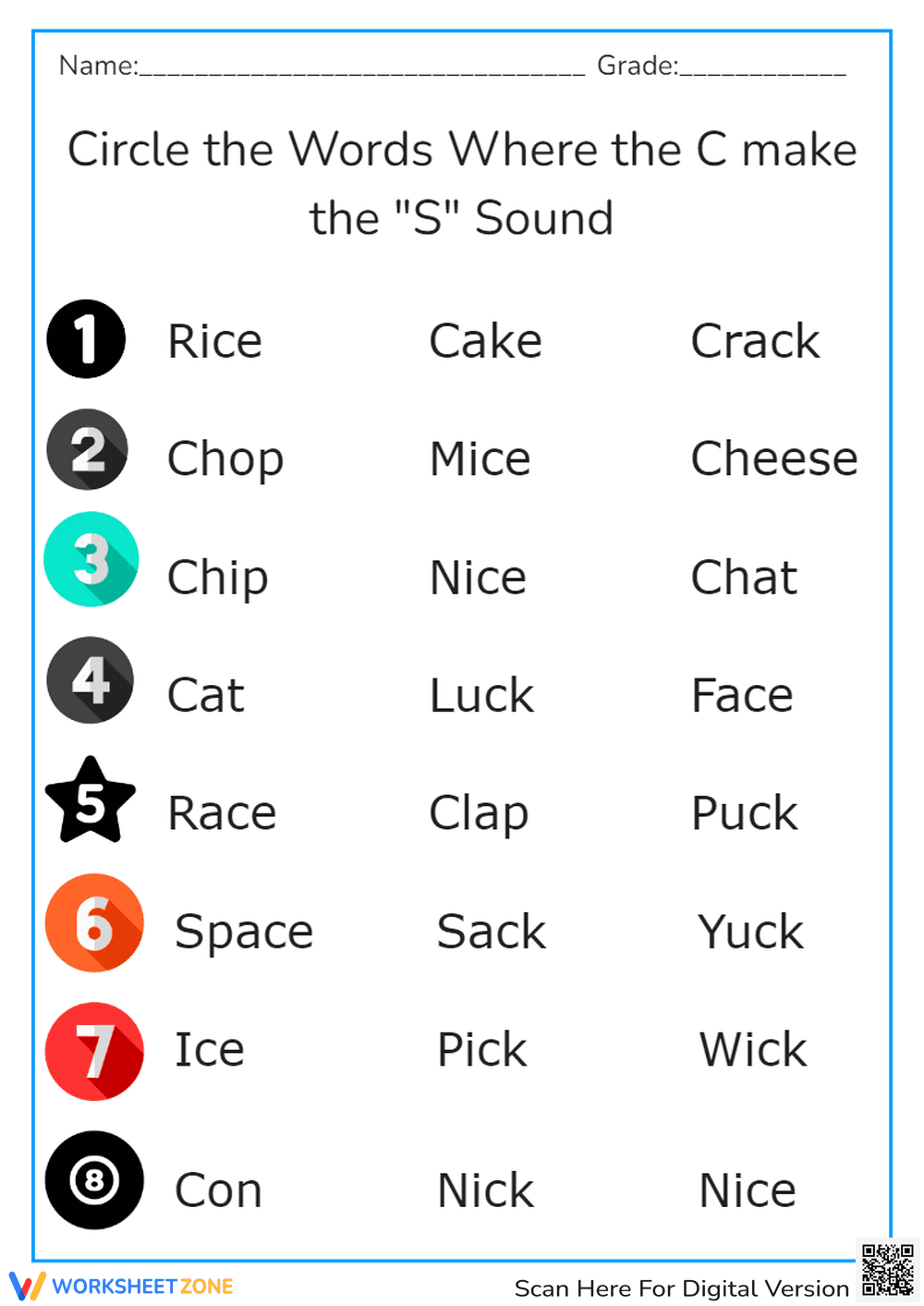

Soft C Sound Printable Worksheet | Grade 2 Phonics
Paste this activity's link or code into your existing LMS (Google Classroom, Canvas, Teams, Schoology, Moodle, etc.).
Students can open and work on the activity right away, with no student login required.
You'll still be able to track student progress and results from your teacher account.
This Grade 2 phonics worksheet helps students master the soft C sound through targeted decoding practice. Second graders evaluate word sets to identify when the letter C makes an S sound. This focused activity strengthens reading fluency and spelling accuracy by reinforcing essential phonics rules.
At a Glance
- Grade: 2 · Subject: English Language Arts
- Standard:
CCSS.ELA-LITERACY.RF.2.3— Apply grade-level phonics and word analysis skills to decode words- Skill Focus: Identifying the soft C sound in common vocabulary
- Format: 1 printable page · 8 problem sets · Answer key included · PDF
- Best For: Independent phonics practice and morning work
- Time: 10–15 minutes
This single-page resource features eight numbered rows, each containing three distinct words. Students read across the rows and circle the specific words where the letter C produces a soft S sound, such as in "rice" or "face." The layout is clean and highly visual, minimizing distractions to keep young readers focused on phoneme recognition. A complete answer key is provided to ensure accurate grading and immediate feedback.
This worksheet requires zero teacher setup, making it an ideal classroom solution.
- Print (1 minute): Generate the PDF and print a class set directly from your computer.
- Distribute (1 minute): Hand out the single-page activity to students without needing extra materials or complex instructions.
- Review (3 minutes): Use the included answer key to quickly check student work or guide a whole-class review session.
Total teacher prep time is under two minutes. The straightforward directions make this an excellent option for emergency sub plans or independent literacy centers.
This activity aligns directly with CCSS.ELA-LITERACY.RF.2.3: Know and apply grade-level phonics and word analysis skills in decoding words. It specifically targets the ability to recognize and read words with common spelling-sound correspondences. Both standard codes can be copied directly into lesson plans, IEP goals, or district curriculum mapping tools.
Teachers can deploy this worksheet during morning work to activate phonics knowledge before direct instruction begins. It also serves as an effective independent practice activity during small-group literacy rotations. While students work, teachers can observe their decoding strategies, noting if they struggle with specific vowel combinations that typically follow a soft C. Most second graders will complete this task within a 10 to 15-minute timeframe.
This resource is designed for second-grade students developing their foundational reading skills. It provides necessary repetition for learners who need extra support distinguishing between hard and soft consonant sounds. Teachers can easily pair this worksheet with a classroom anchor chart detailing the soft C rule (C followed by E, I, or Y) to provide additional scaffolding for struggling readers.
Mastering the soft C sound is a critical component of early literacy development, directly supporting the skills outlined in CCSS.ELA-LITERACY.RF.2.3 where students apply grade-level phonics and word analysis skills to decode words. According to a 2024 report by EdReports, explicit and systematic phonics instruction significantly improves reading comprehension outcomes in primary grades. When students practice identifying specific phonemes within varied word contexts, they build the automaticity required for fluent reading. This worksheet provides that exact type of targeted repetition, allowing learners to isolate the soft C sound among distractors. Consistent exposure to these spelling patterns reduces decoding hesitation and builds student confidence. By integrating this focused phonics practice into daily routines, educators ensure that foundational reading gaps are addressed early, setting a strong trajectory for future academic success across all subject areas.


