


























1 / 2
0
Views
0
Downloads


0.0
0
Save
0 Likes
Share
Bed in Summer – Poetry Annotation Worksheet
0 Views
0 Downloads
Paste this activity's link or code into your existing LMS (Google Classroom, Canvas, Teams, Schoology, Moodle, etc.).
Students can open and work on the activity right away, with no student login required.
You'll still be able to track student progress and results from your teacher account.
Information
Description
What It Is:
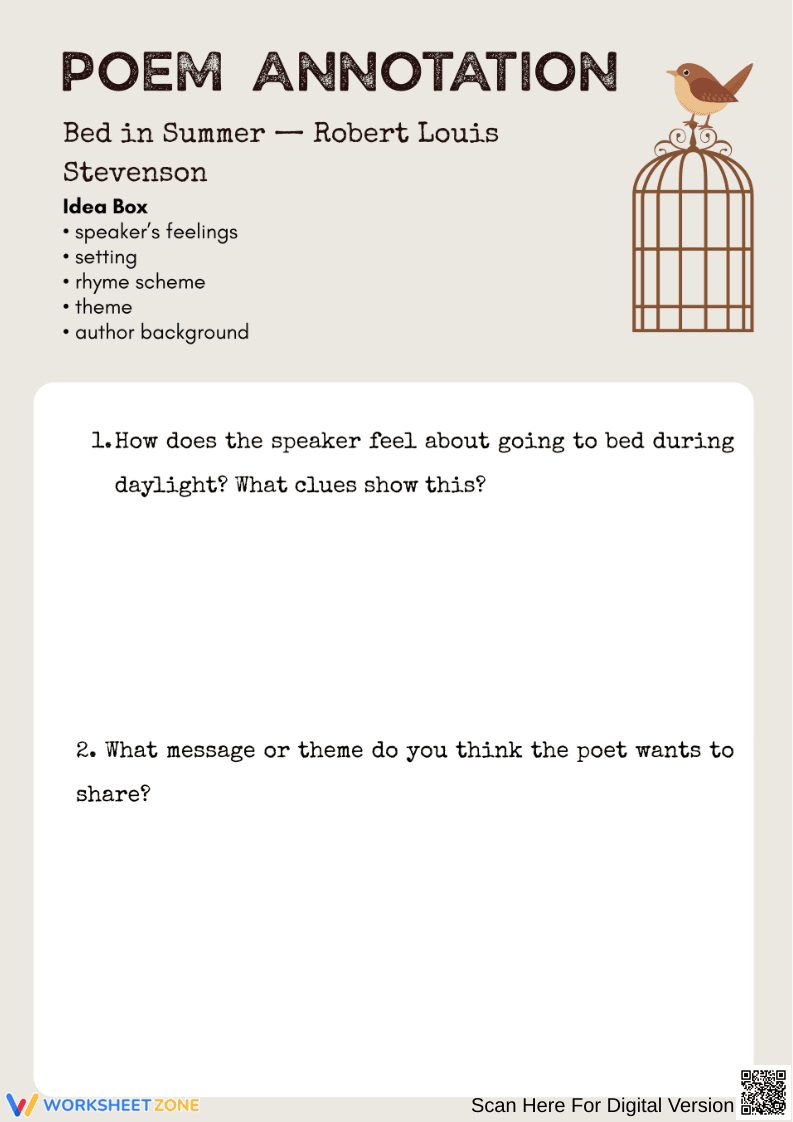
A poetry comprehension and annotation worksheet featuring “Bed in Summer” by Robert Louis Stevenson. Students read the poem, use the idea box for guided annotations, and respond to structured questions about the speaker’s feelings, theme, and poetic details. The clean layout includes the poem text, analysis space, and targeted prompts that support close reading and literary interpretation.
Why Use It:
This worksheet deepens students’ understanding of poetry by encouraging them to explore emotion, setting, rhyme, and thematic meaning. It helps readers connect the speaker’s experiences with their own and strengthens skills such as inference, textual analysis, and identifying poetic techniques. Ideal for building confidence in reading classic poetry.
How to Use It:
• Begin with a class or independent reading of the poem.
• Have students annotate using clues from the idea box (feelings, setting, rhyme scheme, theme).
• Use the questions as discussion starters or written response prompts.
• Assign as practice during a poetry unit, literature center activity, or homework assignment.
• Pair with Poem 1 (“Who Has Seen the Wind?”) for a two-poem comparative lesson.
Grade Suitability:
Best for Grades 6-9.
• Suitable for upper elementary students beginning poetry analysis.
• Helpful for middle schoolers learning deeper interpretation and author intent.
Target Users:
Designed for ELA teachers, literacy specialists, tutors, and homeschool educators teaching poetry, theme, figurative language, and close reading skills.
A poetry comprehension and annotation worksheet featuring “Bed in Summer” by Robert Louis Stevenson. Students read the poem, use the idea box for guided annotations, and respond to structured questions about the speaker’s feelings, theme, and poetic details. The clean layout includes the poem text, analysis space, and targeted prompts that support close reading and literary interpretation.
Why Use It:
This worksheet deepens students’ understanding of poetry by encouraging them to explore emotion, setting, rhyme, and thematic meaning. It helps readers connect the speaker’s experiences with their own and strengthens skills such as inference, textual analysis, and identifying poetic techniques. Ideal for building confidence in reading classic poetry.
How to Use It:
• Begin with a class or independent reading of the poem.
• Have students annotate using clues from the idea box (feelings, setting, rhyme scheme, theme).
• Use the questions as discussion starters or written response prompts.
• Assign as practice during a poetry unit, literature center activity, or homework assignment.
• Pair with Poem 1 (“Who Has Seen the Wind?”) for a two-poem comparative lesson.
Grade Suitability:
Best for Grades 6-9.
• Suitable for upper elementary students beginning poetry analysis.
• Helpful for middle schoolers learning deeper interpretation and author intent.
Target Users:
Designed for ELA teachers, literacy specialists, tutors, and homeschool educators teaching poetry, theme, figurative language, and close reading skills.


