


























Views
Downloads

Essential AAPI Heritage Month Quiz | Grade 8 Printable
Paste this activity's link or code into your existing LMS (Google Classroom, Canvas, Teams, Schoology, Moodle, etc.).
Students can open and work on the activity right away, with no student login required.
You'll still be able to track student progress and results from your teacher account.
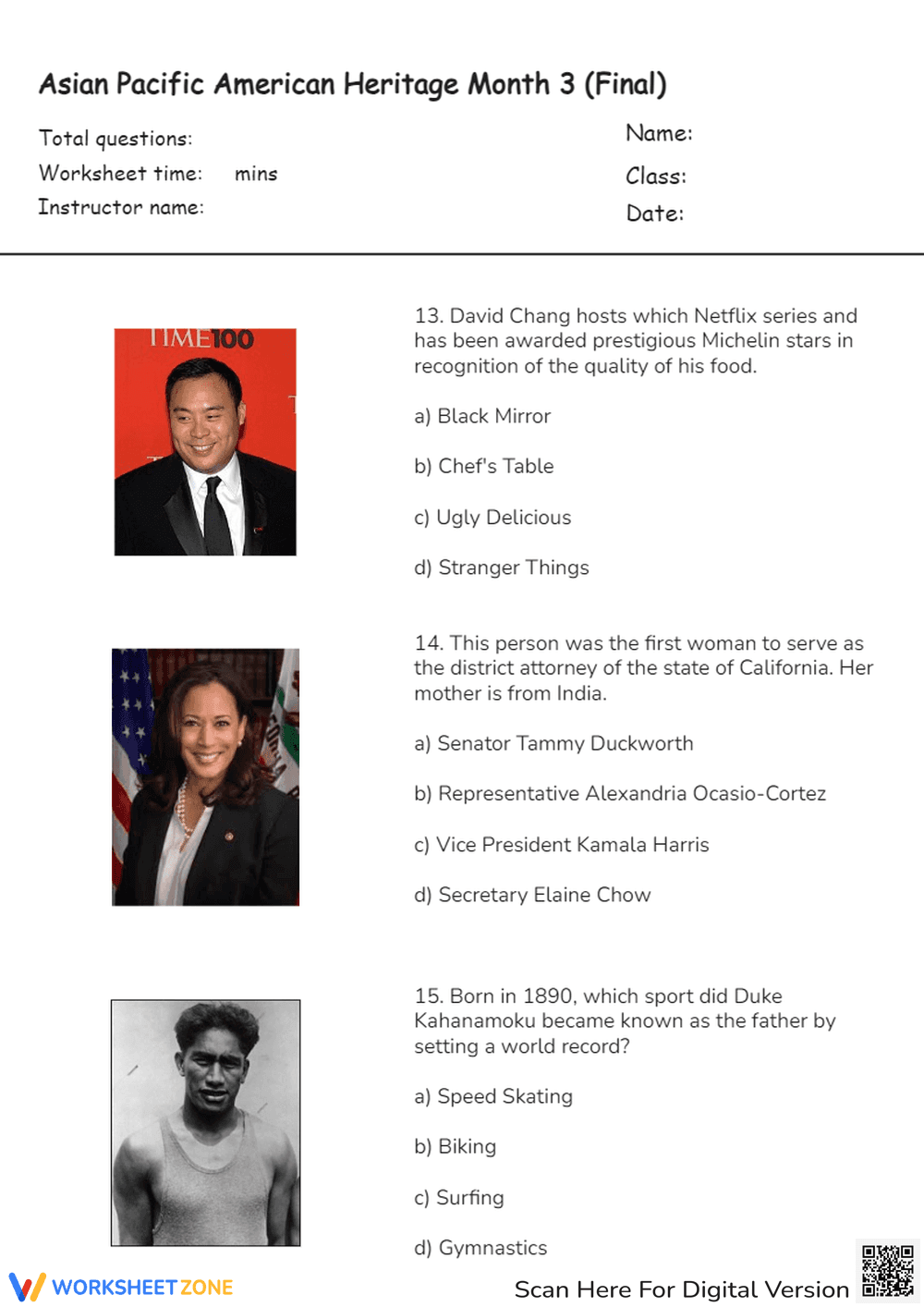
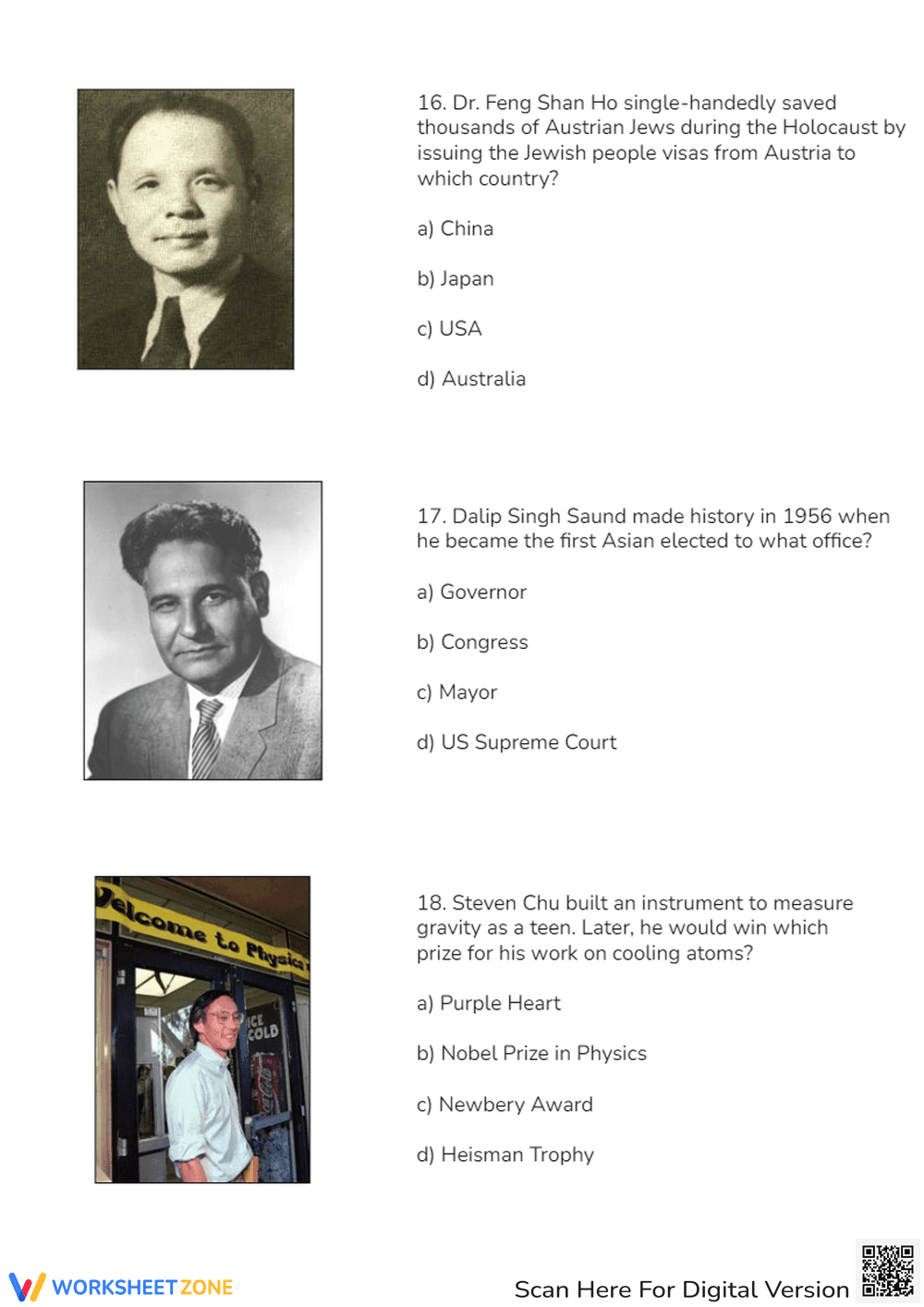
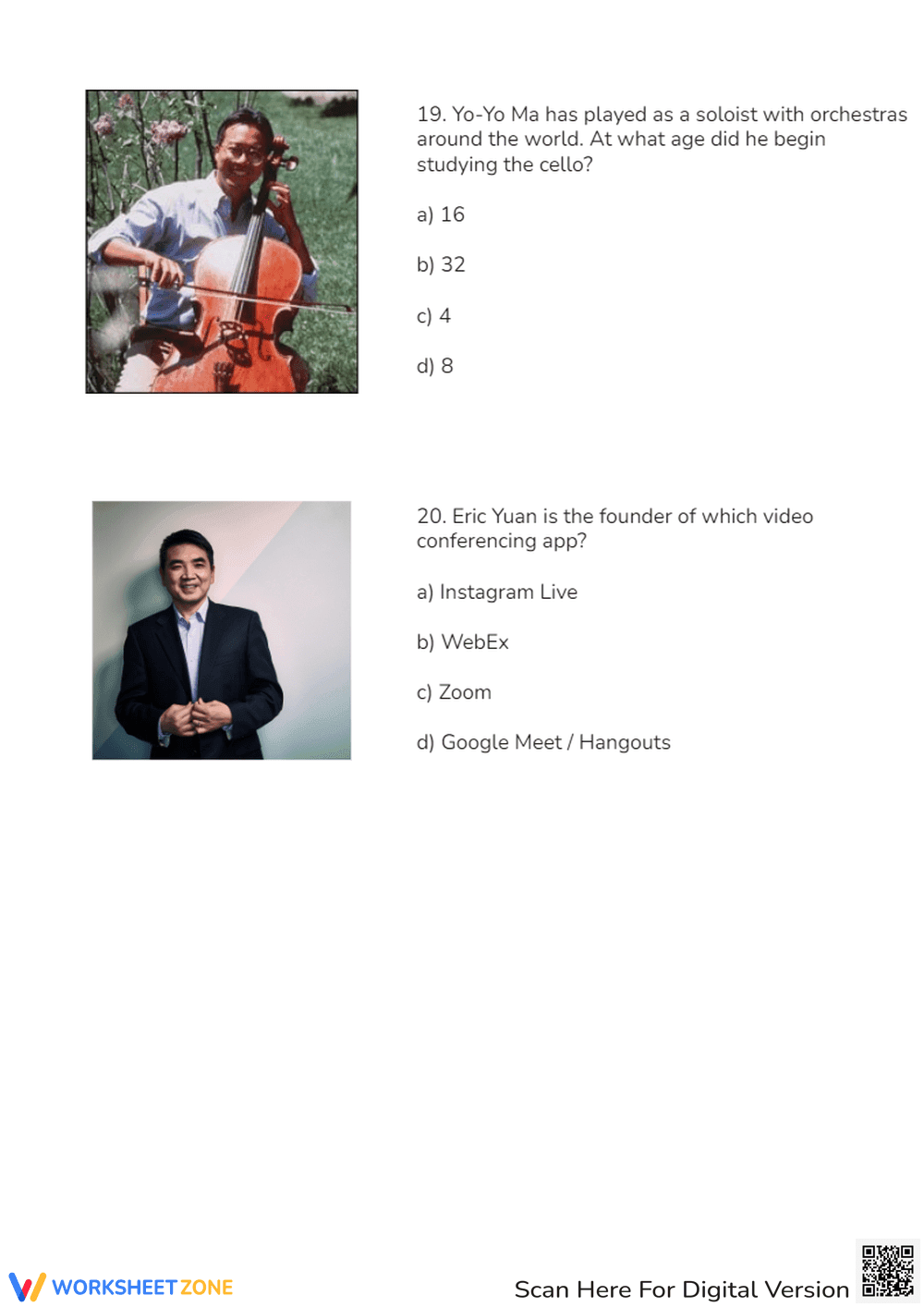
This Grade 8 AAPI Heritage Month worksheet assesses student knowledge of influential Asian American and Pacific Islander figures through a visual quiz format. Students identify key historical and contemporary leaders, from political pioneers to cultural icons, ensuring they can connect biographical facts to specific individuals. It provides a structured way to celebrate heritage while building informational literacy.
At a Glance
- Grade: 8 · Subject: Social Studies
- Standard:
CCSS.ELA-LITERACY.RI.8.1— Cite textual evidence to support analysis of what the text says explicitly- Skill Focus: AAPI Biographical Literacy
- Format: 3 pages · 8 problems · Answer key included · PDF
- Best For: Quick assessment or bell-ringer activity
- Time: 15–20 minutes
What's Inside
This 3-page PDF contains 8 multiple-choice questions, each paired with a high-quality photograph of a notable AAPI figure. The layout is clean and professional, featuring individuals like Vice President Kamala Harris and cellist Yo-Yo Ma. Each question includes four distinct options, and the worksheet includes dedicated fields for student names, class periods, and completion time tracking to help manage classroom pacing.
Zero-Prep Workflow
- Print: Select the 3-page document and print enough copies for your roster in under 30 seconds.
- Distribute: Hand out the sheets as a silent starter or a concluding quiz to check for understanding.
- Review: Use the included answer key to review responses as a whole group or for rapid grading in under 2 minutes.
Total teacher preparation time is less than two minutes, making it an ideal choice for busy instructional days or unexpected sub plans.
Standards Alignment
The primary focus is `CCSS.ELA-LITERACY.RI.8.1`, which requires students to cite evidence and identify explicit facts within informational contexts. By matching specific achievements—such as Nobel Prizes or political "firsts"—to the correct individuals, students demonstrate mastery of factual recall and biographical analysis. Both standard codes can be copied directly into lesson plans, IEP goals, or district curriculum mapping tools.
How to Use It
Use this worksheet as a formative assessment after a unit on American history or during AAPI Heritage Month celebrations in May. It works effectively as a "Gallery Walk" companion where students find information about these figures before taking the quiz. Teachers should observe if students struggle with contemporary versus historical figures to guide future research assignments. Completion typically takes 15 to 20 minutes depending on prior knowledge.
Who It's For
This resource is tailored for middle school students in grades 5 through 8, with content that is accessible yet challenging. It is particularly useful for Social Studies teachers looking to diversify their curriculum or ELA teachers focusing on informational text features. It pairs naturally with biographical anchor charts or short video biographies of the featured leaders.
Research from EdReports 2024 emphasizes that high-quality instructional materials must provide diverse representations to foster student engagement and cultural competency. This AAPI Heritage Month quiz highlights 8 distinct leaders across fields such as science, sports, and government. By utilizing CCSS.ELA-LITERACY.RI.8.1, the worksheet ensures that students are not just memorizing names but are identifying the specific evidence of impact that defines these historical figures. Studies by Fisher & Frey (2014) suggest that visual cues, such as the photographs included here, significantly improve retention of biographical information in middle-grade learners. This resource provides a validated method for integrating multicultural history into the standard curriculum without sacrificing academic rigor. It serves as a reliable tool for measuring student proficiency in identifying key details within the broader context of American social and political history.


