




























Views
Downloads

Grades 1-3 AAPI Heritage — Printable No-Prep Worksheet

Paste this activity's link or code into your existing LMS (Google Classroom, Canvas, Teams, Schoology, Moodle, etc.).
Students can open and work on the activity right away, with no student login required.
You'll still be able to track student progress and results from your teacher account.
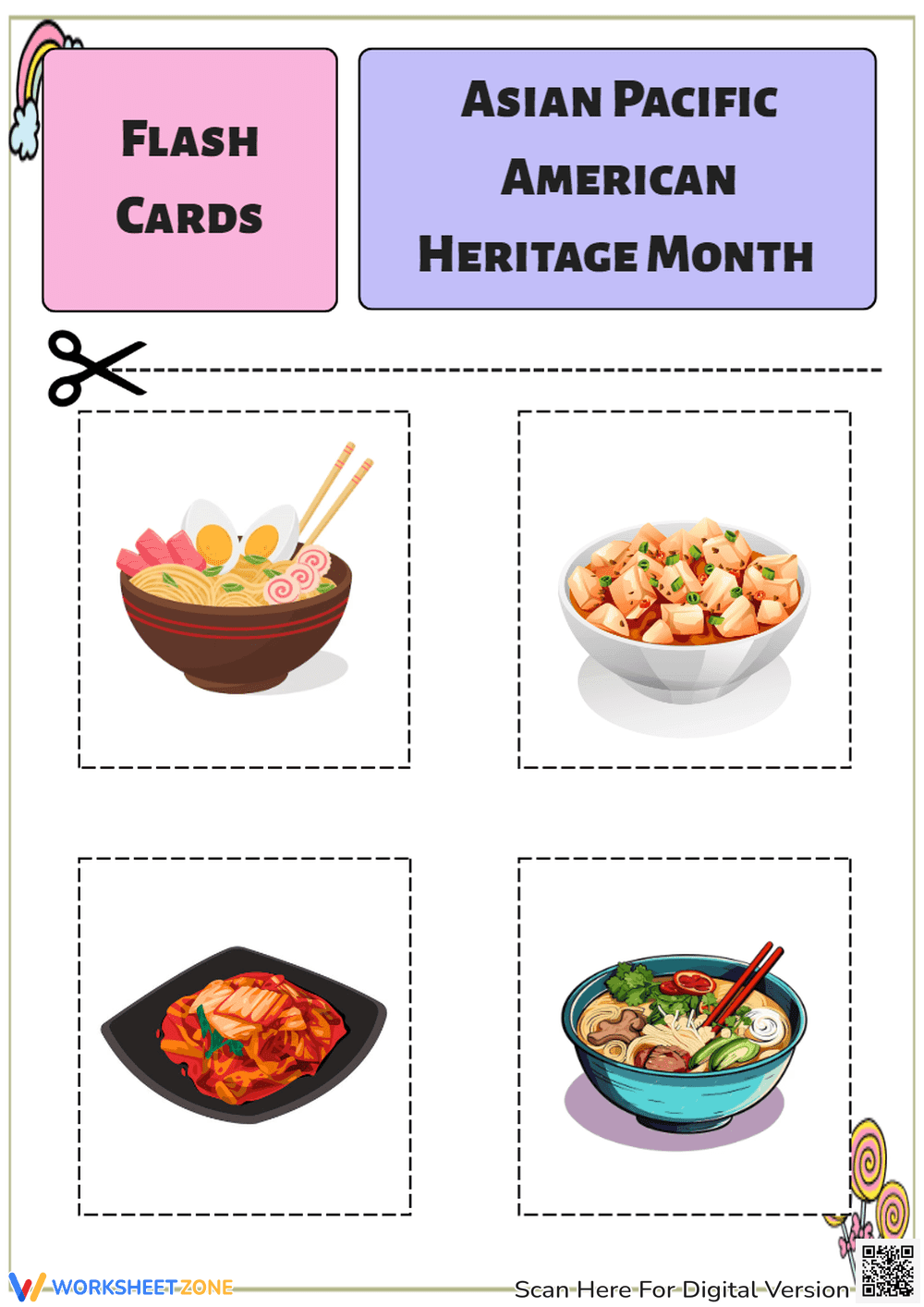
These Asian Pacific American Heritage Month flash cards help students identify and celebrate diverse cultural contributions through visual recognition. By engaging with high-quality illustrations of traditional foods and symbols, learners build essential vocabulary while fostering an inclusive classroom environment. This resource provides a tangible way to integrate cultural studies into daily literacy or social studies blocks, ensuring students connect with global traditions in a meaningful way.
At a Glance
- Grade: 1-3 · Subject: Social Studies
- Standard:
CCSS.ELA-LITERACY.RI.2.4— Determine the meaning of words and phrases in a topic-specific text- Skill Focus: Cultural vocabulary and identification
- Format: 1 page · 4 tasks · Answer key included · PDF
- Best For: Morning work or cultural centers
- Time: 10–15 minutes
What's Inside
Inside this printable PDF, you will find one page featuring four distinct, high-resolution flash cards. Each card depicts a significant cultural element, such as traditional Asian cuisine, designed with clear dashed lines for easy cutting. The layout is optimized for student handling, ensuring that the visual cues are the primary focus for young learners developing their identification skills. The set includes an answer key for teacher reference or student self-correction.
Zero-Prep Workflow
- Print: Send the single-page PDF to your printer (30 seconds).
- Distribute: Hand out sheets to students for independent cutting and sorting (5 minutes).
- Review: Discuss the cultural significance of each image as a whole class or in small groups (5 minutes).
Total teacher preparation time is under 2 minutes, making this an ideal choice for busy mornings or unexpected sub plans.
Standards Alignment
This resource aligns with `CCSS.ELA-LITERACY.RI.2.4`, focusing on determining the meaning of domain-specific words and phrases. By associating images with cultural terms, students expand their informational text vocabulary. Additionally, it supports Social Studies frameworks regarding cultural diversity and heritage. Both standard codes can be copied directly into lesson plans, IEP goals, or district curriculum mapping tools.
How to Use It
Use these cards during a "Gallery Walk" where students rotate to different stations to learn about AAPI heritage. Alternatively, assign them as a formative assessment tool: show a card and ask students to describe the item or its cultural origin. Observe if students can correctly identify the items without prompting. This activity typically takes 10 to 15 minutes and works best after an introductory read-aloud about Asian Pacific American history.
Who It's For
This resource is tailored for elementary students in Grades 1, 2, and 3, including English Language Learners who benefit from strong visual scaffolds. It pairs naturally with a classroom anchor chart about global traditions or a picture book featuring AAPI protagonists. The simple format allows for easy differentiation by adding written labels for advanced learners.
According to the RAND AIRS 2024 report, the integration of culturally responsive materials in early elementary grades significantly improves student engagement and sense of belonging. This worksheet addresses CCSS.ELA-LITERACY.RI.2.4 by providing concrete visual representations of cultural vocabulary, which is a critical step in building background knowledge for informational text comprehension. Research from Fisher & Frey (2014) emphasizes that visual scaffolds like these flash cards allow students to bridge the gap between prior knowledge and new academic concepts. By utilizing these 4 specific tasks, educators can facilitate meaningful discussions about diversity without extensive preparation. The use of high-interest visuals ensures that learners remain focused on the skill of identification while simultaneously developing a broader worldview. This resource serves as a foundational tool for inclusive social studies instruction, meeting the rigorous demands of modern standards while remaining accessible to all learners in the primary classroom.


