


























Views
Downloads

April Fool's Day Quiz | Essential Printable Worksheet
Paste this activity's link or code into your existing LMS (Google Classroom, Canvas, Teams, Schoology, Moodle, etc.).
Students can open and work on the activity right away, with no student login required.
You'll still be able to track student progress and results from your teacher account.
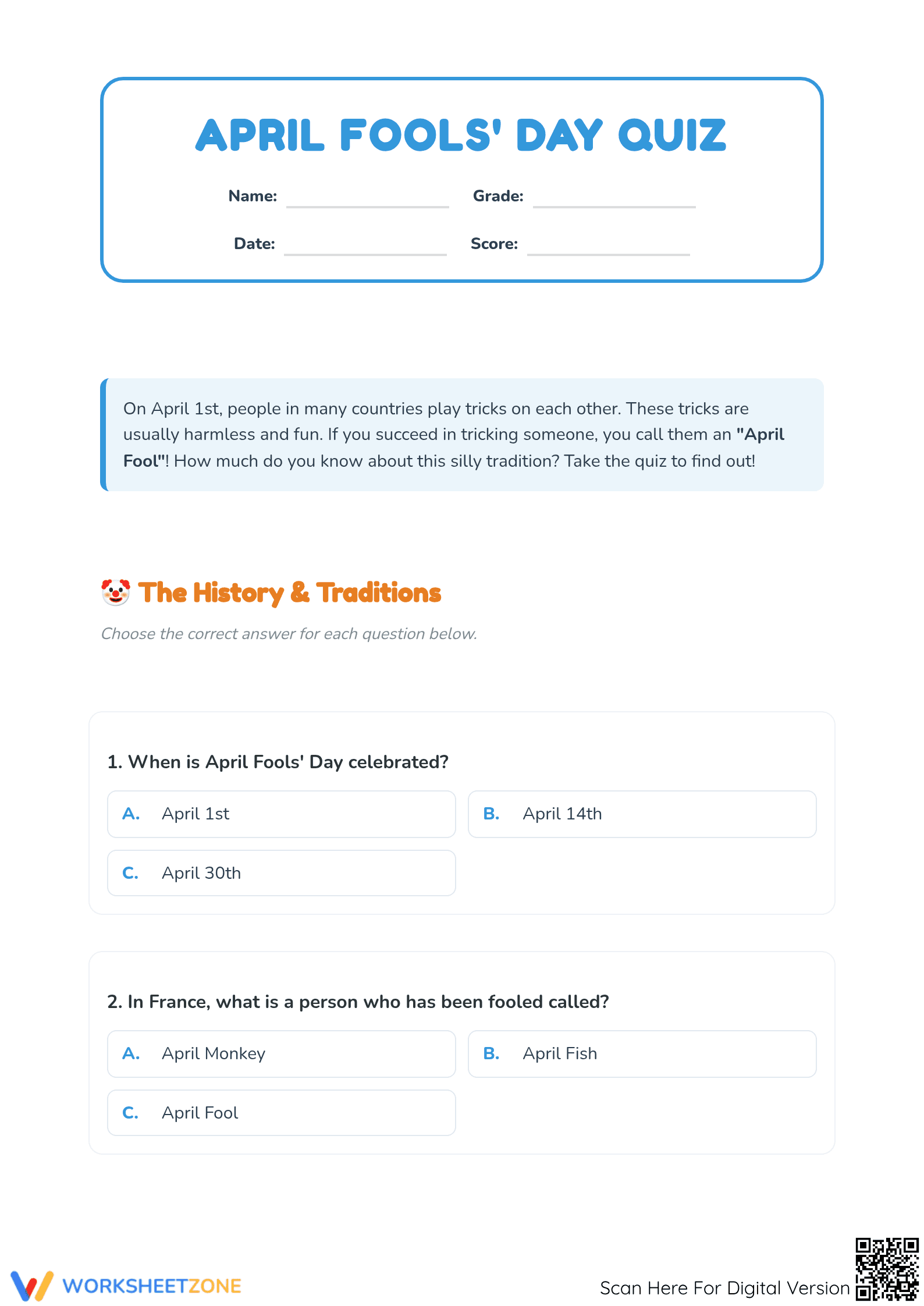
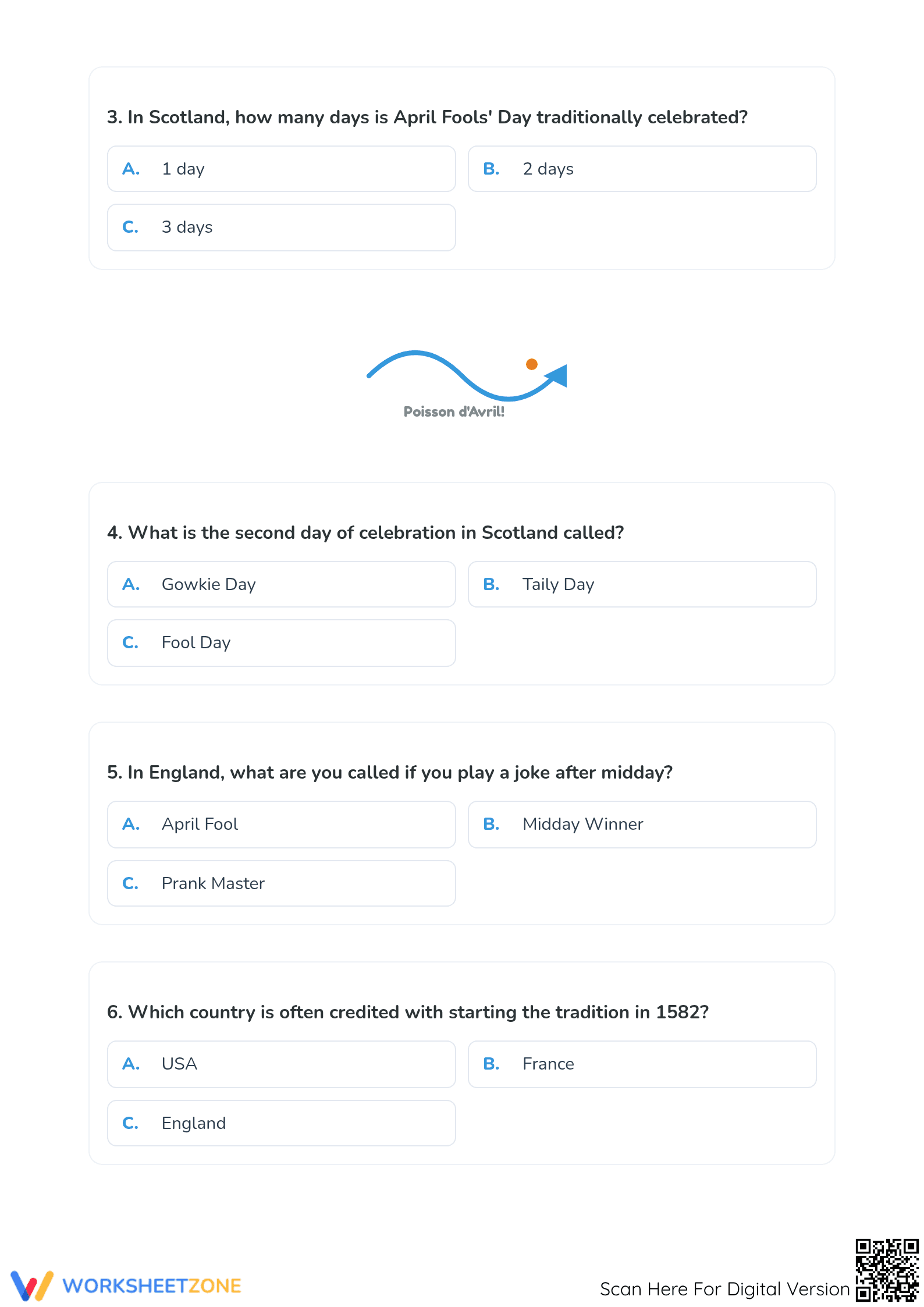
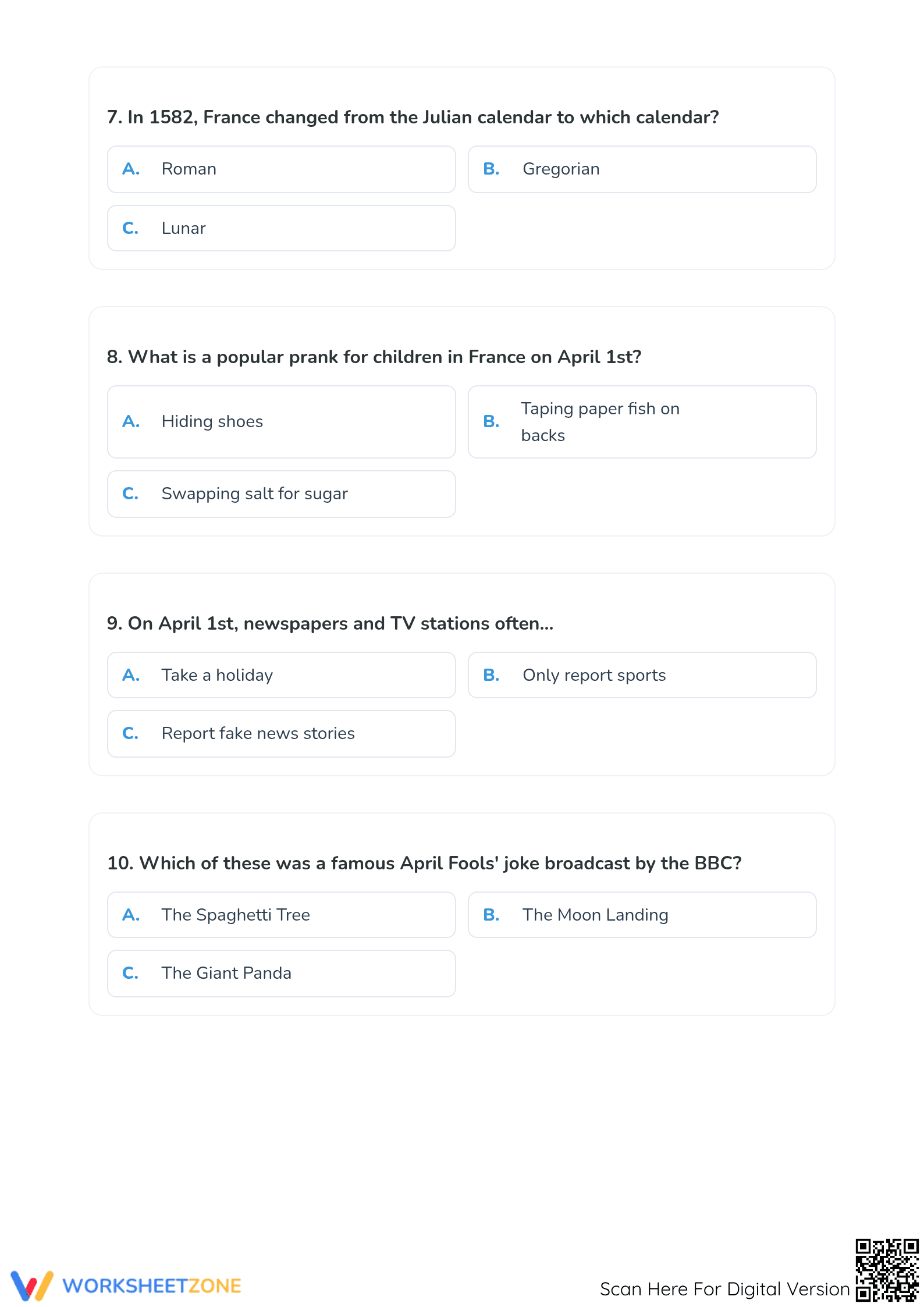
This April Fool's Day quiz provides a comprehensive overview of the holiday's historical origins and global traditions. Students engage with ten multiple-choice questions that test their reading comprehension and cultural knowledge before transitioning to a creative writing prompt. It is a functional tool for building informational text stamina while celebrating a popular seasonal event.
At a Glance
- Grade: 3–12 · Subject: English
- Standard:
CCSS.ELA-LITERACY.RI.5.1— Quote accurately from a text and explain what it says- Skill Focus: Historical literacy and recall
- Format: 4 pages · 11 tasks · Answer key included · PDF
- Best For: Holiday activities and sub plans
- Time: 20–30 minutes
What's Inside
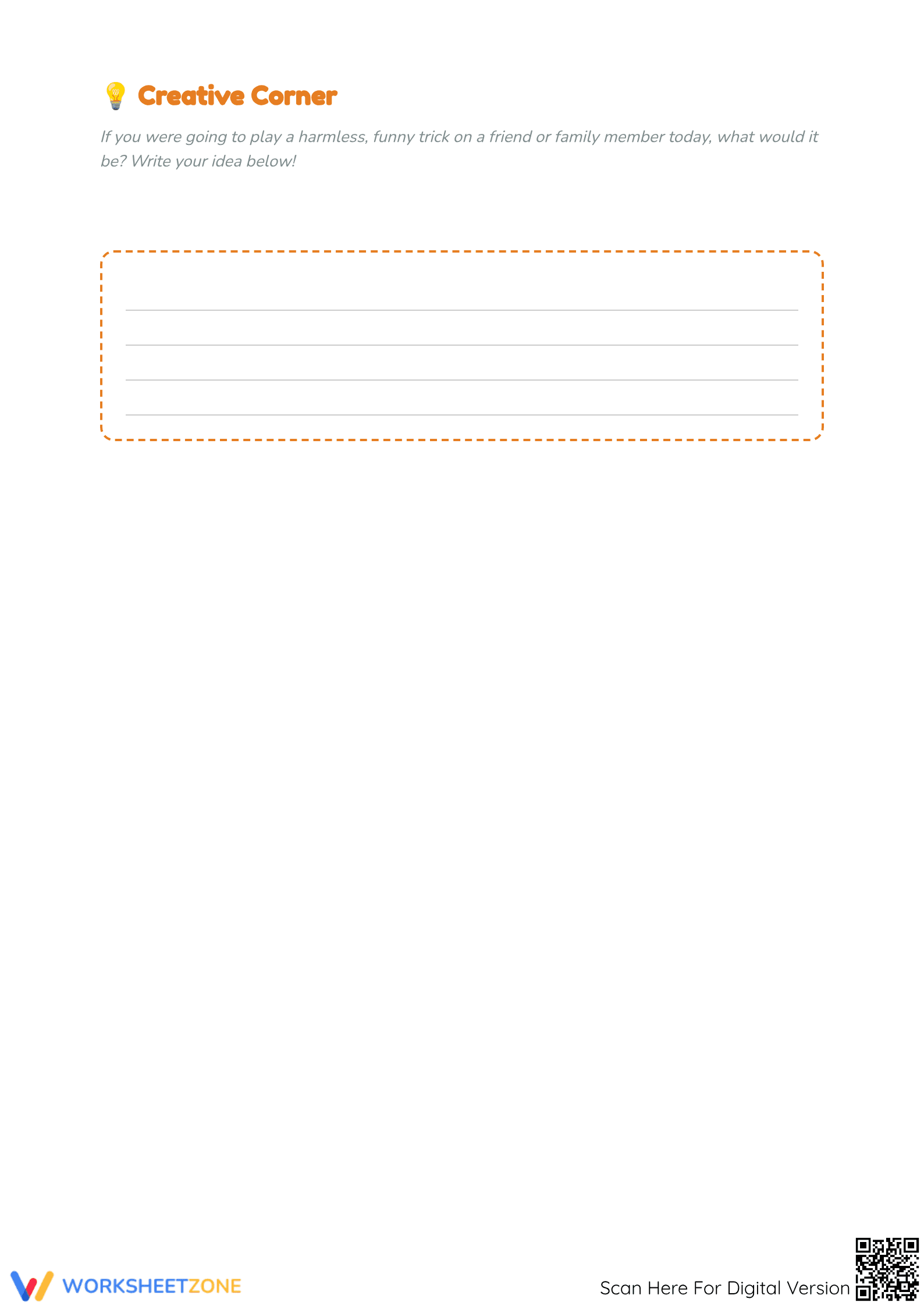
The resource consists of a four-page PDF document. The first three pages contain ten multiple-choice questions covering traditions in France, Scotland, and England, as well as famous media pranks like the BBC's spaghetti tree. The final page features the "Creative Corner," which prompts students to draft their own harmless prank idea, encouraging creative expression and narrative planning. A complete answer key is provided for immediate feedback.
Zero-Prep Workflow
The print-and-go design ensures a zero-prep experience for busy educators. First, print the four-page document for each student, which takes approximately one minute for a standard class set. Second, distribute the worksheets and allow 20 minutes for independent completion. Finally, spend five minutes reviewing the answers using the provided key. Total teacher preparation time is less than two minutes, making it ideal for holiday-themed instruction.
Standards Alignment
Primary alignment is CCSS.ELA-LITERACY.RI.5.1, which requires students to quote accurately from a text when explaining what the text says explicitly. The worksheet also supports CCSS.ELA-LITERACY.W.5.3 through the creative writing extension. Both standard codes can be copied directly into lesson plans, IEP goals, or district curriculum mapping tools to demonstrate compliance with rigorous state and federal educational frameworks.
How to Use It
Use this quiz as an engaging warm-up activity on April 1st to settle the class before moving into core curriculum. It serves as an effective formative assessment tool; teachers should observe whether students can distinguish between factual history and the "fake news" mentioned in the questions. The worksheet is also perfectly suited for emergency sub plans or "filler" activities that maintain academic rigor during high-energy school days.
Who It's For
This resource is designed for students in Grades 3 through 12, with the reading level optimized for middle elementary and up. It provides natural differentiation through the creative writing task, allowing advanced students to expand on their ideas while providing a structured format for those who need support. It pairs well with a short video or passage about the history of the Gregorian calendar transition.
Research by EdReports 2024 indicates that high-quality instructional materials must balance factual recall with opportunities for creative synthesis to maximize student engagement. This April Fool's Day worksheet achieves this by anchoring its ten multiple-choice tasks in the CCSS.ELA-LITERACY.RI.5.1 standard, which focuses on extracting specific details from informational contexts. By requiring students to identify historical milestones—such as the 1582 calendar shift in France—the resource builds cultural literacy and academic vocabulary. The inclusion of the "Creative Corner" writing prompt aligns with evidence-based practices for narrative development, ensuring that the activity transcends simple trivia. Educators can confidently integrate this worksheet into their curriculum knowing it meets modern standards for both content accuracy and instructional design. It provides a reliable, self-contained lesson that reduces administrative burden while delivering measurable student outcomes in reading comprehension and historical understanding.


